
Siberian Husky
The 3,000-year-old sled dog of the Chukchi people — bred to run 100+ miles a day at -60F. The #16 AKC breed with hypnotic blue eyes from a single genetic ancestor, the worlds greatest escape artist, and the legendary Togo who ran 264 miles through a blizzard to save an entire town. Discover everything in our complete breed guide.
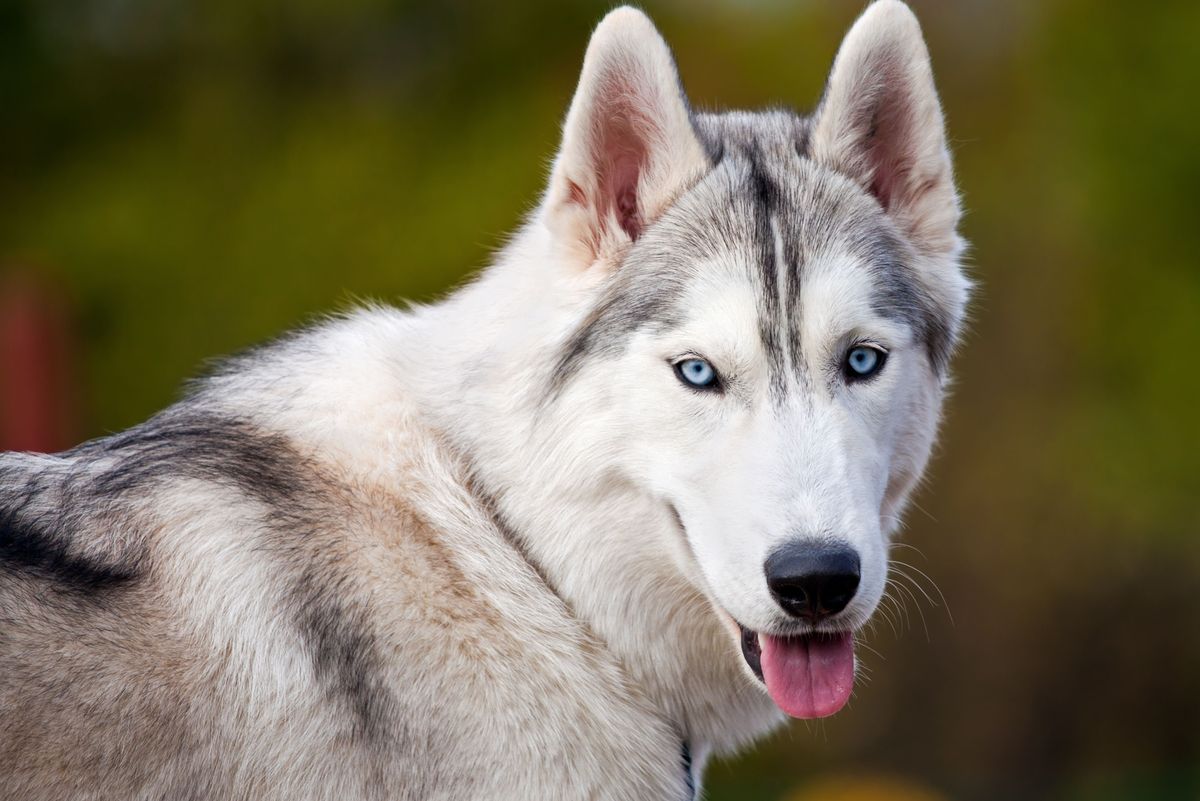
Breed Overview
Quick facts at a glance — size, lifespan & key traits
Temperament & Training
🎯 Decision Guides for Siberian Husky Owners
Huskies were bred to pull sleds for miles — the impulse lives in their DNA. Leash training requires understanding the genetic drive behind the behavior. These three Decision Guides help you identify exactly which pattern is driving the behavior — and what to do about it.
Personality traits rated on a 1–10 scale
📖 About the Husky — 3,000 Years of Arctic Survival
The Siberian Husky was developed by the Chukchi people of northeastern Siberia over 3,000+ years — making it one of the oldest dog breeds still in existence. These dogs were not pets — they were survival tools. They pulled sleds loaded with food and supplies across hundreds of miles of frozen tundra at -60°F, slept with the family in their tents (providing warmth — the origin of the Husky's extreme social nature), and were trusted to guard children, not property. The Chukchi selectively bred for endurance, cold tolerance, efficiency (Huskies burn calories slower than any other breed their size), and a gentle, pack-oriented personality.
From Siberia to Global Icon
The breed exploded into global consciousness in 1925 during the Nome Serum Run — the "Great Race of Mercy." A diphtheria epidemic threatened to wipe out Nome, Alaska. The only serum was in Anchorage — 674 miles away across frozen wilderness. 20 mushers and 150 sled dogs — mostly Siberian Huskies — relayed the serum in just 5.5 days through -85°F blizzards. The lead dog of the final leg, Balto, became a global hero — a bronze statue of Balto stands in Central Park, NYC to this day. Another lead dog, Togo, ran the longest and most dangerous leg — 260 miles (Balto ran 55 miles). The Iditarod Trail Sled Dog Race commemorates this historic run annually.
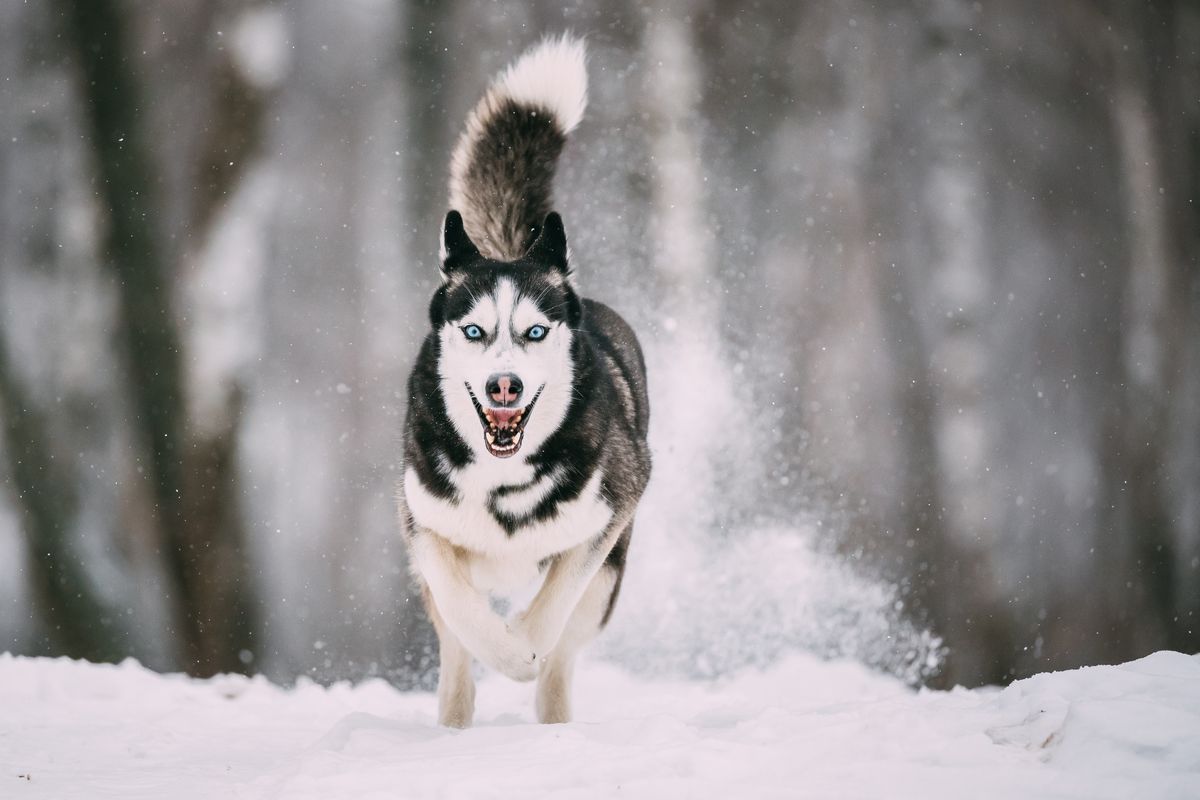
Togo — The True Hero of the 1925 Serum Run (264 Miles at Age 12)
While Balto received the statue and the fame for leading the final 53-mile leg into Nome, the true hero of the 1925 Serum Run was Togo. Togo was a sickly, unpromising puppy with a throat disorder. He was so mischievous that Leonhard Seppala — Alaska's most venerated musher — gave him away. Togo escaped by leaping through a glass window and returned home. At 8 months old, Seppala harnessed him in exasperation — and Togo ran 75 miles on his very first day in harness. During the serum run, at age 12, Togo led the team across the treacherous Norton Sound — an ice-floe crossing so dangerous no musher had attempted it in winter. Total distance: 264 miles — nearly 5 times farther than any other team. When stranded on a breaking ice floe, Seppala threw Togo across 5 feet of water. The line snapped — but Togo snatched it from the water, rolled it around his shoulders like a harness, and pulled the team to safety. Every registered Siberian Husky alive today traces to the Seppala-Ricker kennel or the Wheeler kennel — Togo is a foundational sire of the ENTIRE breed. His mounted hide is at Iditarod HQ in Wasilla, his complete skeleton is preserved at Yale University — one of the few individual dogs honored in this way. The 2019 Disney+ film Togo starring Willem Dafoe finally gave this hero the recognition he deserved.
Balto's Forgotten Story — From Hero to Dime-Museum Attraction
After the serum run, Balto was sold to a producer and abused as a dime-museum attraction in Los Angeles. In 1927, Cleveland schoolchildren raised $2,000 in two weeks to rescue him. A 2023 genetic analysis of Balto's remains found he had a healthier genome with fewer disease variants than modern purebred dogs — his ancestry: 39% Husky, 18% Greenland Dog, 17% Chinese Village Dog.
💛 Personality & Temperament
Huskies are the comedians of the dog world — dramatic, vocal, and convinced that every rule is negotiable. They don't obey commands — they consider your request and decide whether it benefits them.
Key Personality Traits
- 🎭 Dramatic, vocal, and operatic: Huskies don't bark — they howl, yodel, "woo-woo," scream, and hold entire conversations with their owners. YouTube is filled with "talking Husky" videos for a reason. They'll argue with you loudly when asked to do something they don't want to do.
- 🛡️ World's worst guard dog: Huskies love everyone equally: family, strangers, delivery drivers, burglars, that squirrel, the mailman. They were bred to be gentle with children and non-aggressive toward humans — and 3,000 years of genetics stick. A Husky will greet an intruder with wagging tail and demand belly rubs.
- 🧠 Intelligent but NOT obedient: Huskies are brilliant problem-solvers (opening doors, escaping enclosures, manipulating humans) but score near the bottom in obedience. They're independent thinkers — sled dogs must make split-second decisions without musher input to avoid thin ice. This independence is adaptive, not defective.
- 🐺 Pack animals — MUST have companionship: Huskies need another dog or constant human presence. Isolation = destruction, howling, and escape attempts.
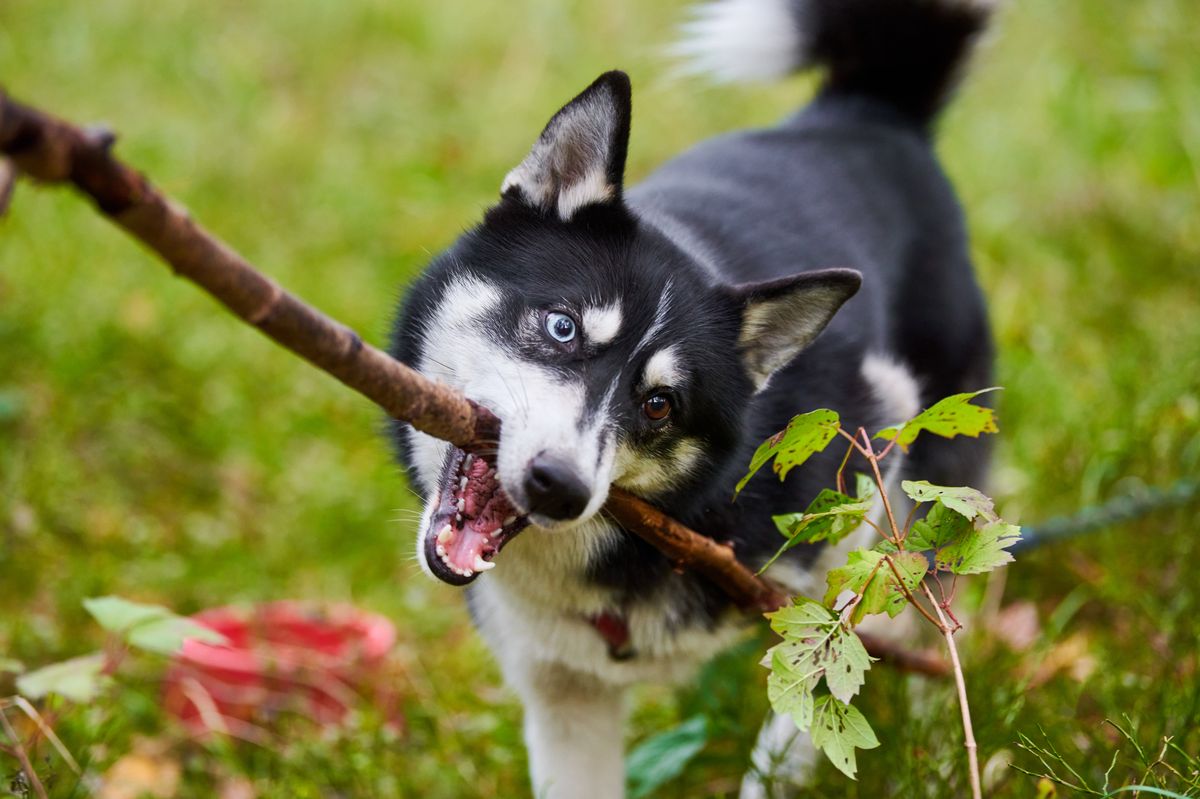
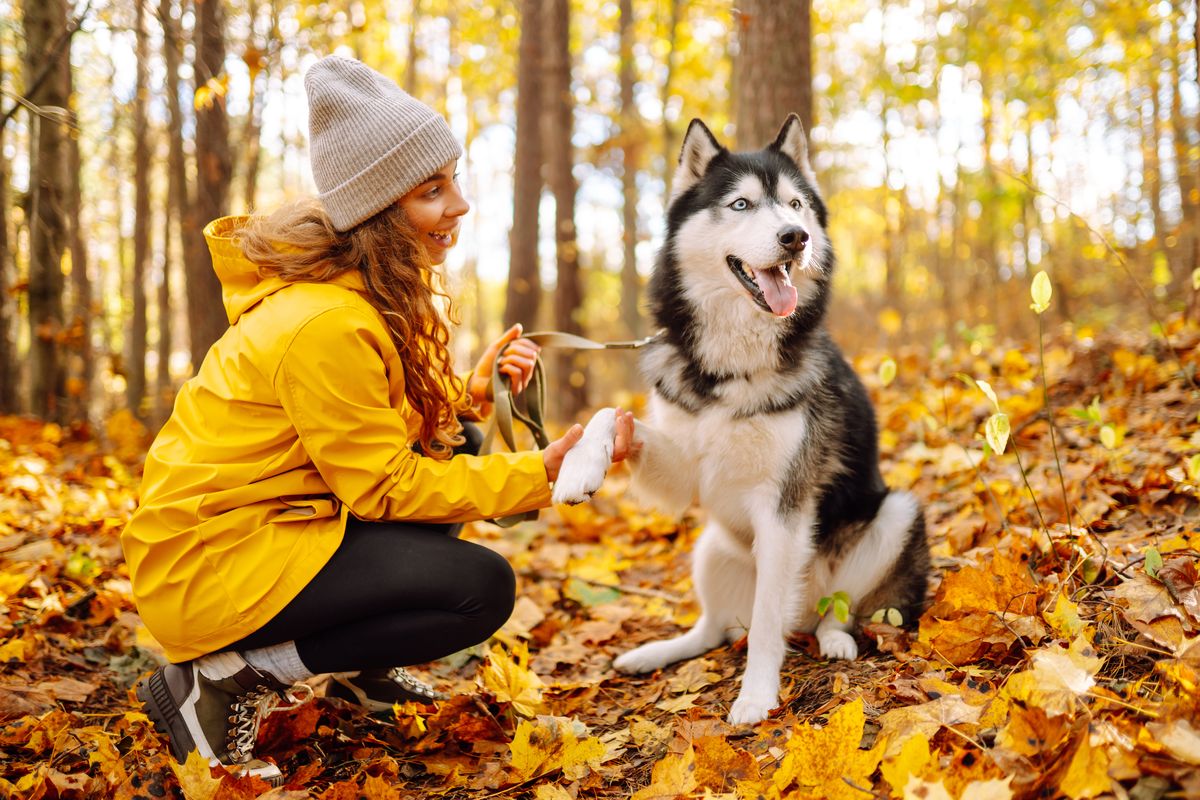
⚠️ The Escape Artist — Containment Engineering
🧬 Blue Eyes Genetics — The ALX4 Gene
Huskies have the highest rate of blue eyes of any breed — and in 2018, scientists discovered why. A duplication in the ALX4 gene on chromosome 18 causes reduced pigment production in the iris, creating the characteristic ice-blue color. Remarkably, this mutation appears to have occurred JUST ONCE in a single ancestral dog — meaning every blue-eyed Husky alive today shares the exact same genetic mutation from one ancient ancestor. Huskies can also have heterochromia (one blue, one brown), parti-colored eyes (blue and brown in the SAME eye), and bi-eyed patterns. Blue eyes in Huskies do NOT correlate with deafness (unlike white-coat/blue-eye combinations in other breeds like Dalmatians).
⚕️ Health & Wellness
- Juvenile Cataracts: Hereditary, bilateral cataracts appearing at 6-18 months — can cause blindness by age 2-3. DNA test available. All breeding Huskies must be eye-tested.
- Zinc-Responsive Dermatosis: A breed-specific skin condition — Huskies don't absorb zinc efficiently, causing crusty lesions around the mouth, eyes, and paw pads. Managed with lifetime zinc supplementation.
- Hypothyroidism: Very common — annual thyroid screening from age 3.
- Hip Dysplasia: Relatively low rate (~5%) compared to other medium-large breeds.
- PRA (Progressive Retinal Atrophy): DNA test available.
🏃 Exercise & Activity
Huskies are marathon athletes bred to run 100+ miles per day. A Husky without adequate exercise is a destructive, howling, escaping nightmare.
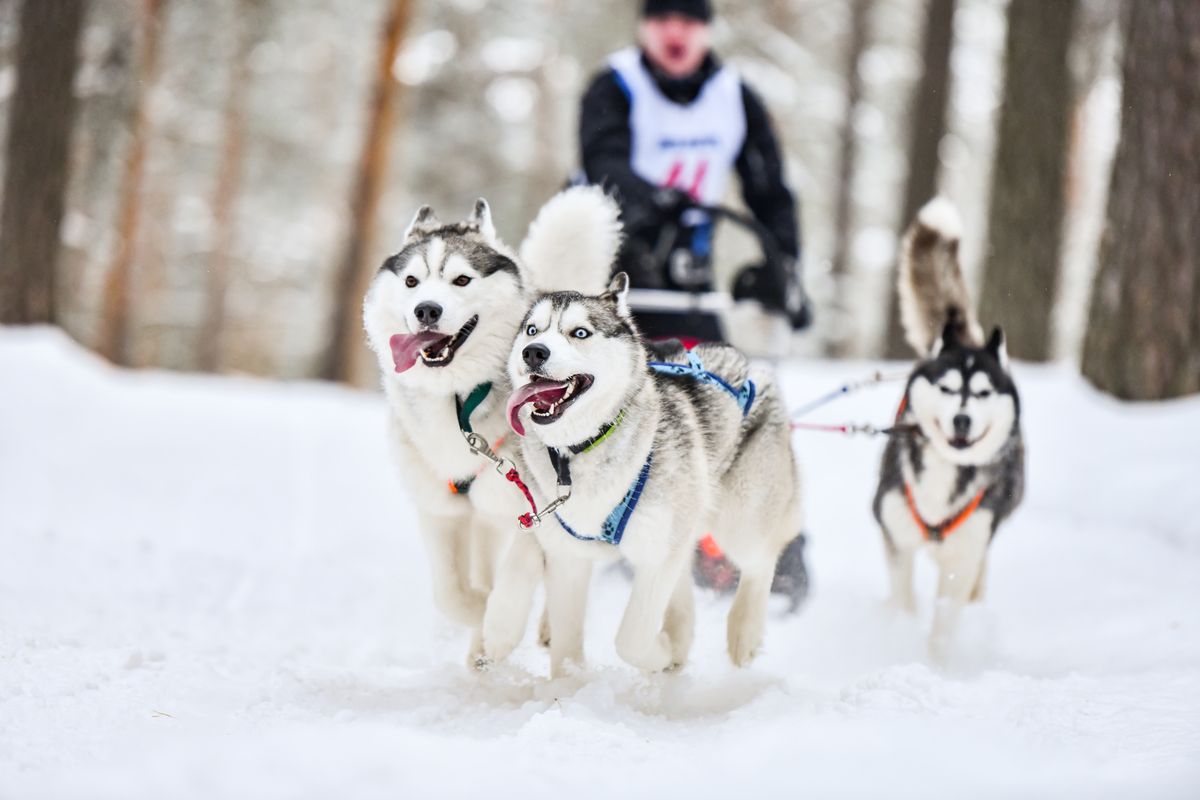
- Minimum 2 hours of vigorous exercise daily: Running (canicross — running with your dog), bikejoring (dog pulls bicycle), sledding/skijoring in winter, hiking, mushing sports.
- Mental work ESSENTIAL: Puzzle toys, scent games, obedience challenges. A bored Husky destroys drywall.
- NEVER off-leash in unfenced areas: Their prey drive + independence + recall refusal = lost dog. Period.
- Heat warning: Huskies overheat dangerously fast. NEVER vigorous exercise above 70°F. Early morning/late evening only in summer.
✂️ Grooming — The Coat Blow Apocalypse
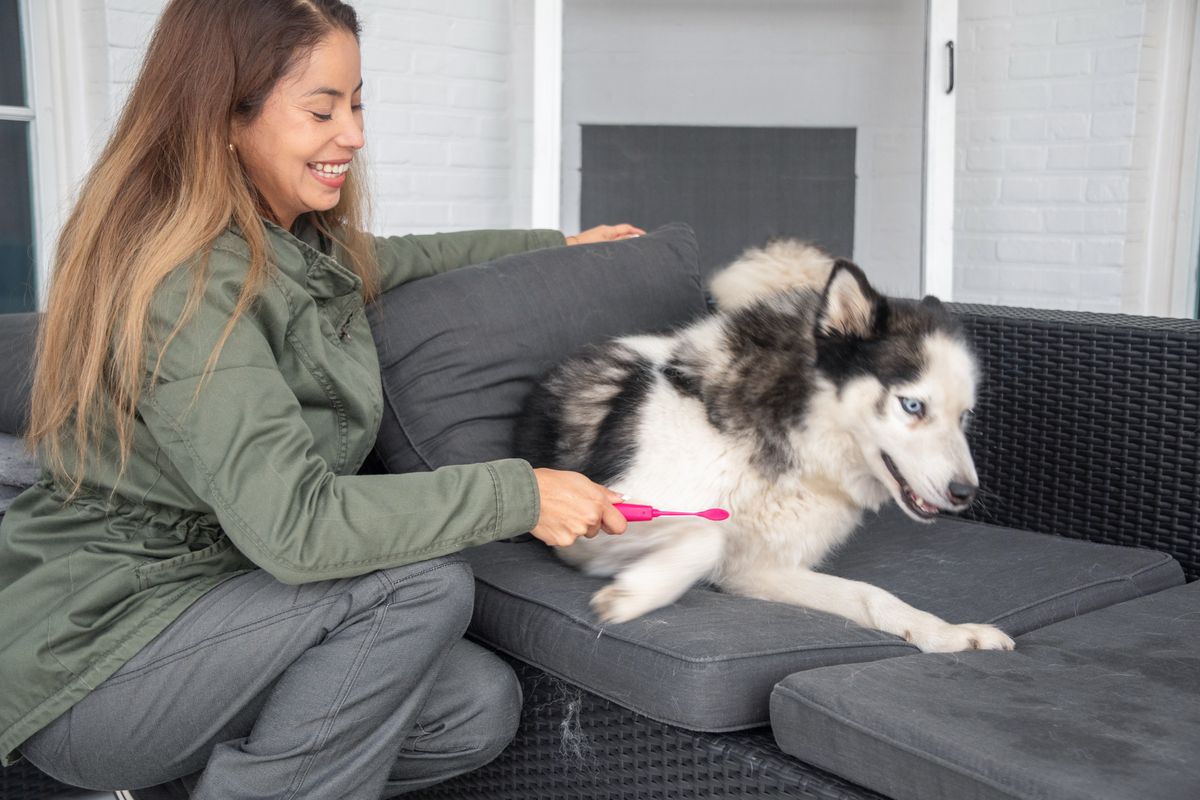
The Husky's legendary double coat sheds moderately year-round — and then TWICE a year, their entire undercoat comes out in massive tufts over 2-3 weeks. This is the "coat blow." You will fill multiple trash bags with fur. You will find Husky fur in your food. You will vacuum twice a day and still lose. Never shave a Husky — the double coat insulates against BOTH heat and cold. Shaving permanently damages thermoregulation and exposes skin to sunburn.
- Brushing 2-3× weekly (daily during coat blow). Undercoat rake + slicker brush essential.
- High-velocity dryer highly recommended for coat blow season — blows out loose undercoat in minutes.
- Bathing every 6-8 weeks. Huskies are naturally very clean — they groom themselves like cats.
Care Needs
Daily care requirements & suitability ratings
Exercise
2h+ vigorous daily. Mushing sports, running, hiking. Never off-leash.
EXTREMEShedding
Coat blow apocalypse 2×/year. Fur tumbleweeds. Vacuum daily.
LEGENDARYContainment
6ft fence + underground barrier + coyote rollers. Houdini-proofing.
MAXIMUM SECURITYHeat Sensitivity
Miserable above 75°F. AC mandatory. Summer = early AM/late PM only.
HEAT INTOLERANTVocalization
Howls, yodels, woo-woos, arguments. Not for apartments.
EXTREMELY VOCALGrooming
2-3× weekly brushing. Daily during coat blow. Never shave.
MODERATE-HIGH🍽️ Feeding & Nutrition
- High-quality, high-protein (>30%) food — Huskies have unusually efficient metabolisms. They need fewer calories per pound than most breeds their size.
- Daily caloric needs: 1,000–1,600 kcal. They self-regulate — many Huskies eat only what they need and stop, unlike Labs/Beagles.
- Zinc supplementation often necessary — discuss with vet.
- Feed 2 meals/day. Huskies are not prone to bloat but deep chest warrants caution.
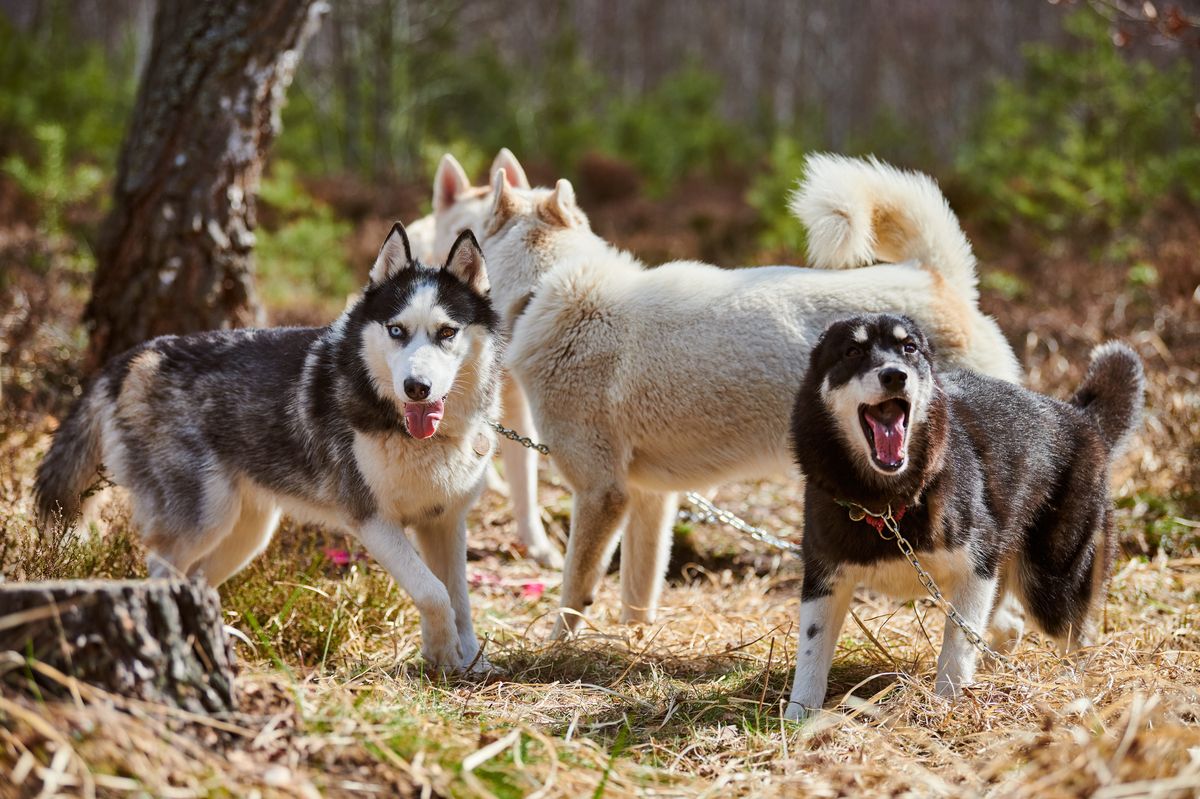
Color Variations
One of the most colorful breeds — all colors accepted per AKC
Cost Breakdown
| Expense Category | Estimated Cost (USD) |
|---|---|
| 🐶 Puppy (eye-tested, health-screened parents) | $800 – $2,000 |
| 🍖 Annual Food | $500 – $1,000 |
| 🏥 Annual Vet + Eye Exams | $500 – $1,200 |
| 🚪 Containment (fence reinforcement, GPS collar) | $500 – $3,000 |
| 💵 Annual Total | $2,500 – $5,200 |
| 💵 Lifetime (12–15 yrs) | $32,000 – $72,000 |
👤 Ideal Owner Profile
✅ Great For
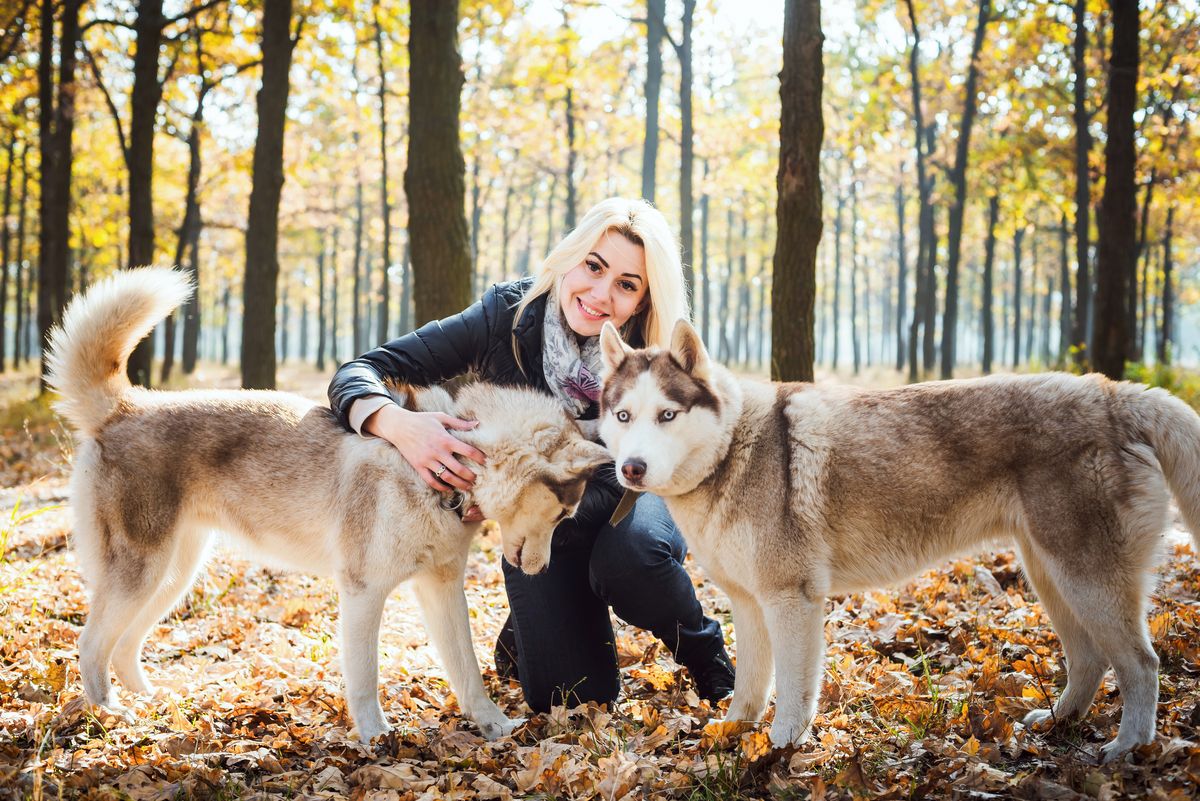
- Marathon runners, cyclists, skiers — people who already do endurance sports
- Multi-dog households — Huskies thrive with canine companionship
- Experienced dog owners who value independence over obedience
- Cold-climate dwellers with secure, large yards
⚠️ Not Ideal For
- Apartment/sedentary owners — this is an Arctic athlete
- People wanting off-leash reliability — NEVER gonna happen
- Those who value a quiet, orderly home — Huskies are chaos gremlins
- Hot-climate dwellers without AC — cruel to the dog
- First-time dog owners — the escape artist + independence combo breaks people
💡 Fun Facts & Trivia
Balto's statue in Central Park: A bronze statue of Balto — the lead Husky of the 1925 Serum Run's final leg — stands in NYC's Central Park with the inscription: "Endurance · Fidelity · Intelligence."
One ancestor — all blue eyes: The ALX4 gene mutation causing blue eyes occurred ONCE in a single ancient dog. Every blue-eyed Husky shares this one ancestor's genetic gift.
Metabolic miracle: Huskies can run 100+ miles/day for days without depleting glycogen stores — their metabolism seamlessly switches to fat-burning. Scientists STILL don't fully understand how.
Togo ran 260 miles — Balto ran 55: The unsung hero of the 1925 Serum Run was Togo, who ran the longest, most dangerous leg at age 12. Balto got the statue; Togo got history's respect.
They sing — not bark: Huskies rarely bark. They howl, yodel, chirp, and "woo" — a vocal range that's earned them the nickname "the opera singers of the dog world."
Togo escaped through a glass window: Given away as a puppy for being uncontrollable, Togo leaped through a glass window to return to Seppala. First day in harness at 8 months: 75 miles.
Balto was healthier than modern purebreds: A 2023 DNA test found Balto had fewer genetic diseases than today's purebred dogs. His diverse ancestry made him extraordinarily robust.
Poodles tried the Iditarod — got banned: A poodle team once entered the Iditarod. Northern breeds only rule was created immediately after.
Sleep in -60°F — happily: Huskies prefer sleeping outside in snow rather than indoors. Their coat is so efficient that snow doesn't melt on their back — body heat stays locked inside.
💬 Comments & Questions
Comments are temporarily unavailable.