
German Shepherd
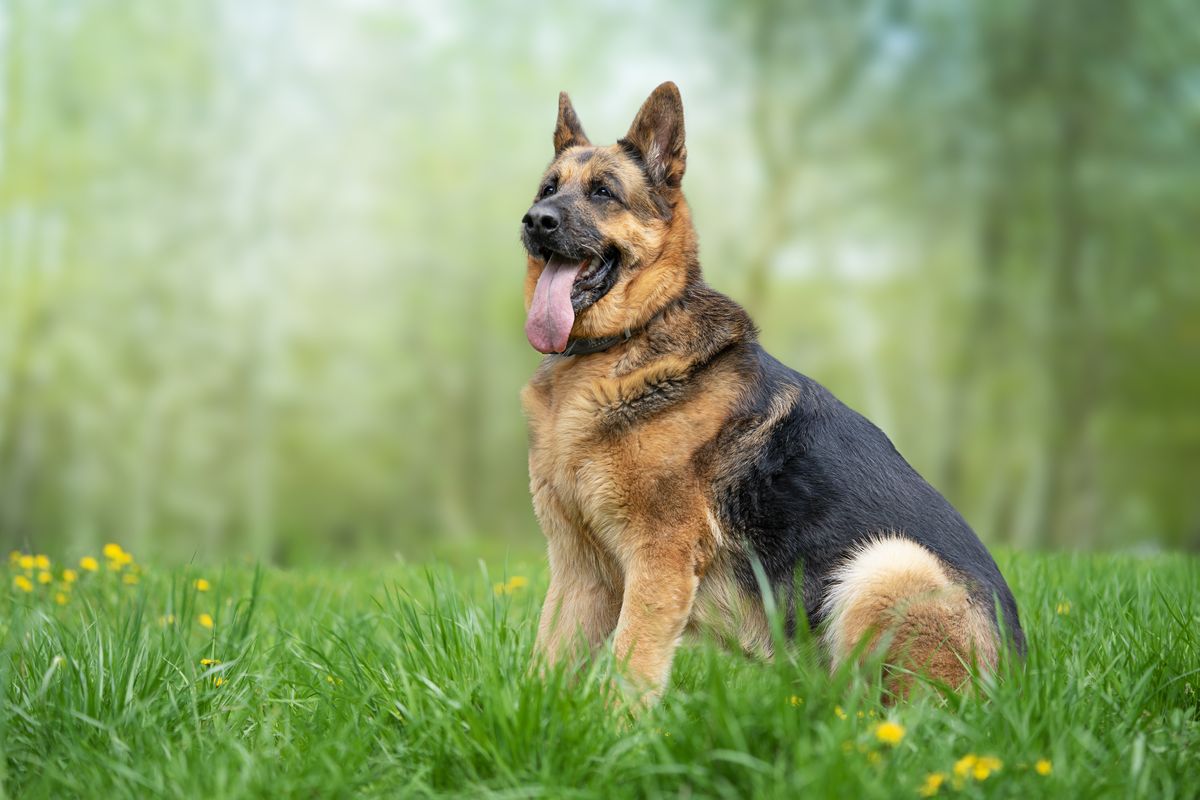
The world's #1 police & military working dog — 1M+ working globally, #4 AKC, and arguably the most versatile working breed on Earth. That noble wolf-like silhouette, those almond eyes radiating intelligence, that unbreakable loyalty to one handler — the GSD is a breed apart. Discover everything in our complete 2026 breed guide, including DM (degenerative myelopathy), the Show vs Working line split, and why this breed needs a purpose, not just a home.
Breed Overview
Quick facts at a glance — size, lifespan & key traits (FCI Standard)
Temperament & Training
🎯 Decision Guides for German Shepherd Owners
GSDs bond intensely with their handler but need structured proofing — their focus can collapse in new environments or around other dogs. These three Decision Guides help you identify exactly which pattern is driving the behavior — and what to do about it.
Personality traits rated on a 1–10 scale
📖 About the German Shepherd — Captain von Stephanitz
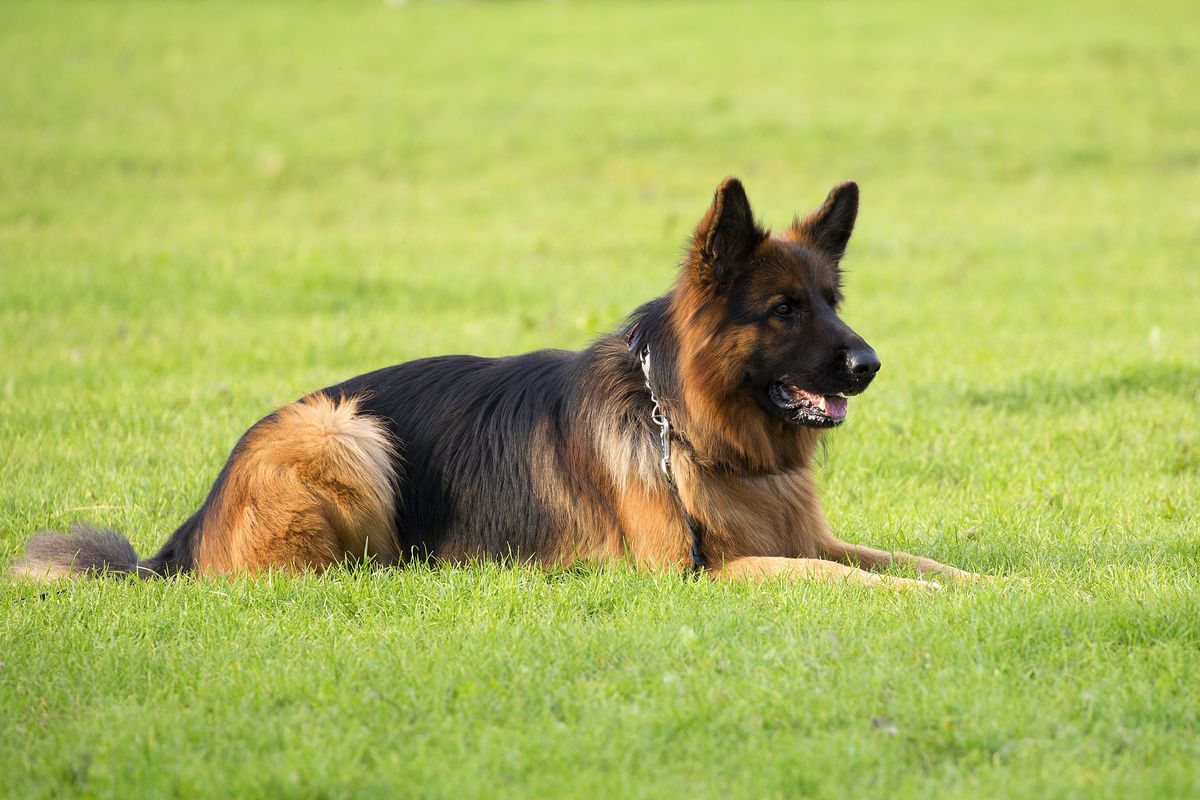
The German Shepherd Dog is one of the youngest major breeds — its entire history spans just 126 years. In April 1899, a German cavalry officer named Captain Max von Stephanitz attended a dog show in Karlsruhe and saw a wolf-like dog named Hektor Linksrhein. Von Stephanitz bought him on the spot for 200 gold marks, renamed him Horand von Grafrath, and registered him as the VERY FIRST German Shepherd Dog — SZ1 in the newly founded Verein für Deutsche Schäferhunde (SV). Every single German Shepherd alive today descends from Horand von Grafrath.
A Breed Built on Utility, Not Fashion
Von Stephanitz's vision was radical for its time: "Utility is the true criterion of beauty." He didn't care about coat color or ear shape — he wanted the ultimate herding and working dog. The breed's rise to global prominence came through World War I and II, where GSDs served as Red Cross dogs, messengers, sentries, and mine detection dogs. A German Shepherd named Rin Tin Tin, rescued from a WWI battlefield by an American soldier, became one of Hollywood's biggest stars in the 1920s — he signed his own contracts with a paw print and received 10,000 fan letters per week. Today, the German Shepherd is the #4 AKC breed and the #1 police, military, and protection dog worldwide — with over 1 million actively working GSDs in security, military, search-and-rescue, explosive detection, and service roles.
💛 Personality & Temperament
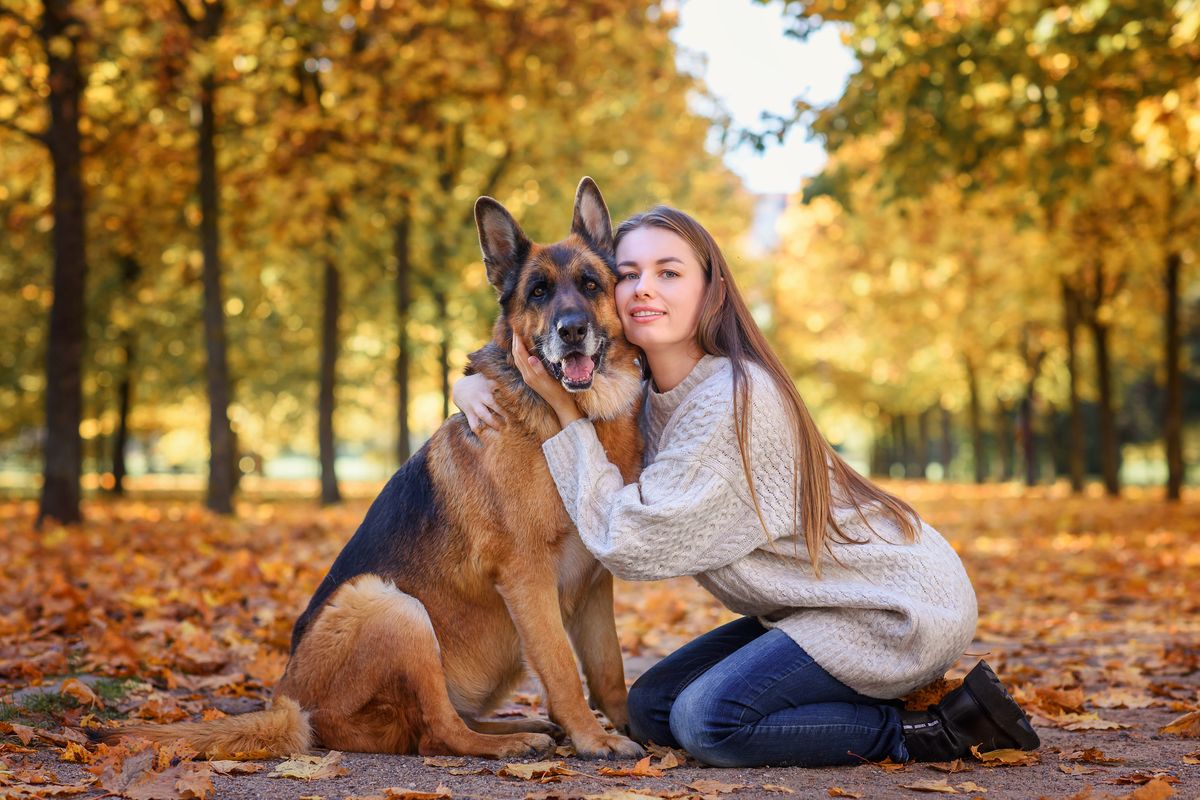
The German Shepherd has a dual nature that confuses people who've never owned one: with their family, they're gentle, goofy, and affectionate. With threats, they're fearless, decisive, and lethal. This is not a Golden Retriever in a police uniform — it's a serious working breed that requires understanding, respect, and a job.
Key Personality Traits
- Unbreakable loyalty — ONE person: GSDs bond intensely with one handler. They'll love the whole family, but one person is their sun and moon. This is the breed that will die for you without hesitation — and that level of devotion demands equal commitment in return.
- Brilliant but demanding: Ranked #3 most intelligent breed (Stanley Coren). A GSD can learn a new command in under 5 repetitions and obeys first commands 95%+ of the time. But intelligence without direction becomes destruction, neurosis, and reactivity.
- Natural guardian — not trained, BORN: A GSD doesn't need protection training to guard their home. Genetic protective instinct kicks in at sexual maturity (12-18 months). Proper socialization from 8-16 weeks is non-negotiable — an unsocialized GSD becomes a liability.
- Aloof with strangers: They are NOT Golden Retrievers. A well-bred GSD is indifferent to neutral toward strangers — not aggressive, not friendly. They watch, assess, and stay close to their handler. This is correct temperament, not a flaw.
- Sensitive despite the tough image: GSDs are emotionally sensitive — harsh training destroys their confidence. They need fair, consistent, positive leadership. Yelling at a GSD doesn't make them tougher; it makes them anxious and mistrustful.
🔍 Show Line vs Working Line — The Breed's Deepest Divide
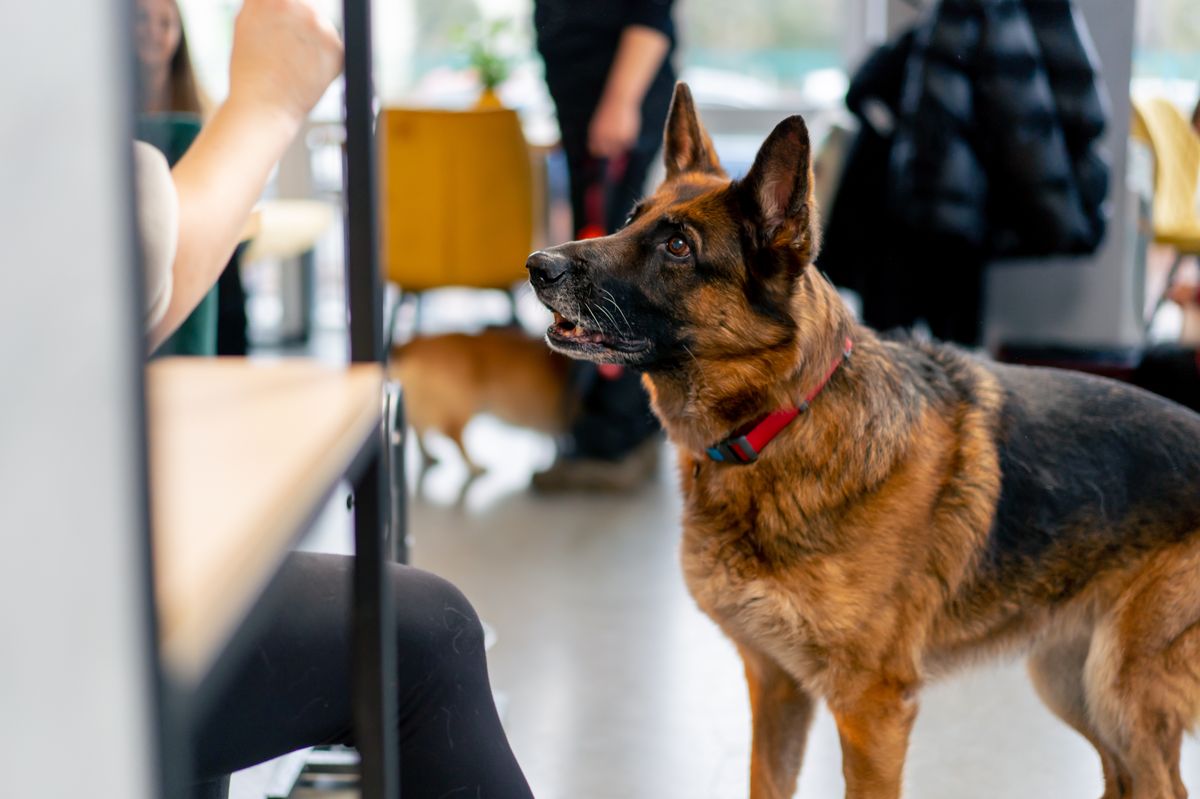
No breed split is more significant or consequential than the GSD's. Choosing the wrong line for your lifestyle is the #1 reason GSDs end up in shelters.
| Feature | Show Line | Working Line |
|---|---|---|
| Build | Angulated rear, sloped back, larger, heavier bone | Straight back, square build, leaner, more athletic |
| Energy | Moderate-High — needs daily work | EXTREME — bred to work all day, every day |
| Drive | Moderate prey & defense drive | Intense — ball/toy/food drive off the charts |
| Temperament | Calmer, more family-oriented | Sharper, harder, needs a JOB — not a pet |
| Best For | Active families, sport homes, therapy | Police, military, Schutzhund/IGP, experienced handlers |
| Hip Score | Often better — show breeders screen heavily | Varies — working ability prioritized over structure |
⚠️ DM — Degenerative Myelopathy (The GSD's Genetic Shadow)
⚕️ Health & Wellness — The Complete Panel
The GSD is a generally robust breed, but irresponsible breeding has concentrated several devastating conditions. A responsible GSD breeder screens for ALL of the following:
Genetic Diseases (DNA Tests Available)
- DM — Degenerative Myelopathy (SOD1 gene): Fatal spinal cord degeneration — see detailed section above. DNA test essential.
- MDR1 — Multi-Drug Resistance Gene: Causes life-threatening neurotoxicity from common drugs (ivermectin, loperamide, certain chemo agents). DNA test identifies affected dogs.
- Hemophilia A (Factor VIII Deficiency): A blood-clotting disorder — affected dogs can bleed to death from minor injuries or routine surgery. DNA test available.
Structural & Acquired Conditions
- Hip Dysplasia: Affects ~20% of GSDs (OFA data). OFA or PennHIP screening mandatory for all breeding dogs. The sloped back in show lines can exacerbate this.
- Elbow Dysplasia: Affects ~12% of GSDs. Front-leg lameness, often bilateral.
- Bloat (GDV): Deep-chested breed — #1 cause of sudden death in adult GSDs after DM. Prophylactic gastropexy recommended during spay/neuter.
- EPI — Exocrine Pancreatic Insufficiency: The pancreas stops producing digestive enzymes — dog starves while eating ravenously. Common in GSDs. Diagnosed via TLI blood test. Managed with lifelong enzyme supplementation.
- Perianal Fistulas: Painful, draining tracts around the anus — disproportionately common in GSDs. Requires immunosuppressive therapy or surgery.
- Allergies (Atopic Dermatitis): Chronic itching, paw licking, recurrent ear infections — often environmental.
- Pannus (Chronic Superficial Keratitis): An immune-mediated eye disease causing pigment and blood vessels to grow over the cornea — can cause blindness if untreated. GSDs are the #1 affected breed.
🏃 Exercise & Activity
German Shepherds are high-drive working dogs bred to herd sheep all day across rough terrain, then guard the flock all night. A GSD without adequate exercise and mental work becomes destructive, reactive, barking-obsessed, and potentially aggressive.
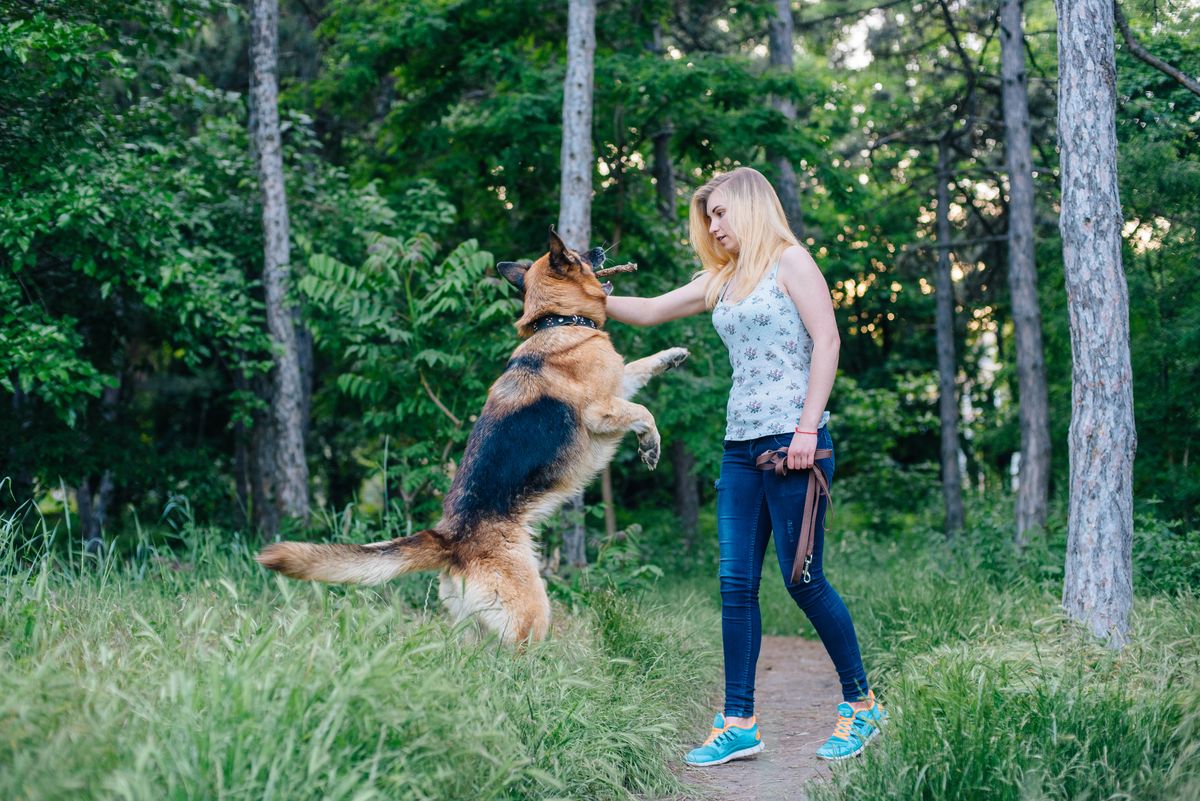
- Minimum 1.5–2 hours of vigorous exercise daily: Running, structured fetch with obedience commands, hiking, swimming, agility, scent work, Schutzhund/IGP training.
- Mental stimulation is NON-NEGOTIABLE: A GSD's brain will invent its own job if you don't provide one — and you won't like what it invents (digging trenches, eating walls, herding children, barking at shadows).
- Weekend warrior won't work: Crate all week + hike on Saturday = neurotic, anxiety-riddled GSD. They need DAILY structured work.
- NOT an apartment dog without extraordinary commitment. They need space, a securely fenced yard, and an experienced owner who views daily training as non-negotiable.
✂️ Grooming & Maintenance
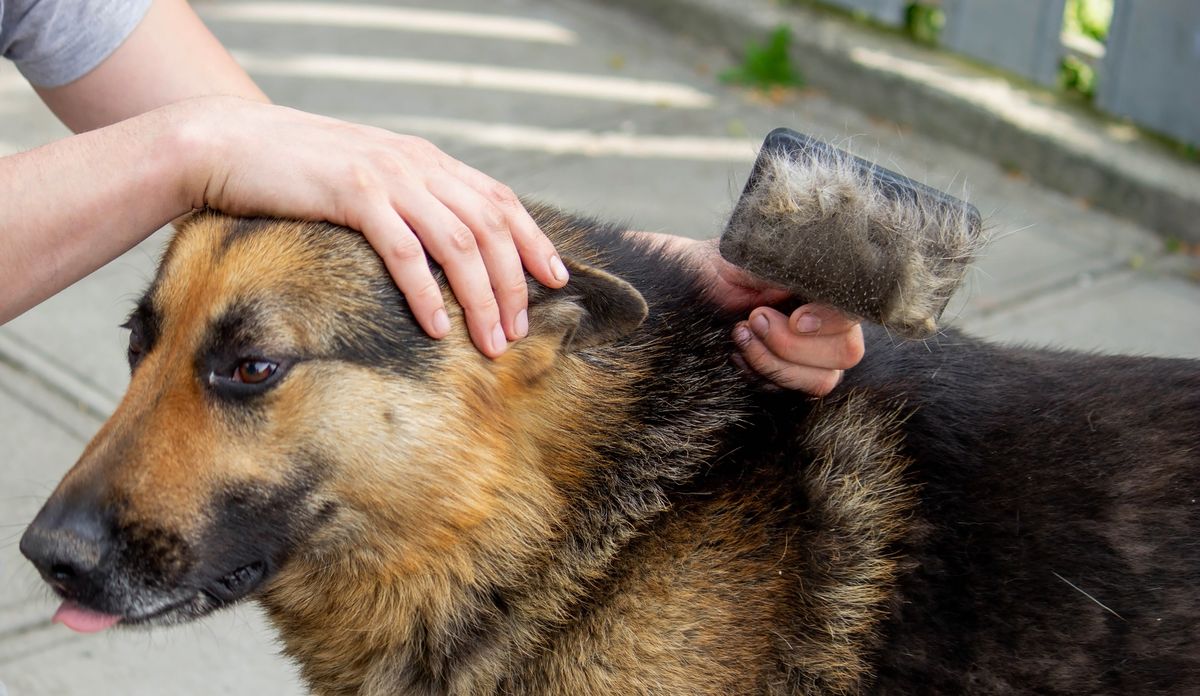
German Shepherds are affectionately known as "German Shedders" for a reason. Their dense double coat sheds 365 days a year with two major blowouts. Here's what every GSD owner needs to know:
- Brushing 3–4 times per week minimum with an undercoat rake and slicker brush. During spring/fall coat blows: daily brushing — you'll fill multiple trash bags.
- ⚠️ The GSD coat blow is EPIC: Twice a year, they shed their entire undercoat in tufts that tumble across your floor like fur tumbleweeds. Invest in a high-velocity dryer — it blows loose undercoat out in minutes versus hours of brushing.
- Bathing every 4–6 weeks — too frequent strips coat oils. Never shave a GSD — the double coat insulates against heat AND cold. Shaving ruins thermoregulation permanently.
- Nail trims every 2–3 weeks. Active dogs on pavement wear naturally.
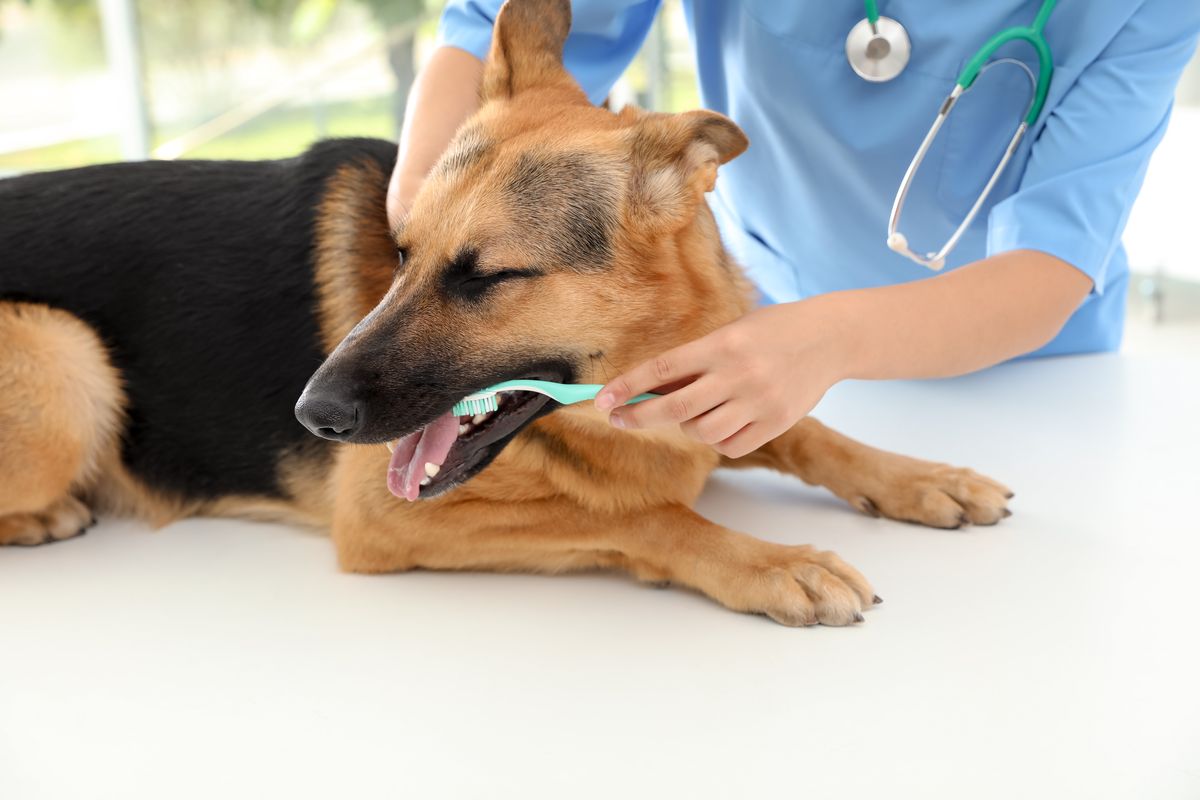
- Dental hygiene: Brush 2–3× weekly. Annual professional dental cleaning from age 3.
Care Needs
Daily care requirements & suitability ratings
Brushing
3-4× weekly (daily during coat blow). Undercoat rake + slicker.
HIGH MAINTENANCEBathing
Every 4-6 weeks. High-velocity dryer for coat blow season.
REGULARShedding
365 days/year. "German Shedder" — fur tumbleweeds are real.
CONSTANTExercise
1.5-2h vigorous daily. Must include MENTAL work — not just walks.
EXTREMEMental Stimulation
CRITICAL. Scent work, obedience, tracking, IGP sport. Daily.
NON-NEGOTIABLEDental
Brush 2-3× weekly. Annual professional cleaning from age 3.
IMPORTANT🍽️ Feeding & Nutrition
German Shepherds are large, high-energy working dogs with a deep chest (bloat risk) and a breed-specific tendency toward digestive sensitivity and EPI.
Daily Feeding Guidelines
- High-quality, high-protein (>30%) large-breed formula with a named meat source as first ingredient. Avoid corn, wheat, soy, and by-products.
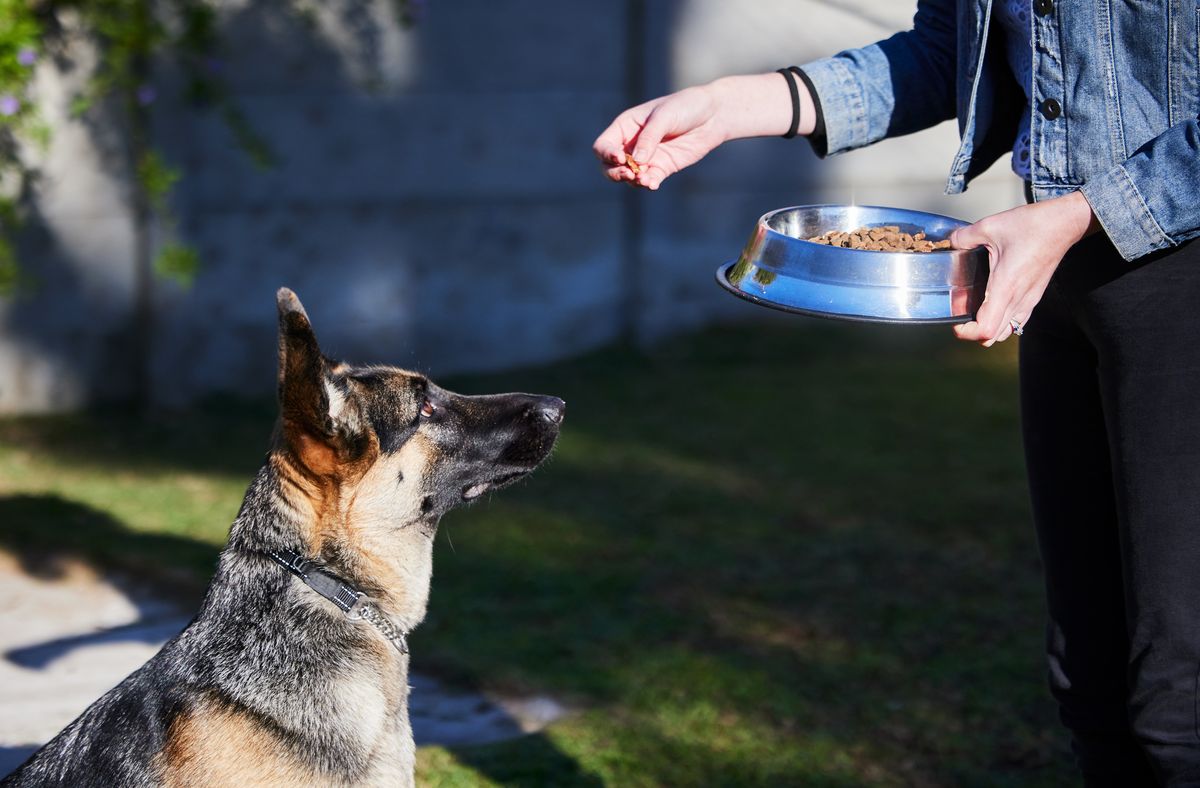
- Feed 2 measured meals per day — never one large meal (bloat risk). Use a kitchen scale, not a scoop.
- Daily caloric needs: 1,500–2,200 kcal for active adults. Working GSDs may need 2,500+.
- Elevated feeders are CONTROVERSIAL: Once thought to prevent bloat, recent studies suggest they may increase GDV risk. Floor-level slow-feeder bowls are safer.
- Joint supplements from puppyhood: Glucosamine, chondroitin, omega-3s (fish oil), and green-lipped mussel support joint health.
- No exercise 1 hour before and 2 hours after meals — bloat prevention.
Color Patterns & Markings
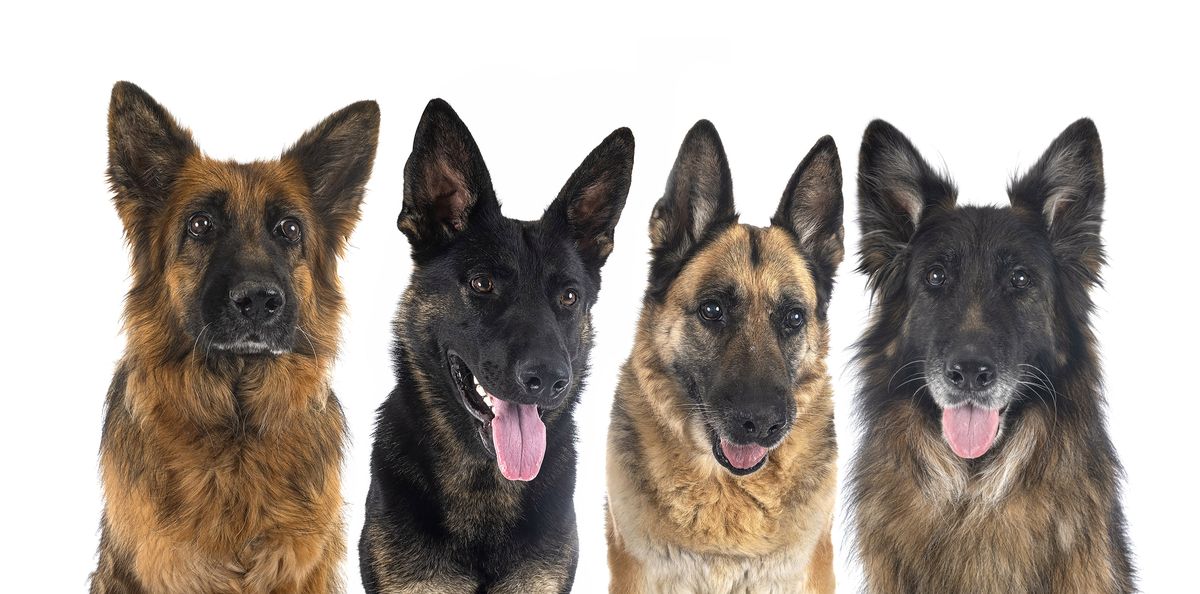
Common GSD coat patterns — FCI & AKC recognized variations
German Shepherds come in a stunning range of colors and patterns. The most iconic is the black saddle with tan/red markings — this is what most people picture. But the breed standard accepts most colors except white (AKC disqualification for conformation, though perfectly healthy as pets). The sable pattern — where each hair is banded with multiple colors — is the original and genetically dominant coat type.
* White, blue, and liver GSDs exist but are AKC conformation disqualifications. They're perfectly healthy as companions. Panda GSDs — white markings caused by a rare KIT gene mutation — are a naturally occurring but controversial pattern.
Cost Breakdown
Estimated expenses for owning a German Shepherd in 2026 (USD)
| Expense Category | Estimated Cost (USD) |
|---|---|
| 🐶 Puppy (DM/MDR1/OFA parents) | $1,500 – $4,000 |
| 🌟 Working Line / Elite Pedigree | $5,000 – $12,000+ |
| 🍖 Annual Food (large breed, quality) | $800 – $1,400 |
| 🏥 Annual Vet + Genetic Screening | $800 – $2,200 |
| 🎯 Training & Sport (Schutzhund/IGP, agility) | $1,000 – $3,000 |
| 🧸 Toys, Gear, Grooming, Misc | $600 – $1,400 |
| 📦 Initial Setup (crate, bed, bowls, harness) | $250 – $600 |
| 💵 Annual Total | $3,200 – $8,000 |
| 💵 Estimated Lifetime (9–13 yrs) | $40,000 – $104,000 |
* Costs vary by region and activity level. Training/sport costs are significant for working-line GSDs — this is not a breed you can skip training with. DM DNA test (~$75) + MDR1 (~$60) + OFA hip/elbow X-rays (~$400) are one-time costs essential for responsible ownership.
👤 Ideal Owner Profile
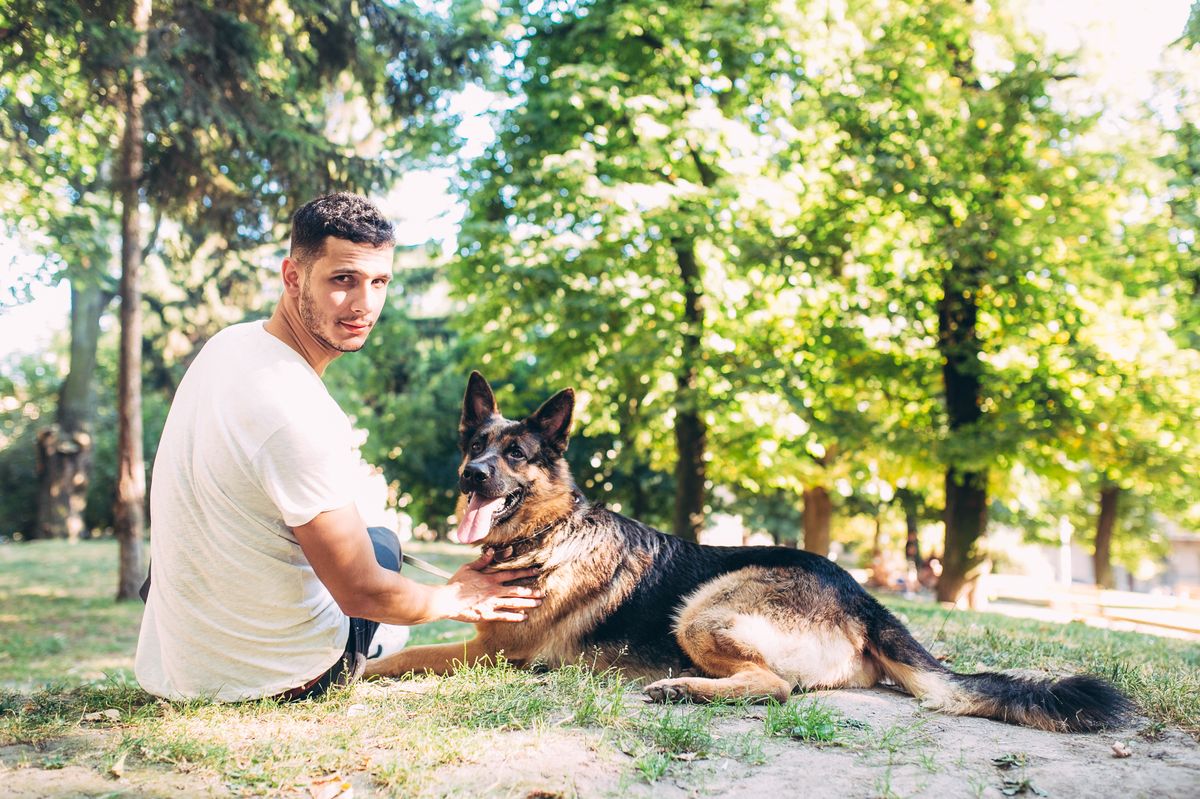
The German Shepherd is not a beginner's dog. They require an owner who understands working breeds, drive management, and structured leadership. In the wrong hands, they become a liability. In the right hands, they're unmatched in loyalty, capability, and devotion.
✅ Great For
- Experienced dog owners familiar with working breeds
- Active individuals/couples who make dog training a lifestyle
- Sport homes — Schutzhund/IGP, agility, tracking, obedience
- Police, military, SAR, and service handlers
- Families with older children who respect the dog's space
⚠️ Not Ideal For
- First-time dog owners — this is a Ferrari, not a Honda
- Apartment/sedentary owners — space + 2h daily work minimum
- People wanting a "friendly to everyone" dog — aloofness is correct temperament
- Homes where the dog is alone 8+ hours daily — GSDs need their person
- People who won't commit to training — an untrained GSD is a disaster
💡 Fun Facts & Trivia
One dog founded the breed: Every German Shepherd alive descends from Horand von Grafrath (SZ1), a dog Captain von Stephanitz bought for 200 gold marks at a Karlsruhe dog show in 1899.
Rin Tin Tin — Hollywood's biggest star: A GSD rescued from a WWI battlefield became a global film icon in the 1920s. He received 10,000 fan letters weekly and signed contracts with a paw print. At the first Academy Awards, he won Best Actor (the award was later rescinded).
#3 smartest dog breed: Stanley Coren ranked GSDs #3 out of 138 breeds in intelligence. They learn new commands in under 5 repetitions — faster than most breeds learn their own name.
DM was found in GSDs first: Degenerative Myelopathy is sometimes called "German Shepherd Degenerative Myelopathy" because it was first identified in the breed. The SOD1 DNA test was developed thanks to GSD research.
1M+ working GSDs globally: Over 1 million German Shepherds are actively deployed in police K-9 units, military, SAR, explosive detection, narcotics detection, and service work worldwide.
Nose that beats machines: A GSD's nose has 225 million scent receptors (humans have 5 million). They can track a 2-week-old scent trail, detect cancer in human breath samples, and distinguish between identical twins by smell alone.
💬 Comments & Questions
Have a German Shepherd? Share your experience, tips, or questions below!
Comments are temporarily unavailable.
We're setting up our commenting system. Check back soon!