
Doberman Pinscher
Created in the 1890s by a tax collector who needed protection on dangerous streets — the only breed in history designed specifically as a personal bodyguard. The #13 AKC breed with a 50%+ DCM heart crisis, 35+ mph speed, and the legendary USMC Devil Dog legacy. Discover everything in our complete breed guide.
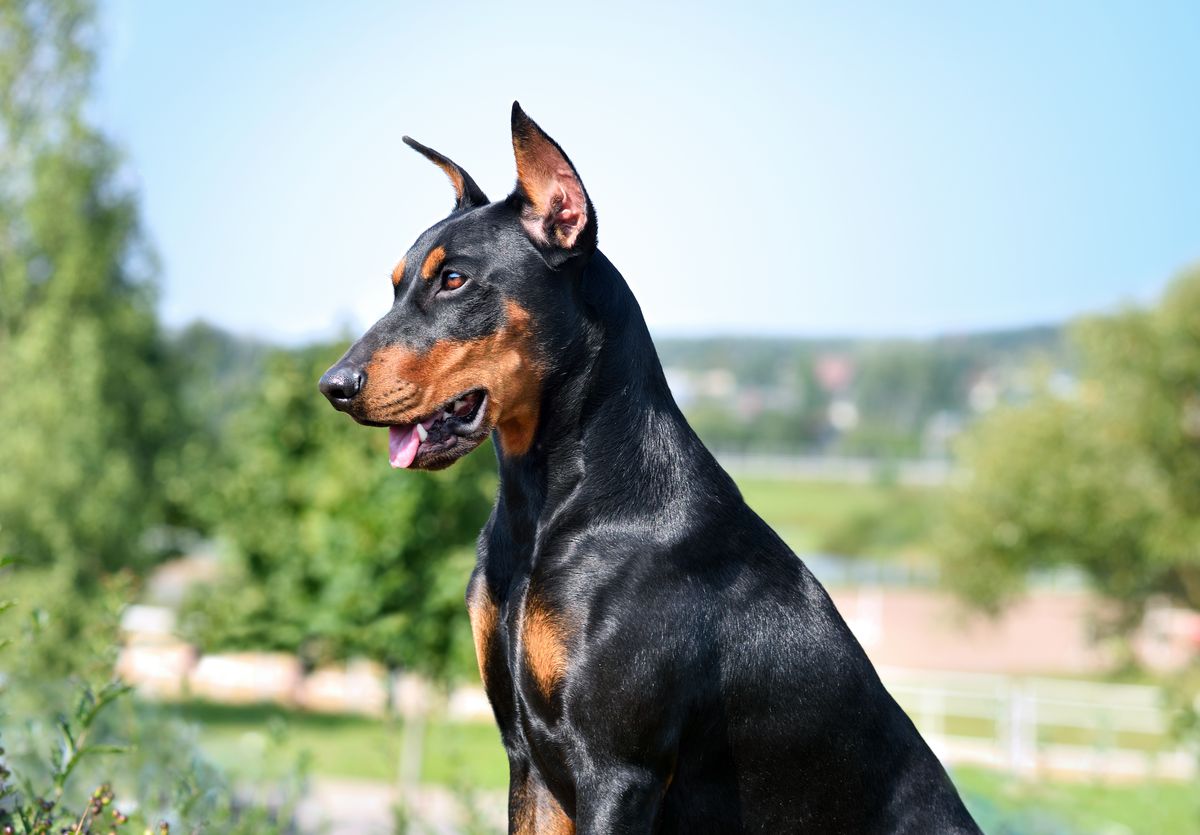
Breed Overview
Quick facts at a glance — size, lifespan & key traits
Temperament & Training
Personality traits rated on a 1–10 scale
📖 About the Doberman — The Tax Collector's Bodyguard
The Doberman Pinscher is the only breed in history created specifically as a personal protection dog. In the late 1880s in Apolda, Germany, a man named Karl Friedrich Louis Dobermann had a dangerous job: he was the town's tax collector, night watchman, and dog catcher. He needed a fearless, intelligent, and intimidating companion who could protect him as he walked through rough neighborhoods carrying large sums of money. Using his access to the town pound, he selectively crossed Rottweilers, German Pinschers, Greyhounds, Weimaraners, and Manchester Terriers — creating a dog that combined speed, strength, intelligence, and unwavering loyalty. The result was the Doberman Pinscher — the world's first purpose-bred personal guardian.
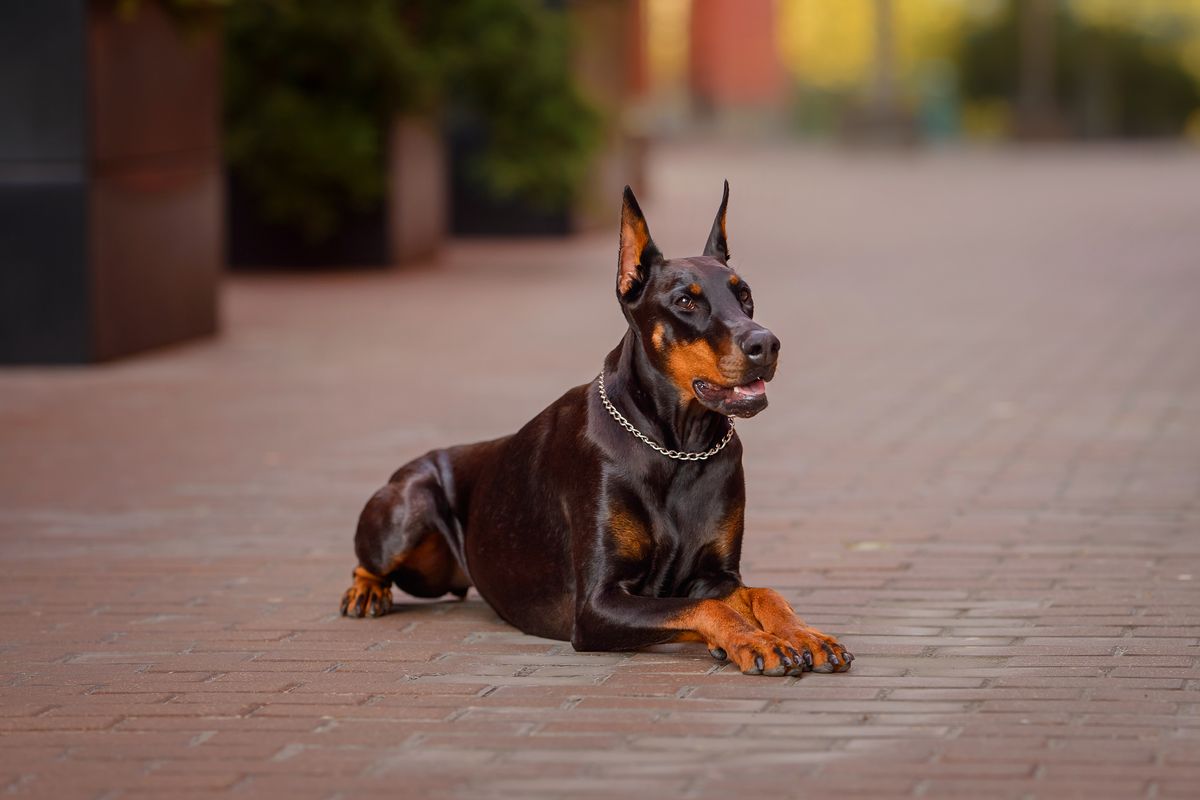
From Tax Collector's Dog to Elite Global Protector
Karl Dobermann died in 1894, never knowing his creation would become a global icon. The breed was refined by Otto Goeller, who established the first Doberman kennel. By WWII, Dobermans were the official war dog of the US Marine Corps — known as "Devil Dogs." A Doberman named Kurt became the first canine casualty of the Pacific War during the Battle of Guam, saving 250 Marines. A bronze statue of Kurt stands at the War Dog Cemetery on Guam to this day — inscribed with: "Always Faithful."
💛 Personality & Temperament
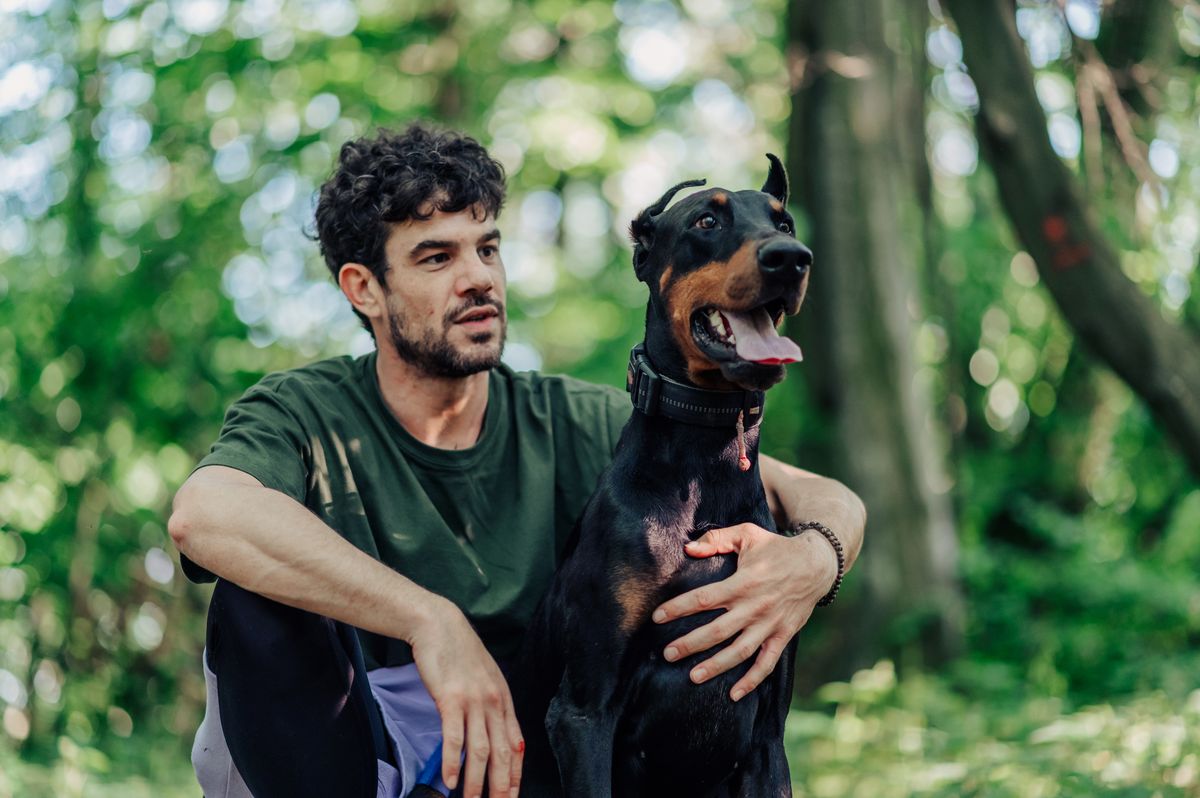
The Doberman is often called the "Velcro dog with a PhD." They bond with the intensity of a heat-seeking missile — one person becomes their entire universe. This is not a dog that loves "everyone" — this is a dog that loves YOU, tolerates your family, and watches everyone else with calculated assessment.
Key Personality Traits
- Unmatched loyalty — almost telepathic: Dobermans read body language at a level that seems psychic. They anticipate your movements, watch your face, and respond to micro-expressions you didn't know you were making. This is the breed that will place itself between you and a threat before you've even registered danger.
- Intensity personified: Everything a Doberman does is at 110%: protecting, playing, cuddling, learning. They're called "Velcro dogs" because they physically press against you constantly — a Doberman who can touch their person is a content Doberman.
- Sensitive despite the tough image: Harsh training destroys a Doberman. They're emotionally soft and deeply affected by tone of voice. Positive reinforcement + clear boundaries is the only approach that works.
- The Doberman leans — literally: Like Rottweilers, Dobermans express trust by leaning their full body against you. At 90 lbs, this is a significant commitment.
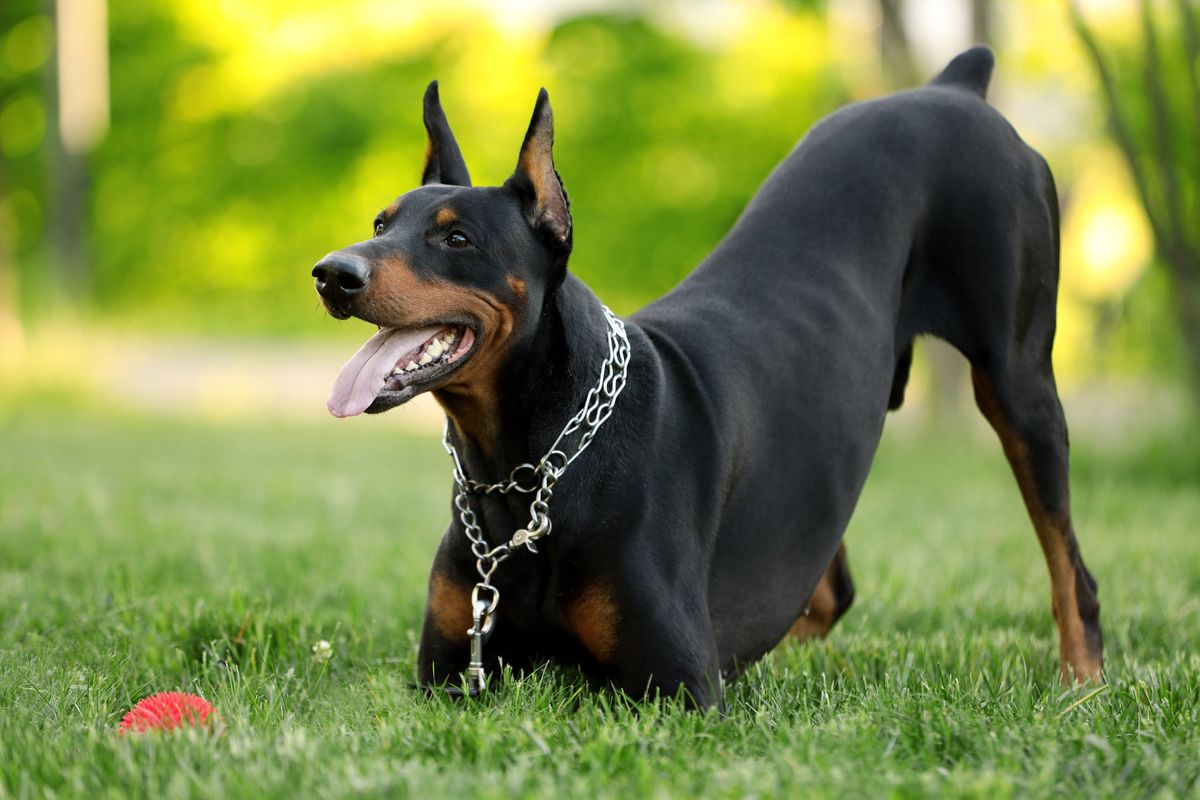

⚠️ DCM — The Silent Killer (50%+ Affected)
🔍 European vs American Dobermans
The Doberman has split into two distinct types — and the differences are significant:
| Feature | European (Working) | American (Show) |
|---|---|---|
| Build | Heavier bone, thicker neck, more substantial | Lighter, more elegant, refined silhouette |
| Drive | INTENSE — bred for Schutzhund/IGP, protection | Moderate — bred for conformation, family life |
| Temperament | Harder, sharper, needs a JOB | Softer, more family-oriented |
| DCM Rate | Slightly lower — working breeders screen heavily | Higher — show lines more affected |
| Best For | Sport, protection, experienced handlers | Active families, first-time Doberman owners |
⚕️ Health & Wellness
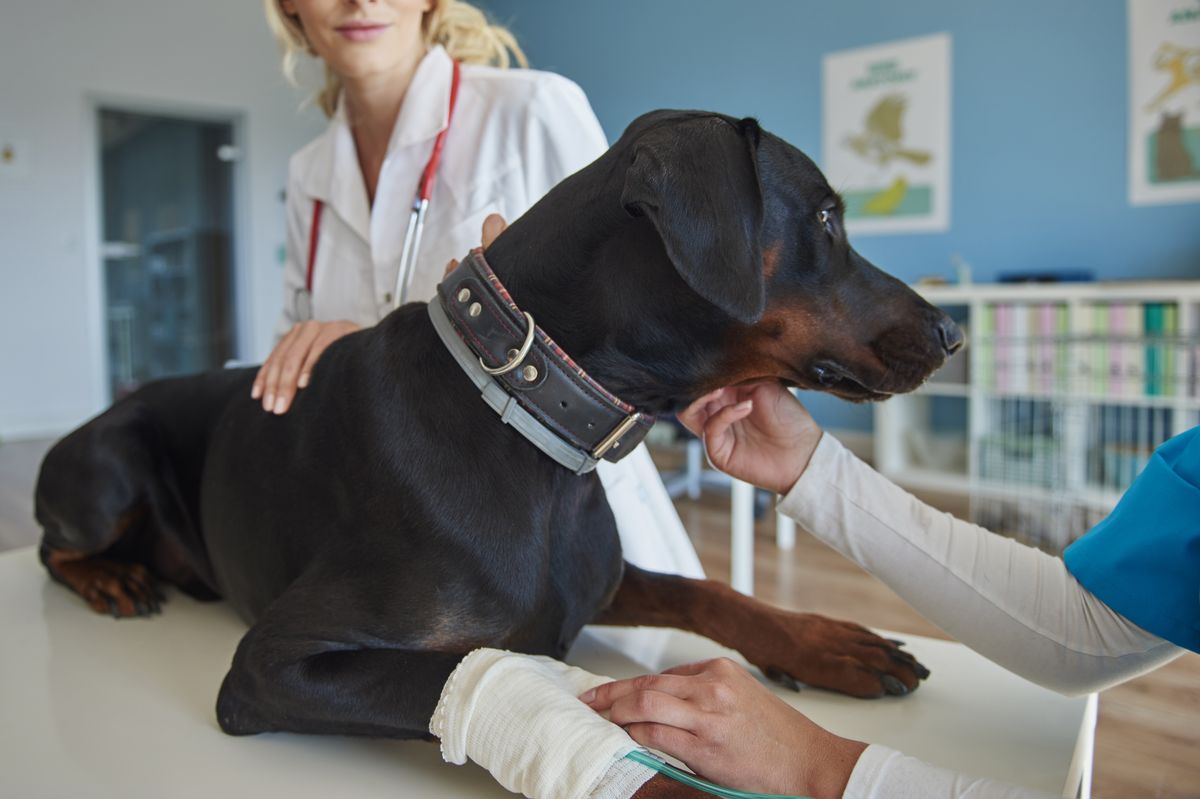
- DCM: See above — the breed's #1 crisis. Annual echo + Holter from age 2 mandatory.
- von Willebrand Disease (vWD): A blood-clotting disorder — affected dogs can bleed to death from minor cuts or surgery. DNA test available — mandatory for all breeding dogs.
- Wobbler Syndrome (Cervical Vertebral Instability): Compression of the spinal cord in the neck causing wobbling gait, neck pain, and paralysis. Dobermans are the #1 affected large breed.
- Hip Dysplasia: ~13% affected. OFA/PennHIP screening mandatory.
- Bloat (GDV): Deep-chested breed. Prophylactic gastropexy recommended.
- Hypothyroidism + Allergies: Common endocrine/immune issues.
- Color Dilution Alopecia (CDA): Affects blue and fawn Dobermans — progressive hair loss from the dilute gene.
🏃 Exercise & Activity
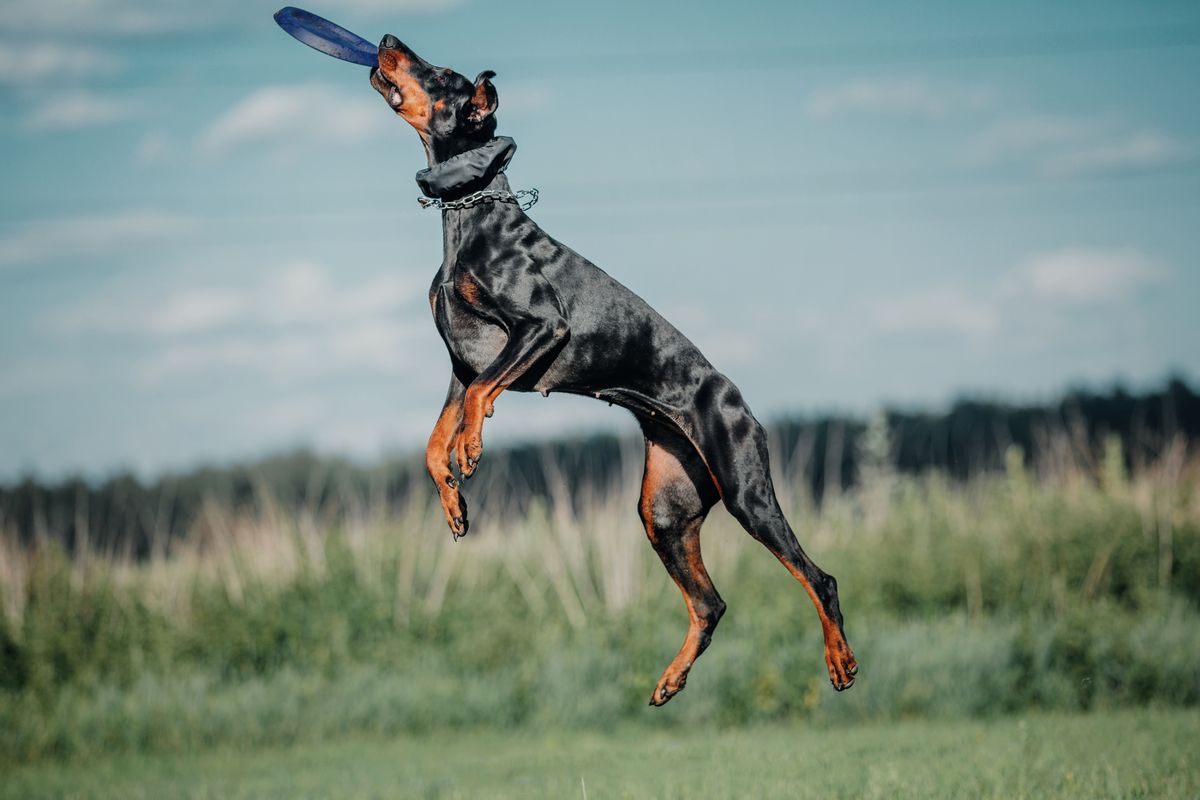
Dobermans are elite canine athletes — capable of 35+ mph bursts and marathon-level endurance. A Doberman without adequate exercise becomes destructive, neurotic, and emotionally unstable.
- Minimum 2 hours of vigorous exercise daily: Running, sprinting, agility, Schutzhund/IGP, dock diving. NOT a 30-minute walk — that's a warm-up.
- Mental work is EQUALLY critical: Scent work, obedience, protection sport, puzzle toys. A bored Doberman invents its own entertainment — and you'll hate what it invents.
- NOT an apartment dog without extraordinary commitment. They need a securely fenced yard for sprint bursts.
- Puppy exercise CONTROLLED until 18 months — growth plates in athletic breeds need protection.
✂️ Grooming & Maintenance
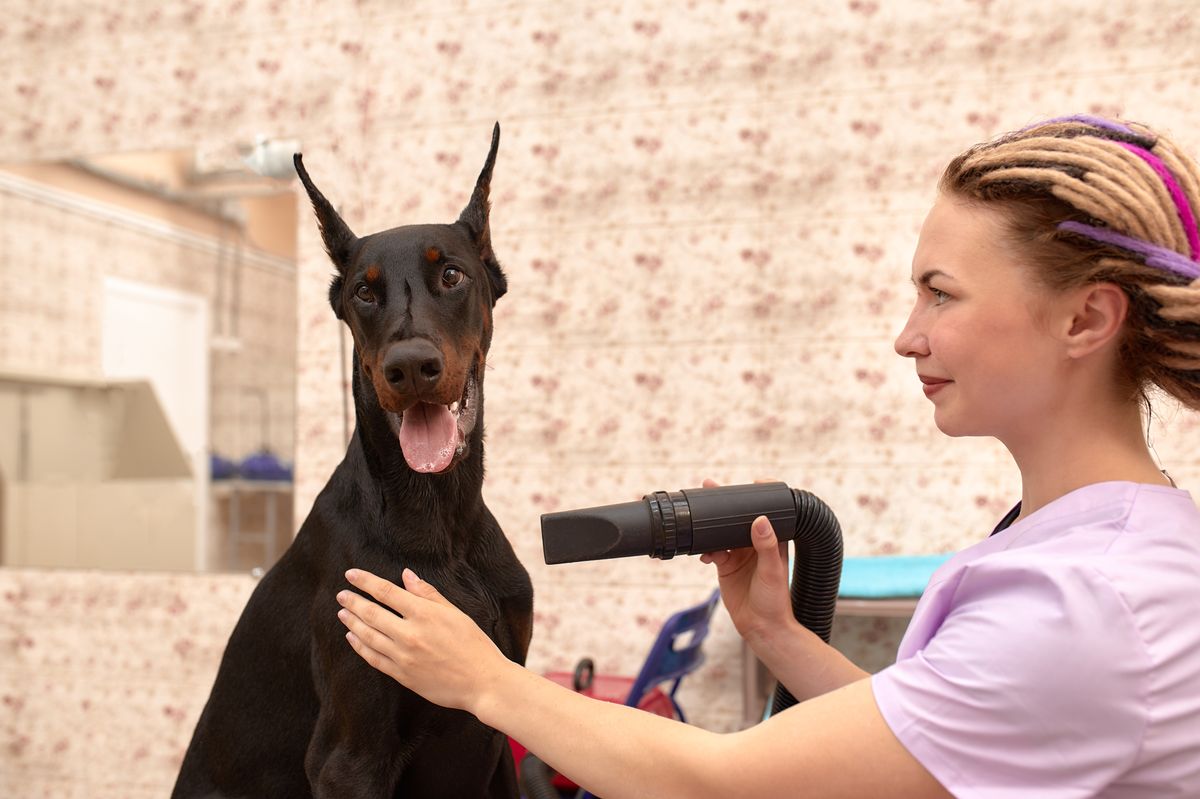
The Doberman's short, sleek single coat is the lowest-maintenance of any working breed — but they have special care needs:
- Weekly rubdown with a grooming mitt or rubber curry brush removes loose hair and distributes natural oils for that signature Doberman gleam.
- Minimal shedding compared to double-coated breeds.
- Skin care is important: Short coat = less protection. Dobermans are prone to dry skin, pressure sores, and sunburn. A soft bed is essential for preventing elbow calluses.
- Nail trims every 2 weeks — CRITICAL: Dobermans have cat-like, compact feet. Overgrown nails ruin their foot structure and gait.
- Dental: Brush 2-3× weekly. Annual professional cleaning from age 3.
Care Needs
Daily care requirements & suitability ratings
Exercise
2h+ vigorous daily. Sprint work, sport training, mental challenges.
EXTREMEMental Work
ESSENTIAL. Schutzhund/IGP, agility, scent work. Daily training.
NON-NEGOTIABLEGrooming
Weekly rubdown. Minimal shedding. The lowest-maintenance working breed.
EASIESTCardiac Screening
Annual echo + Holter from age 2. DCM kills 50%+. Non-negotiable.
MANDATORYNails
Every 2 weeks. Cat-like feet need precise nail maintenance.
IMPORTANTTraining
Professional training STRONGLY recommended. Elite working breed.
ESSENTIAL🍽️ Feeding & Nutrition
Dobermans are high-metabolism athletes with a deep chest (bloat risk) and a breed-specific need for cardiac-supportive nutrition.
Daily Feeding Guidelines
- High-quality, high-protein (>30%) food with named meat source. Taurine and L-carnitine supplementation may support cardiac health — discuss with your veterinary cardiologist.
- Adult daily caloric needs: 1,800–2,500 kcal for adults. Active/sport Dobermans may need 3,000+.
- Feed 2-3 measured meals/day — never one large meal (bloat).
- No exercise 1h before + 2h after meals — bloat prevention.
Color Genetics — The Dilution Gene
Four recognized AKC colors — the dilution gene creates blue & fawn
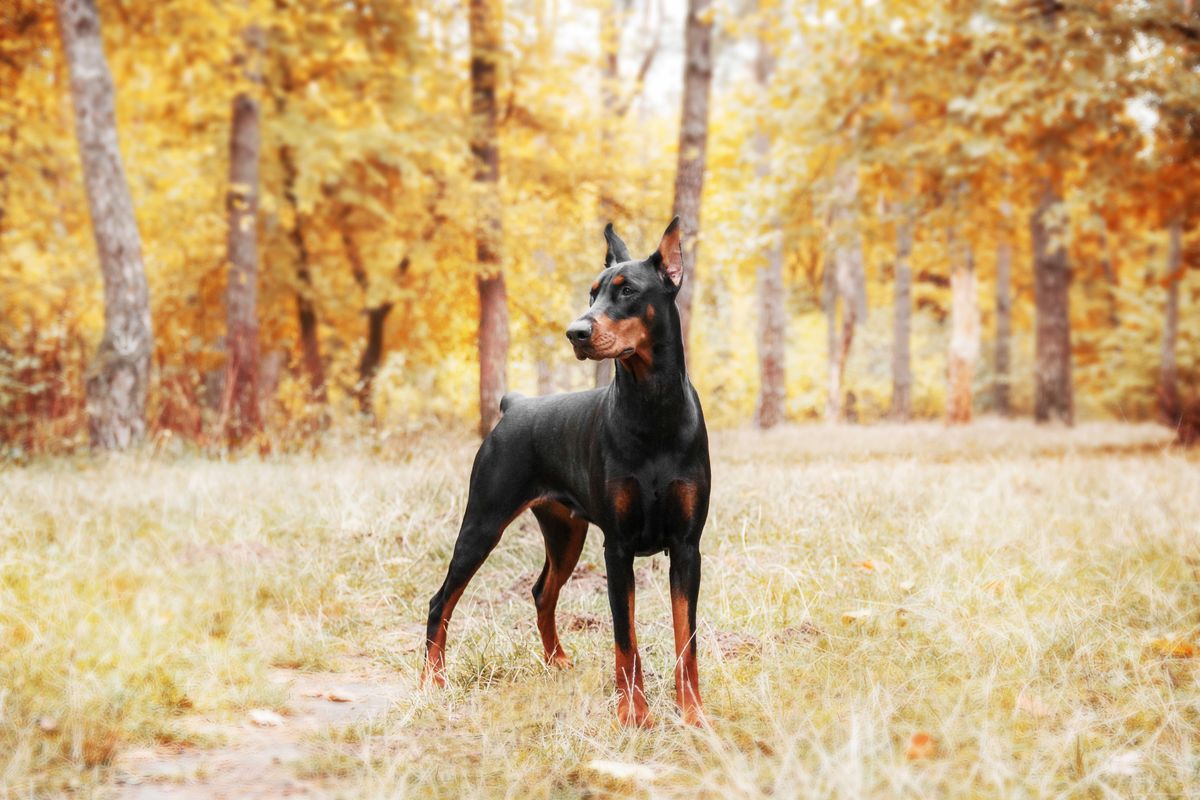
Dobermans come in four AKC-recognized colors, all with distinctive rust/tan markings (the pattern is identical — only the base color changes). The dilution gene (d) turns black into blue and red into fawn — but 90%+ of dilute dogs develop Color Dilution Alopecia (CDA), a progressive hair loss condition.
* White/albino Dobermans exist from a single mutation in the 1970s — they carry severe health problems (blindness, sun sensitivity, skin cancer). Reputable breeders do not produce them.
Cost Breakdown
Estimated expenses for owning a Doberman in 2026 (USD)
| Expense Category | Estimated Cost (USD) |
|---|---|
| 🐶 Puppy (cardiac-tested + vWD-clear parents) | $2,000 – $4,500 |
| 🌟 European Working Lines / Elite Pedigree | $4,500 – $10,000 |
| 🍖 Annual Food (high-performance, quality) | $800 – $1,400 |
| 🏥 Annual Cardiac (echo + Holter) + bloods | $800 – $2,000 |
| 🎯 Sport Training (Schutzhund/IGP, agility) | $1,200 – $3,500 |
| 🧸 Toys, Gear, Grooming, Misc | $500 – $1,200 |
| 💵 Annual Total | $3,300 – $8,100 |
| 💵 Lifetime (10–13 yrs) | $40,000 – $105,000 |
* Cardiac screening is non-negotiable — annual echo (~$400-600) + Holter (~$300-400). DCM medication ($100-300/month) adds significant cost if diagnosed.
👤 Ideal Owner Profile
The Doberman is an elite-level breed for committed, active owners who view dog ownership as a lifestyle, not a hobby.
✅ Great For
- Experienced working/sport breed owners — not your first athletic dog
- Competitive sport homes — Schutzhund/IGP, agility, dock diving
- Active individuals who make daily training a priority
- Families with older children who respect the dog's sensitivity
- Those committed to annual cardiac screening — knowing the emotional cost
⚠️ Not Ideal For
- Sedentary/apartment-only owners — this is a Ferrari, not a Corolla
- Those wanting a low-maintenance pet — Dobermans need DAILY structured work
- People who leave dogs alone 8+ hours — separation anxiety is severe
- Those unwilling to do annual cardiac screening — early DCM detection adds YEARS
- Cold-climate outdoor-only homes — single coat = poor insulation
💡 Fun Facts & Trivia
Created by a tax collector: Karl Dobermann needed a fierce protector while collecting taxes in dangerous neighborhoods. He used his dog pound access to breed the ultimate personal bodyguard — the only breed ever created specifically for personal protection.
USMC Devil Dogs: Dobermans were the official war dog of the US Marine Corps in WWII. Kurt — a Doberman killed at the Battle of Guam — is memorialized with a bronze statue: "Always Faithful."
245 PSI bite force: Combined with 35+ mph speed — the Doberman is a precision protection instrument, not a brute-force brawler. Speed + intelligence + bite = the ultimate deterrent.
DCM kills 50%+: One of the highest rates of heart disease of ANY breed. The Doberman Diversity Project is mapping the entire Doberman genome to find a cure. Every Doberman owner should support this research.
All from ONE man's dogs: Every Doberman alive descends from the dogs Karl Dobermann bred in the 1880s-1890s in Apolda, Germany. A breed created by one man in one lifetime.
35+ mph top speed: Dobermans are among the fastest dog breeds on Earth — faster than Greyhounds over short distances due to their explosive acceleration.
💬 Comments & Questions
Have a Doberman? Share your experience, tips, or questions below!
Comments are temporarily unavailable.
We're setting up our commenting system. Check back soon!