
Dwarf Gourami
A jewel of the freshwater aquarium — stunning neon blues and fiery reds packed into a peaceful 3-inch fish. Our complete 2025 care guide covers everything from tank setup to the critical iridovirus every owner must know about.
Species Overview
Quick facts — scientific name, size, lifespan & key parameters
📖 About the Dwarf Gourami
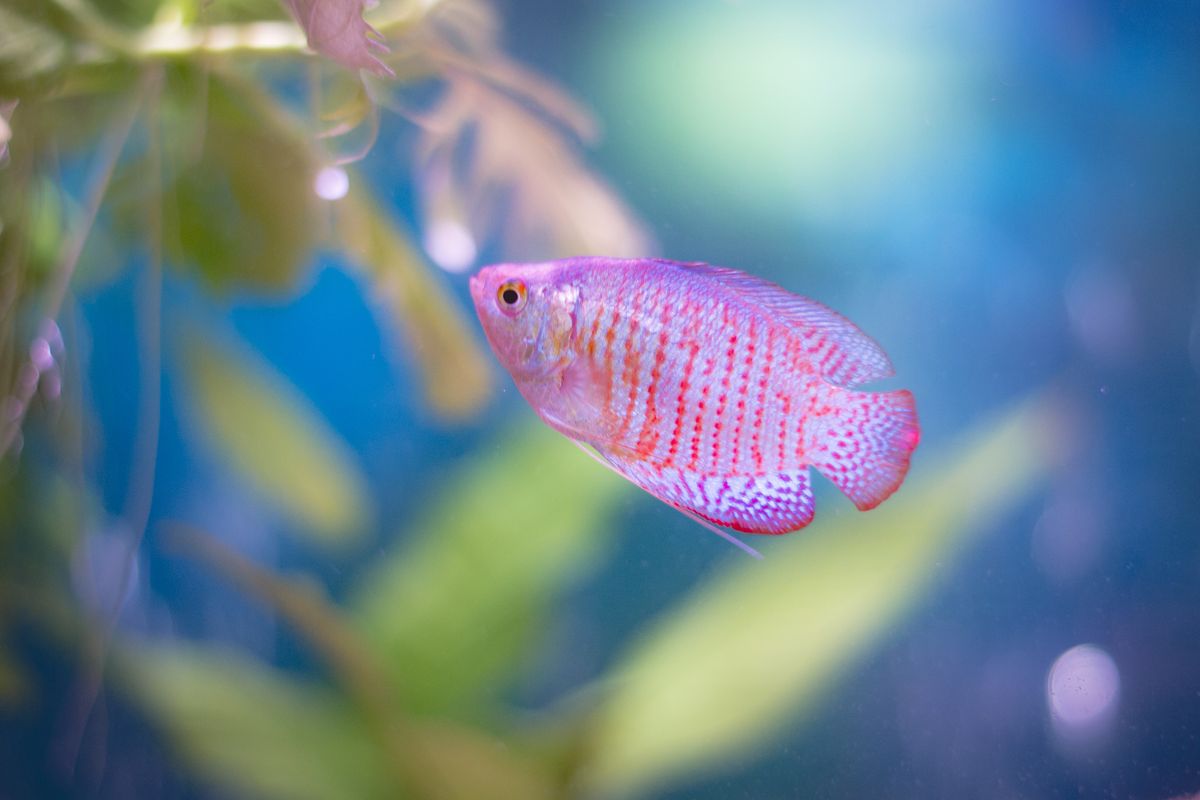
The Dwarf Gourami (Trichogaster lalius) is one of the most visually stunning freshwater fish in the aquarium hobby. Native to the slow-moving, heavily vegetated waters of India, Bangladesh, and Pakistan, these fish bring an explosion of iridescent blues and fiery reds to any community tank.
What makes Dwarf Gouramis truly special is that they're labyrinth fish — they possess a specialized organ called the labyrinth organ that allows them to breathe atmospheric air directly from the surface. This adaptation evolved to help them survive in oxygen-poor waters in the wild, and it means you'll often see them darting to the surface for a gulp of air.
They typically reach 5–9 cm (2–3.5 inches) and live 4–6 years with proper care. While beautiful, they're considered an intermediate-level fish — not because they're difficult day-to-day, but because they're sensitive to water quality fluctuations and, crucially, prone to a species-specific virus that every prospective owner needs to understand.
Water Parameters
Ideal water conditions — stability is more important than perfection
🏠 Tank Setup & Aquascaping
Creating the right environment for your Dwarf Gourami is critical for their well-being. In the wild, they inhabit slow-moving, densely vegetated waters — and your aquarium should replicate this as closely as possible.
Tank Size & Equipment
- Minimum tank size: 40 litres (10 gallons) for a single fish. 75 litres (20 gallons) or larger is strongly recommended for a pair or community setup. These fish need swimming space despite their small size.
- Filtration: A sponge filter or hang-on-back (HOB) filter with adjustable flow is ideal. Dwarf Gouramis come from still or slow-moving waters — strong currents stress them out. Baffle the outflow if needed.
- Heater: A reliable submersible aquarium heater set to 25–26°C (77–79°F). Use a thermometer to verify — fluctuations are dangerous.
- Lighting: Moderate, diffused lighting. Bright lights make Dwarf Gouramis skittish. Floating plants like duckweed, water lettuce, or frogbit naturally diffuse light and create the shaded conditions they love. Aim for 8–10 hours of light per day — use a timer for consistency.
- Lid is MANDATORY: As labyrinth fish, they breathe surface air. A lid prevents them from jumping out AND traps warm humid air above the water — essential for their labyrinth organ health.
Aquascaping & Plants
- Heavily planted tanks are ideal. Best plants: Java Fern, Anubias, Amazon Sword, Water Sprite, Hornwort, Vallisneria.
- Floating plants (duckweed, water lettuce, red root floaters) are highly recommended — they diffuse light and make gouramis feel secure.
- Dark substrate (black sand or fine gravel) enhances the gourami's vibrant colours.
- Add driftwood, rocks, and caves to create hiding spots and break lines of sight — this reduces stress and territorial behaviour.
🍽️ Diet & Feeding
Dwarf Gouramis are omnivores with a strong preference for protein-rich foods. A varied diet is essential for maintaining their vibrant colours and overall health:
Recommended Foods
- Staple diet: High-quality tropical fish flakes or micro-pellets (e.g., TetraMin, Hikari Micro Pellets) as the daily base.
- Live foods (2–3 times per week): Brine shrimp, bloodworms, daphnia, mosquito larvae — these trigger natural hunting behaviour and enhance colouration.
- Frozen foods: Frozen bloodworms, daphnia, and cyclops are excellent alternatives to live food and safer (no parasite risk).
- Vegetable matter: Blanched spinach, zucchini, and algae wafers provide fibre and prevent constipation.
Feeding Schedule
- Feed small amounts twice a day — only what they can consume in 2–3 minutes.
- Overfeeding is a common mistake — uneaten food decays and spikes ammonia levels. Dwarf Gouramis are particularly sensitive to poor water quality.
- Fast them one day per week to aid digestion and prevent bloating.
Tank Mate Compatibility
Who gets along with Dwarf Gouramis — and who doesn't
✅ Compatible | ⚠️ With Caution | ❌ Not Compatible. Rule of thumb: avoid fin-nippers, aggressive species, and other male labyrinth fish.
Care Schedule
Weekly & monthly maintenance routine for a healthy Dwarf Gourami tank
Weekly Water Change
25% water change every week — use a gravel vacuum to remove debris
WEEKLYWater Testing
Test ammonia, nitrite, nitrate, pH weekly with a liquid test kit
WEEKLYFeeding
Twice daily — small portions, 2-3 min consumption, fast 1 day/week
DAILYFilter Maintenance
Rinse filter media in tank water (not tap water) every 2-4 weeks
BIWEEKLYPlant Trimming
Trim dead leaves, thin floating plants as needed to allow surface access
AS NEEDEDHealth Check
Observe fish daily for colour, behaviour, appetite — early signs of disease
DAILY🎨 Color Varieties & Appearance
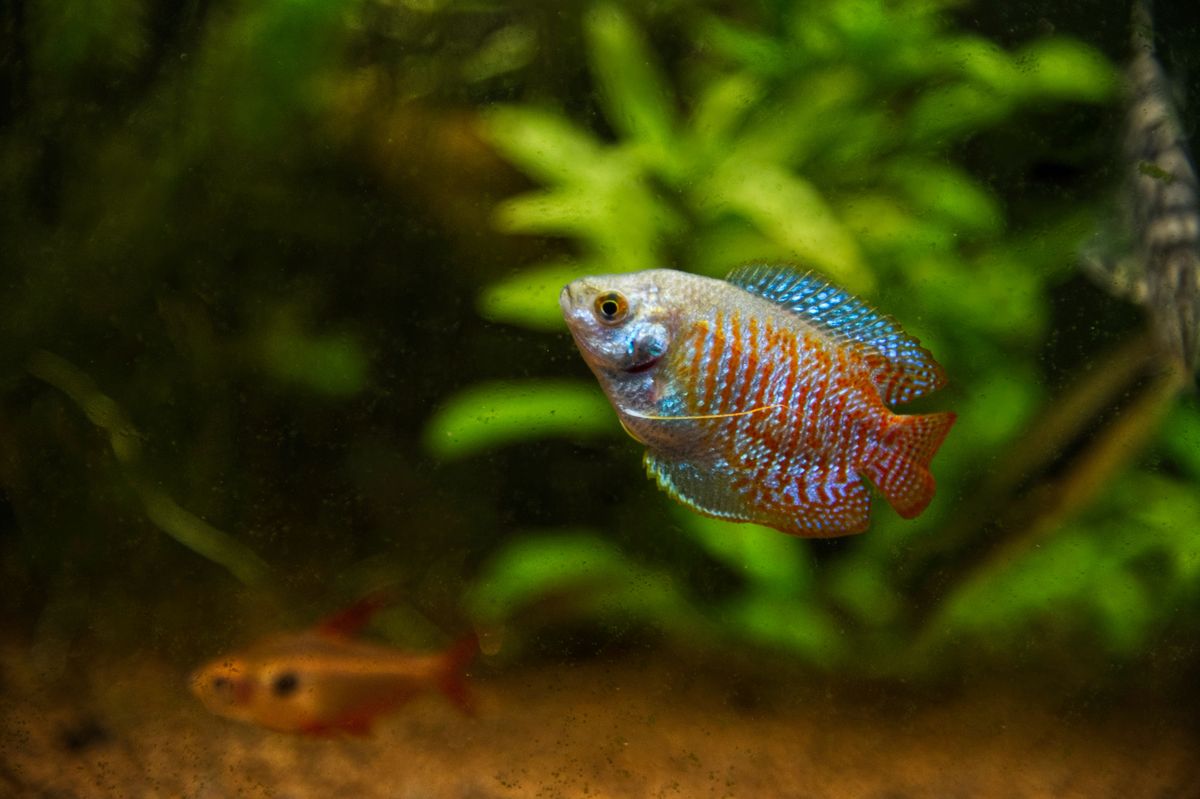
Dwarf Gouramis are famous for their stunning colour morphs. Selective breeding has produced an incredible range of colour varieties — each more beautiful than the last:
Male vs Female — Visual Differences
- Males: Much more colourful — vibrant blue/red/orange with striking iridescent stripes. Dorsal fin is pointed and elongated. Slightly larger body.
- Females: Silvery-grey and subdued in colouration. Dorsal fin is rounded and shorter. Rounder belly, especially when gravid (carrying eggs).
🧪 Breeding Dwarf Gouramis
Breeding Dwarf Gouramis is fascinating to witness — they're bubble nest builders, and watching a male construct his nest is one of the most rewarding experiences in fishkeeping:
Breeding Setup & Process
- Separate breeding tank: 40–75 litres (10–20 gallons) with 6–8 inches of water depth (shallow water triggers spawning).
- Temperature: Raise to 28°C (82°F) — this is the key spawning trigger.
- Floating plants (Riccia, Cabomba, Java moss) are ESSENTIAL — the male uses plant fragments to build his bubble nest at the water surface.
- Condition the pair with live/frozen foods for 1–2 weeks before introducing them.
- The male builds the nest, courts the female, and spawning produces 300–800 eggs. The male guards the nest fiercely.
- ⚠️ Critical: Remove the female immediately after spawning — the male may attack her. Remove the male once fry are free-swimming (about 3 days after hatching) to prevent him from eating them.
- Fry care: Feed infusoria or liquid fry food for the first week, then baby brine shrimp. Fry are TINY and need microscopic food initially.
Cost Breakdown
Estimated expenses for a Dwarf Gourami setup in 2025 (USD)
| Expense Category | Estimated Cost (USD) |
|---|---|
| 🐟 Dwarf Gourami (single fish) | $6 – $15 |
| 🐟 Breeding Pair | $15 – $30 |
| 🏠 10-20 Gallon Tank (kit) | $40 – $120 |
| 🔌 Heater (50-100W) | $15 – $40 |
| 💨 Filter (sponge or HOB) | $15 – $45 |
| 💡 LED Light | $25 – $80 |
| 🌿 Plants & Decor (substrate, driftwood) | $30 – $100 |
| 🧪 Water Test Kit (API Master) | $25 – $35 |
| 🍽️ Monthly Food & Supplies | $10 – $25 |
| 💵 Total First-Year Setup | $180 – $500 |
* The fish itself is inexpensive — the tank, heater, filter, plants, and test kit are the real investment. A properly cycled tank before adding fish is essential.
⚕️ Health & Disease — The DGIV Warning
This is the most important section of this guide. Dwarf Gouramis are susceptible to a species-specific viral disease that every prospective owner MUST know about.
🦠 Dwarf Gourami Iridovirus (DGIV)
Dwarf Gourami Iridovirus (DGIV) — also called Dwarf Gourami Disease (DGD) — is a severe, incurable viral infection found almost exclusively in commercially bred Dwarf Gouramis. It's estimated that a significant percentage of Dwarf Gouramis sold in pet stores carry this virus.
- Symptoms: Lethargy, loss of appetite, darkening or fading of colour, bloated abdomen, skin lesions or sores, and eventually death. Symptoms may not appear for weeks or months after purchase.
- Prognosis: There is NO cure and NO treatment. The disease is almost always fatal once symptoms appear. Affected fish typically die within days to weeks.
- Prevention: Buy ONLY from reputable local breeders who can verify their stock is DGIV-free. Quarantine all new Dwarf Gouramis for 4–6 weeks before introducing them to your main tank.
Other Common Diseases
- Ich (White Spot): White dots on body and fins. Treatable with commercial ich medication and raising temperature to 30°C (86°F) for 3–5 days.
- Fin Rot: Fraying, discoloured fins caused by bacterial infection. Treat with antibacterial medication and improve water quality immediately.
- Dropsy: Severe bloating with raised scales — usually indicates organ failure. Often fatal; caused by poor water quality or underlying disease.
- Fungal Infections: Cotton-like growths on body or mouth. Treat with antifungal medication.
🩺 When to Consult a Vet
If you notice lethargy, appetite loss, colour changes, visible lesions, laboured breathing, or unusual swimming behaviour, consult an aquatic veterinarian or experienced fishkeeper immediately. Early intervention is critical — many diseases are treatable if caught early.
💡 Fun Facts & Trivia
They breathe air! Dwarf Gouramis have a labyrinth organ that lets them breathe atmospheric oxygen — an adaptation to survive in oxygen-poor waters in the wild. You'll see them dart to the surface for a gulp of air throughout the day.
Bubble nest architects: Males build intricate floating bubble nests using plant fragments and saliva. Each nest can hold 300–800 eggs — and the male guards it fiercely against all intruders.
From South Asian waters: Wild Dwarf Gouramis inhabit the Ganges and Brahmaputra river basins in India, Bangladesh, and Pakistan — slow-moving, heavily vegetated waters rich in insect life.
Colour-changing courtship: During breeding, males intensify their colours dramatically — blues become electric, reds become fiery. It's one of the most spectacular colour displays in freshwater fish.
They can "talk": Dwarf Gouramis produce audible clicking or croaking sounds during courtship and territorial displays. It's rare to hear, but unmistakable when you do.
Pelvic fin "feelers": Those long, thread-like fins hanging below their body are modified pelvic fins that act as sensory organs — they use them to "taste" and feel their environment, like underwater fingers.
💬 Comments & Questions
Have a Dwarf Gourami? Share your experience or ask a question!
Comments are temporarily unavailable.
We're setting up our commenting system. Check back soon!