
Corydoras Catfish
The ultimate community bottom-dweller — adorable, armored, and packed with personality. With 170+ species to choose from, venomous spines you need to know about, and the fascinating truth behind the sand vs gravel debate — our complete 2025 care guide covers it all.
Species Overview
Quick facts — armored catfish with 170+ species
📖 About Corydoras Catfish
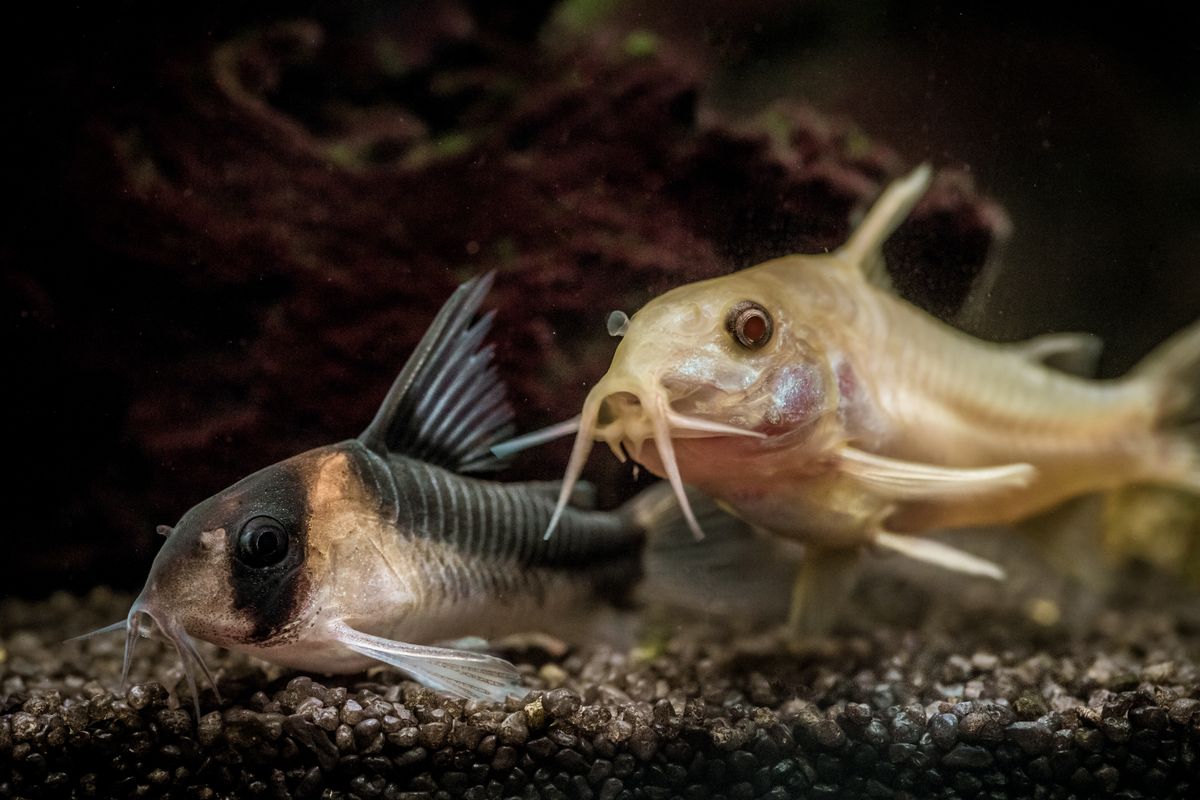
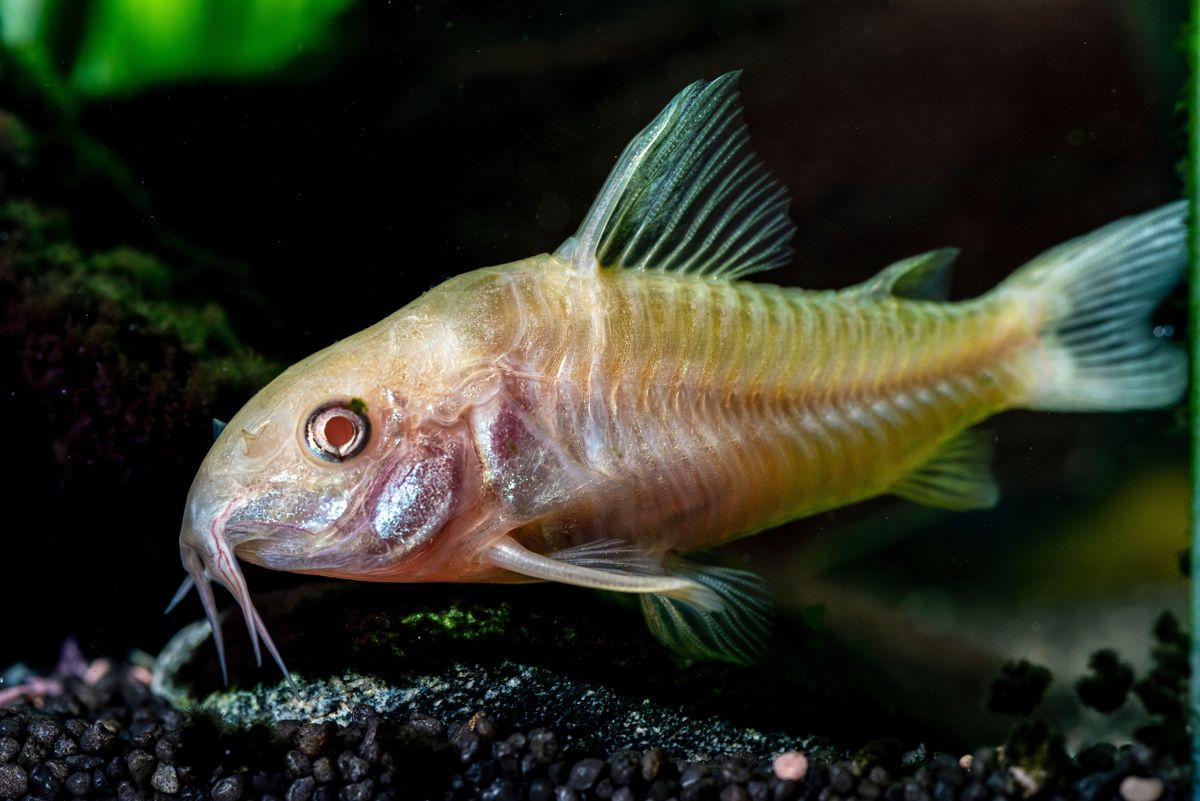
The Corydoras Catfish — affectionately called "Cories" or "Cory Cats" — are among the most beloved freshwater fish in the aquarium hobby. With over 170 scientifically described species (and hundreds more awaiting classification), they offer an incredible diversity of patterns, colors, and sizes.
Their name comes from the Greek kory (helmet) and doras (skin), referring to their armored body. Unlike most fish that have scales, Corydoras are protected by two rows of overlapping bony plates called scutes that run the length of their body — a natural suit of armor from their wild Amazonian habitat.
They're bottom-dwellers, spending their days sifting through substrate with their sensitive barbels (whiskers), searching for food. But don't mistake "bottom-dweller" for "boring" — Cories are constantly active, playful, and exhibit the famous "Cory zoomies" where they dart around the tank at surprising speed. They're also obligate schoolers — keeping them in groups of 6 or more is not optional; it's essential for their well-being (Wikipedia).
🐟 Popular Types & Varieties
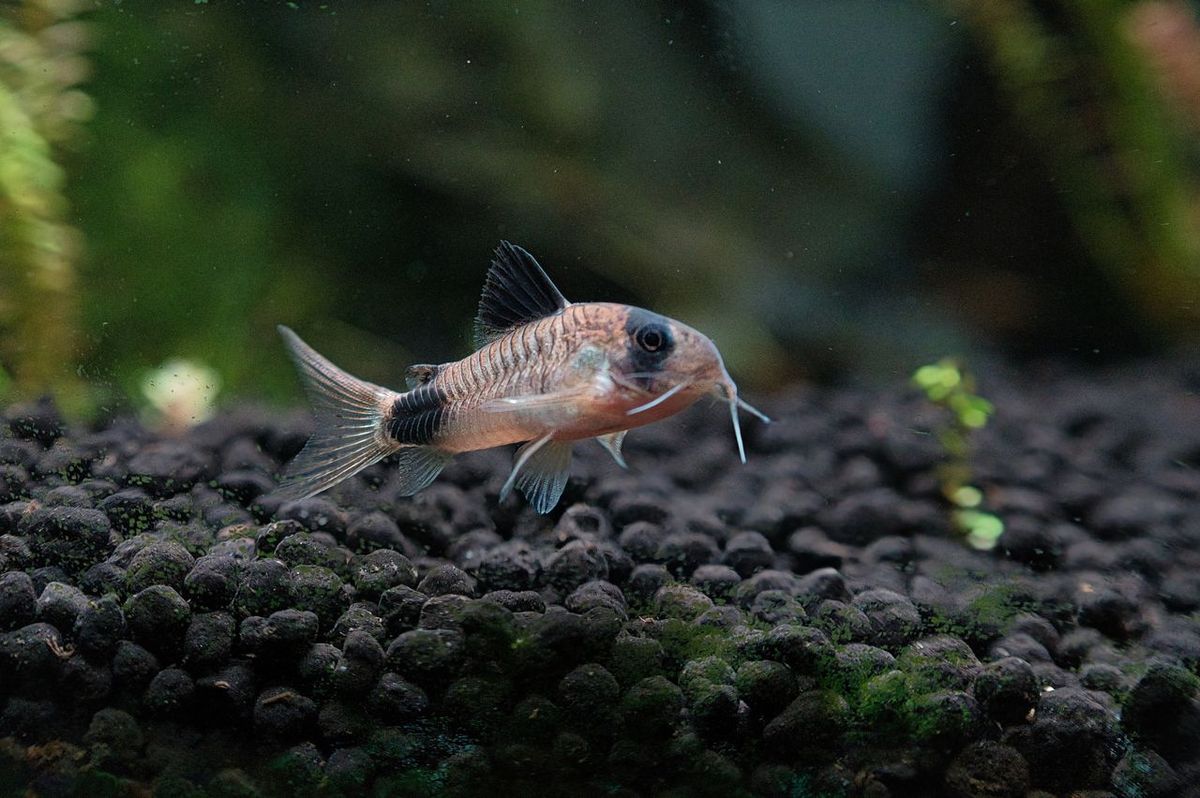
With so many species available, choosing your first Corydoras can be overwhelming. Here are the most popular and accessible types for home aquariums:
Water Parameters
Ideal conditions — stability matters more than perfect numbers
🏠 Tank Setup & The Substrate Truth
This is the most debated topic in Corydoras keeping. Let's address the elephant in the room:
Tank Requirements
- Minimum tank size: 75 litres (20 gallons) for a group of 6. Larger species (Emerald) need 30+ gallons.
- Filtration: A sponge filter or HOB with gentle flow. Cories don't appreciate strong currents. Add extra aeration — they enjoy well-oxygenated water.
- Heater: Reliable heater set to 24–26°C (75–79°F). Check species-specific needs — Peppered Cories prefer cooler temps (20–24°C), while Sterbai can handle warmer (up to 28°C).
- Lighting: Subdued to moderate lighting. Bright lights make Cories skittish. Floating plants help diffuse light.
- Plants & Decor: Java Fern, Anubias, Amazon Sword, Cryptocoryne. Add driftwood, caves, and leaf litter (Indian almond leaves) — they mimic the natural Amazon habitat.
🍽️ Diet & Feeding
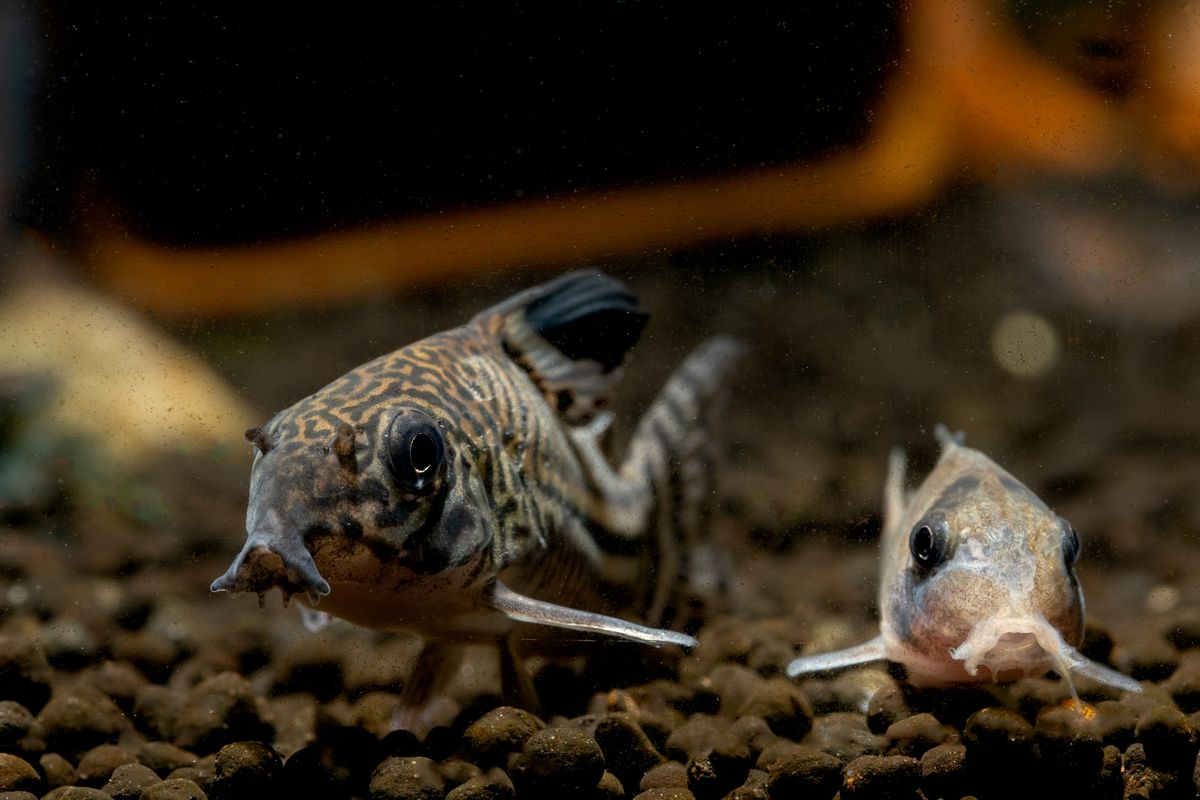
Corydoras are omnivorous bottom-feeders. They use their three pairs of sensitive barbels to detect food buried in the substrate. A varied diet is essential:
- Staple diet: High-quality sinking pellets or wafers designed for bottom feeders (Hikari Sinking Wafers, Omega One Shrimp Pellets). Must sink — floating food won't reach them.
- Live/frozen foods (2-3 times/week): Bloodworms, brine shrimp, daphnia, blackworms — these trigger natural foraging behavior and condition fish for breeding.
- Vegetable matter: Blanched zucchini, cucumber, spinach, and algae wafers supplement their diet.
- Feed after lights out if you have fast-swimming tank mates who steal food before it reaches the bottom.
- Feed once or twice daily — only what they can consume in 3-5 minutes.
Tank Mate Compatibility
Cories are peaceful — but not everyone is peaceful toward them
✅ Compatible | ⚠️ With Caution | ❌ Not Compatible. Golden rule: if a fish can fit a Cory in its mouth, it will try.
Care Schedule
Maintenance routine for a thriving Corydoras tank
Weekly Water Change
25-30% water change with thorough gravel vac — clean substrate = healthy barbels
WEEKLYWater Testing
Test ammonia, nitrite, nitrate, pH weekly — Cories are sensitive to nitrates
WEEKLYFeeding
1-2 times daily — sinking foods, rotate between pellets, wafers & frozen
DAILYFilter Maintenance
Rinse media in tank water every 2-4 weeks — never tap water
BIWEEKLYPlant & Decor
Trim plants, remove decaying leaves, siphon debris from under driftwood
AS NEEDEDHealth Observation
Check barbels, fins, and behavior daily — early detection saves lives
DAILY🧪 Breeding — The Famous T-Position
Corydoras have one of the most unusual breeding rituals in the fish world. It's called the T-position and it's fascinating to witness:
The T-Position Explained
- Conditioning: Feed the group high-quality live and frozen foods for 1-2 weeks. Perform a cooler water change (drop temp by 2-3°C) to simulate Amazon rainfall — this is the primary spawning trigger.
- Courtship chase: Males chase females around the tank. Once a female selects a male, they assume the T-position — the female attaches her mouth to the male's genital opening.
- Fertilization: The female drinks the male's sperm, which passes through her digestive tract at remarkable speed and exits with her eggs into a pouch formed by her pelvic fins. This is unique among fish.
- Egg deposition: The female carries the fertilized eggs in her pelvic fin pouch and carefully deposits them one by one on flat surfaces — glass walls, plant leaves, driftwood, or even filter intakes. A single spawning produces 30–100 eggs.
- Fry care: Remove adults after spawning (they may eat eggs). Eggs hatch in 3–5 days. Feed fry infusoria or powdered fry food for the first week, then baby brine shrimp.
Cost Breakdown
Estimated expenses for a Corydoras setup in 2025 (USD)
| Expense Category | Estimated Cost (USD) |
|---|---|
| 🐟 Corydoras (per fish, common species) | $3 – $8 |
| 🐟 School of 6 (Bronze/Albino/Peppered) | $18 – $40 |
| 🌟 Rarer Species (Sterbai, Adolfoi, Julii) | $10 – $25 each |
| 🏠 20 Gallon Tank (kit) | $50 – $130 |
| 🔌 Heater + 💨 Filter | $30 – $80 |
| 💡 LED Light | $25 – $70 |
| 🏖️ Sand Substrate + 🌿 Plants + 🪵 Driftwood | $40 – $120 |
| 🧪 Water Test Kit (API Master) | $25 – $35 |
| 🍽️ Monthly Food & Supplies | $10 – $20 |
| 💵 Total First-Year (6 Cories + 20G Setup) | $200 – $550 |
⚕️ Health & Defense — Those Venomous Spines
Here's something most beginner guides won't tell you: Corydoras have venomous spines. Their pectoral and dorsal fin spines can lock into an erect position and deliver a mild venom that causes pain similar to a bee sting — not dangerous to humans, but definitely something to know about when handling them.
Common Health Issues
- Barbel Erosion: Worn-down barbels caused by poor water quality (not substrate type). Keep nitrates low and substrate clean. Barbels will regrow once water quality improves.
- Ich (White Spot): White dots on body and fins. Treat with commercial ich medication. Cories are sensitive to some medications — use half-doses of malachite green or copper-based treatments.
- Red Blotch Disease: Bloody patches on the belly — a bacterial infection often linked to dirty substrate. Treat with antibiotics in a hospital tank and clean your substrate.
- Fungal Infections: Cotton-like growths. Treat with antifungal medication.
💡 Fun Facts & Trivia
Armored, not scaled: Corydoras don't have scales — they're protected by bony plates called scutes, making them part of the "armored catfish" family (Callichthyidae). Their name literally means "helmet skin."
They breathe air: Cories are facultative air breathers. They dart to the surface to gulp air and absorb oxygen through their modified intestine — an adaptation to survive in oxygen-poor Amazonian waters.
They "blink": Corydoras can rotate their eyes in their sockets, giving the appearance of blinking. It's one of their most endearing and unique behaviors.
They "talk": Cories produce audible sounds by grinding their pectoral fin spines against their shoulder girdle — a behavior called stridulation. It's used for communication and during courtship.
Record-breaking lifespan: While 5-10 years is typical, the longest-lived Corydoras on record was a Bronze Cory (C. aeneus) that lived 27 years in captivity. With excellent care, these fish can be with you for decades.
Mimicry in nature: Some Otocinclus catfish mimic Corydoras in the wild (Batesian mimicry). The harmless Otos copy the pattern of venomous Cories to avoid predation. Nature is incredible.
💬 Comments & Questions
Have Corydoras in your tank? Share your experience!
Comments are temporarily unavailable.
Check back soon!