
How to Proof Dog Training Around Distractions
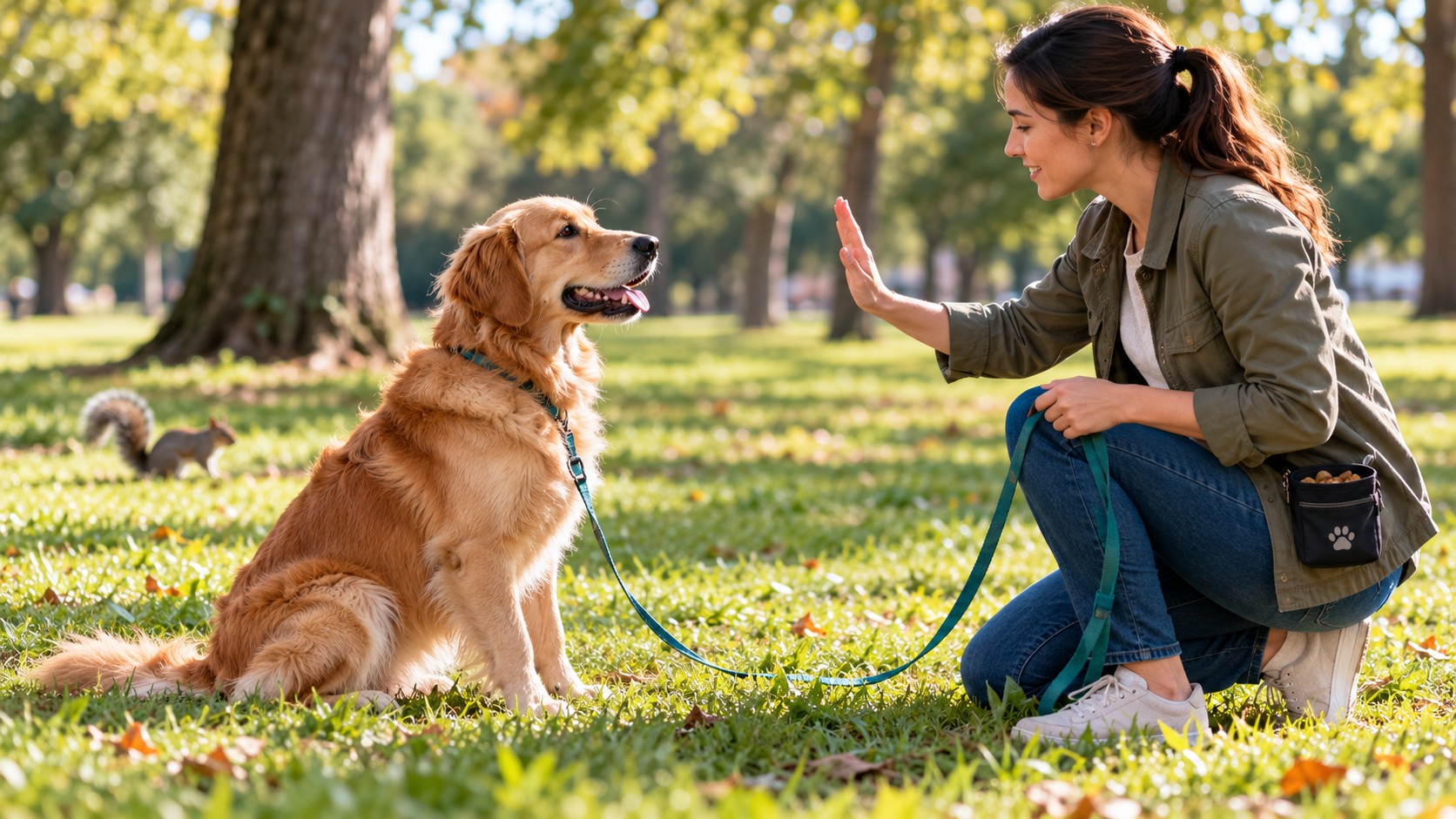
Your dog sits perfectly in the kitchen and acts like the word means nothing at the park. That is normal — and fixable. Proofing is the process of practicing a behavior you have already taught in gradually more distracting situations, so the cue stays meaningful no matter what is going on around you.
In short:
- Proofing is practice in new contexts — not a new behavior to teach.
- Increase one difficulty factor at a time.
- Go back a step whenever the dog stops responding comfortably.
What Does Proofing Dog Training Mean?
When a dog learns to sit in the living room, it has learned "sit" in the living room. Generalization — performing a familiar behavior in new places, around new sights and sounds — is not automatic. Dogs are context learners: the floor surface, the smells, the lighting and who is nearby are all part of what they learn.
Proofing is the deliberate process of moving a learned behavior into new environments, one manageable step at a time. Learning is teaching the behavior in the first place. Proofing is making that behavior dependable across situations. The two are different jobs, and both matter.
Why Your Dog Listens at Home but Not Outside
A dog that responds indoors but not outdoors is not stubborn and is not "trying to dominate" anyone. The usual reasons are simpler:
- Competing environmental stimuli. Outdoors there is more of everything: birds, traffic, other dogs, interesting smells. The cue has to compete with all of it.
- Insufficient practice. If the behavior has only ever been practiced at home, outside is effectively a brand-new context.
- Reward value. The treat that works in a quiet kitchen may be uninteresting compared to a passing squirrel.
- Training difficulty. Asking for longer durations, greater distance or harder skills at the same time as a new environment can overwhelm the dog.
- Emotional state. Stress, fear and over-arousal all interfere with learning and responding. A dog that is worried is not "blowing you off" — its attention is elsewhere for a reason.
Before You Start: Choose One Reliable Cue
Pick one behavior the dog already knows well in a quiet room — a sit or a hand target are good choices because they are low-risk and easy to reward. Not a recall, and definitely not off-leash recall; that comes much later, if ever, and is a separate project.
Check the foundation: in the quietest room in the house, ask for the behavior three or four times. If the dog responds promptly and comfortably most of the time, you have something worth proofing. If the behavior is shaky at home, spend more time on the behavior itself first.
The Three Ds of Dog Training
Difficulty in training comes in three dimensions:
- Duration — how long the dog holds the behavior.
- Distance — how far away you are when you ask.
- Distraction — what competes for the dog's attention.
Each dimension can be raised gradually, but the classic mistake is raising several at once — asking for a long stay, from across the room, next to an open window with birds outside. When success drops, it is usually because too many dimensions moved together. The fix is to change one dimension at a time and keep the others easy.
Step-by-Step Distraction Training Plan
The plan below moves from the most familiar setting to gradually busier ones. Spend as long as your dog needs at each stage — days, not minutes — and only advance while the dog stays comfortable and responsive.
Step 1: Practice in a familiar quiet room
Ask for your chosen behavior exactly as usual and reward each correct response. This is the baseline the rest of the plan builds on.
Step 2: Practice in a different room
Move to another room of the house. Everything else stays the same: same cue, same reward, same expectation. New smells and flooring are already a real change for a dog.
Step 3: Practice in a quiet, secure garden or yard
Step outside only if the space is safely enclosed or the dog is on a leash or long line. Keep the session short and reward generously — the outdoors is a big jump even without visible distractions.
Step 4: Practice in a quiet outdoor area
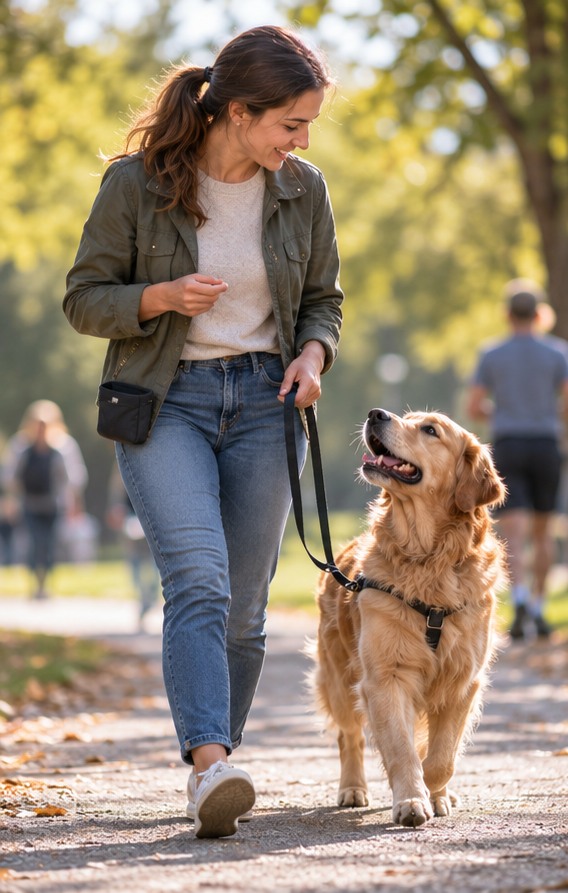
Choose a calm spot away from traffic and other dogs: a quiet sidewalk, a corner of a park at a slow hour. Stay far from anything interesting and keep the first visits brief.
Step 5: Introduce one manageable distraction
Now add a single, distant distraction — a person walking on the far side of the park, a car passing at a distance. Ask for the behavior while the distraction is visible but far enough away that the dog can still respond.
Step 6: Gradually practice at shorter distances from distractions, only when the dog is comfortable
Move a little closer over multiple sessions — but only while the dog remains comfortable, responsive and willing to take rewards. The goal is success, not closeness. If the dog stops responding, you are too close for today.
Step 7: Generalize the skill across several safe locations
Repeat the process in different safe places: another street, another park, a quiet storefront. Each new location is a mini version of the whole progression, and each one goes faster than the one before.
Progress when the current step is easy and the dog looks relaxed. Reduce difficulty — move farther away, shorten the session, or return to an earlier step — whenever the dog hesitates, disengages or stops taking food. Every dog progresses differently, and there is no universal schedule that fits all of them.
How to Find the Right Distance From Distractions
The right distance is the one where your dog can still think. Watch the dog, not the distraction:
- Engagement: the dog glances at the distraction and comes back to you, responds to the cue, and takes rewards.
- Difficulty focusing: the dog keeps staring, ignores the cue, or takes treats mechanically without really engaging.
- Stress and fear: tucked tail, crouched posture, lip licking, yawning, or trying to move away.
- Over-arousal: hard pulling, whining, barking, or an inability to settle.
If you see difficulty, stress, fear or over-arousal, increase the distance or end the session. Forcing a dog closer to something that worries it is not training — it is flooding, and it can make fear worse. Distance is your best tool.
Choosing Rewards Around Distractions
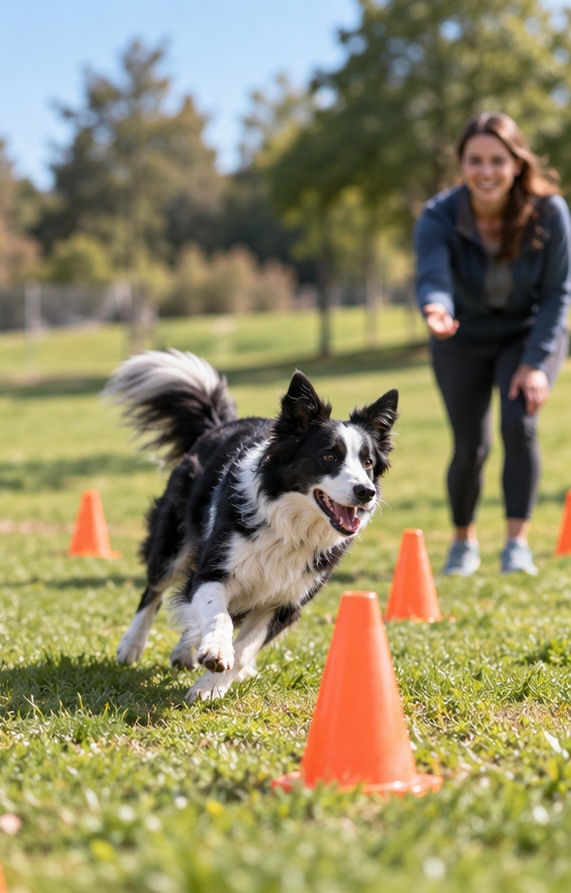
Reward value is relative: a treat that is exciting in the kitchen may be boring outside. For distraction training, use something the dog genuinely loves and does not get every day.
- Food — small, soft, high-value pieces work well because they are fast to deliver and easy to repeat.
- Toys — a quick tug game works for dogs who value play more than food.
- Play — a burst of chase or tug can be the reward in itself.
- Sniffing opportunities — releasing the dog to sniff a great patch of grass is a real reward for many dogs.
Whatever you use, the timing matters more than the size: the reward should arrive within a second or two of the behavior so the dog connects the two. Reward often enough that responding feels worth it — especially in newer, harder settings.
What to Do When Your Dog Stops Listening
When responses drop off, run through this sequence:
- Increase the distance from whatever is distracting the dog.
- Lower the difficulty — ask for something easier, or hold the behavior for less time.
- Improve the reward — switch to something higher-value.
- Check the dog's emotional state — if the dog looks stressed or fearful, end the session on something easy and try again another day.
- Go back a full step in the progression and rebuild from where the dog was last successful.
A drop in performance is information, not defiance. It tells you the current step is too hard, and the plan needs adjusting — not that the dog needs punishment.
Common Mistakes
- Moving too close too quickly. Closeness is earned across sessions, not minutes.
- Repeating cues excessively. "Sit, sit, sit" teaches the dog to wait for the third or fourth word. Say it once.
- Increasing difficulty too fast. Several new factors at once — distance, duration and a busy street — overwhelm most dogs.
- Training only at home. A behavior practiced only indoors stays indoors.
- Using low-value rewards. In a distracting world, pay the dog in a currency it actually cares about.
- Continuing when the dog is distressed. Training should stop when the dog shows stress or fear; pushing through makes things worse.
A Simple Practice Plan
Here is an adaptable example of what short, manageable sessions can look like. Adjust the stages and the number of repetitions to your dog — this is a shape, not a schedule:
| Session | Location | What to practice |
|---|---|---|
| 1 | Quiet room at home | 8–10 easy repetitions of the chosen cue, rewarded every time |
| 2 | Different room | Same cue, same reward, short and relaxed |
| 3 | Garden or quiet outdoor corner | 5–6 repetitions, extra-good rewards |
| 4 | Same quiet outdoor spot | One distant distraction visible; respond, reward, and leave while it is still going well |
Two or three short sessions per week beat one long one. End each session while the dog is still succeeding.
When to Seek Professional Help
Most proofing problems are ordinary training challenges with ordinary fixes. Some situations deserve individual professional guidance:
- Your dog shows fear, anxiety or distress around common everyday situations.
- You see growling, snapping, lunging or other aggressive or reactive behavior.
- Progress has stalled or worsened despite consistent, reward-based practice.
- A health issue could be affecting behavior — a veterinarian is the right first stop.
A qualified reward-based trainer or behavior professional can watch the dog in person, read the body language in real time, and adjust the plan in ways a written guide cannot. There is no failure in seeking help.
Frequently Asked Questions
Can I practice around other dogs?
Eventually, but only at a distance where your dog stays calm and responsive, and only with a leash or long line if you are outdoors. If your dog is reactive toward other dogs, work with a qualified professional rather than improvising.
Should I keep using treats?
Yes. Proofing is about making the behavior reliable, not about removing rewards. Around distractions, most dogs need better and more frequent rewards, not fewer. See our guide on phasing out treats when you are ready to fade the visible lure.
What if my dog refuses food outside?
Refusing food is information — it often means the dog is too stressed or too stimulated to eat. Increase the distance, shorten the session, or try a toy or play reward instead. If a dog that normally eats treats suddenly refuses them everywhere, a vet check is a good idea.
How do I know when to progress?
Progress when the current step feels easy: the dog responds promptly, looks relaxed, and takes rewards happily, several sessions in a row. Hesitation, staring, sniffing everything or stopping rewards means stay or step back.
Can I practice recall around distractions?
Yes — on a long line, in safe enclosed areas, and only after the recall is solid in quiet places. Start far from distractions and move closer gradually. Do not practice recall off-leash in unenclosed or high-risk areas.
Conclusion
Proofing is patience with a structure. Take the behavior your dog already knows, move it to new places one small step at a time, change one difficulty factor at a time, and step back whenever the dog struggles. If your dog currently listens at home but not outside, our decision guide My Dog Listens At Home But Not Outside can help identify the pattern behind it — and the dog training hub collects the step-by-step guides, including behavior guides, to keep building from there.
References
This article follows established reward-based training guidance. For further reading: