
How to Phase Out Treats in Dog Training Without Losing Progress
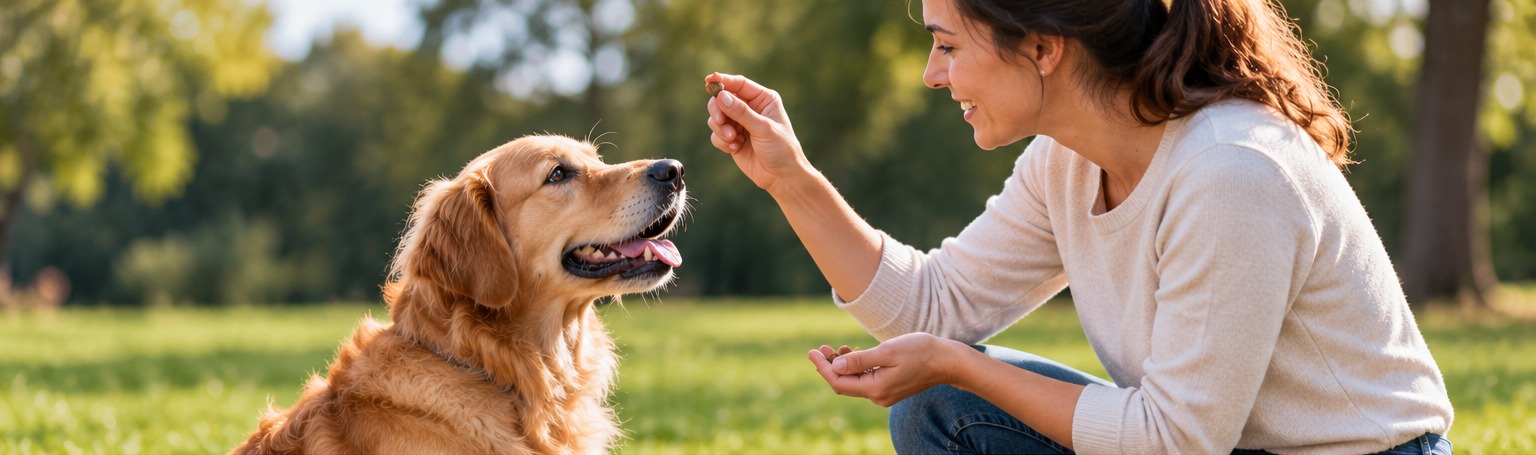
Your dog sits reliably when you are holding a treat — and ignores you the moment your hand is empty. The goal is not to remove food from training. The goal is to take the visible lure out of the picture while keeping the reward, the motivation and the progress you have already built.
In short:
- Fade the visible lure — not the reward.
- Reward after the behavior, from a hidden hand or pouch.
- Go back a step whenever the dog hesitates — it is part of the process.
When food becomes part of the cue, the dog is not being stubborn. The dog has simply learned an accurate rule: "the treat appears, then the behavior works." This guide walks through why that happens and how to fade the lure in a way your dog can follow.
Why Your Dog Waits to See a Treat
In everyday training, food is often used in two very different ways:
- As a lure. You hold a treat near the dog's nose and move it so the dog follows — into a sit, a down, or beside you. The food leads the behavior.
- As a reward. The dog performs a behavior and then receives food. The food follows the behavior.
Both uses are legitimate. But when a treat is held in view before the behavior most of the time, the sight of the treat can become part of the signal. The dog learns that the sequence that predicts a reward is: visible treat → behavior → food. Remove the visible treat and the sequence is broken — from the dog's point of view, the cue has changed.
This is a training detail, not a personality flaw. Dogs are excellent observers, and a dog that waits for the treat is simply responding to the most reliable part of the picture you have been showing them. The same pattern shows up when a dog only comes when called while food is visible — our decision guide My Dog Comes Only When I Have Food walks through that version of the problem.
Lure vs. Reward: The Important Difference
The two roles are easy to confuse because the same piece of food can play either one. The table below shows what changes:
| Lure | Reward | |
|---|---|---|
| When it appears | Before the behavior | After the behavior |
| What it does | Guides or prompts the behavior | Strengthens the behavior |
| What the dog learns | "Follow the food" | "That behavior pays off" |
| Example | Treat moved over the head to prompt a sit | Treat given the moment the dog sits on cue |
Fading the lure means moving from the left column to the right: the behavior starts on its own, and the food arrives afterward.
Before You Start: Is Your Dog Ready?
Lure fading works fastest when the behavior already exists without any physical prompting — in other words, when the dog understands the cue and simply needs the treat visible to bother responding. Before you begin, check these in a quiet, familiar room with no distractions:
- With a treat visible in your hand, the dog performs the behavior promptly and reliably when asked.
- The behavior looks the same each time — the dog is not guessing between several options.
- You can deliver the reward within a second or two of the behavior happening.
- Your dog is comfortable and not showing signs of stress, fear or frustration.
If the behavior is shaky even with a visible lure, spend more time teaching the cue itself before fading anything. Fading only works on top of a behavior that is already understood.
A Step-by-Step Plan to Fade the Lure
Work through these steps in short, calm sessions. Move on only when the current step is going well most of the time. There is no universal number of sessions — the pace is set by your dog's responses, not by a calendar.
Step 1: Practice a familiar cue in a quiet environment
Start with a cue your dog knows well, in the room where training has been easiest. Ask for the behavior while the treat is visible exactly as you normally would, and reward as usual. This is your baseline — the version of the behavior you will fade from.
Step 2: Move the treat out of sight
Keep the treat in a pocket, a pouch, or your other hand behind your back. Ask for the behavior with the same voice and posture as before. The moment the dog performs the behavior, bring the treat out and deliver it. The treat still follows the behavior — it just is not visible first.
Step 3: Use an empty-hand gesture if appropriate
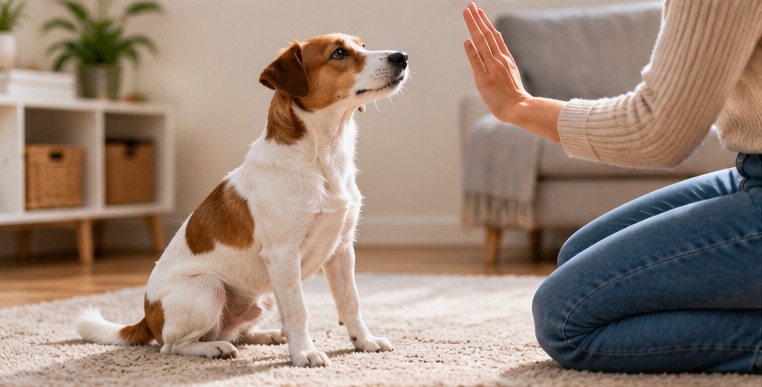
If your dog was trained with a hand signal (for example, a raised palm for sit), keep using that gesture with an empty hand. The gesture stays; only the food in the hand disappears. Some dogs glance at the empty hand and hesitate for a moment — reward the first correct response generously.
Step 4: Introduce or strengthen the verbal cue
Say the cue once, calmly, just before or as you give the hand signal. The word and the gesture pair together, and over repetitions the word begins to predict the behavior on its own. Avoid repeating the cue if the dog does not respond — say it once, then help if needed.
Step 5: Deliver the reward after successful behavior
Reward every correct response while you are fading the lure. The reward should appear only after the behavior — from the pocket, the pouch, or the hidden hand. This is the step where the dog learns that the behavior, not the sight of food, is what starts the sequence.
Step 6: Gradually reduce dependence on the hand gesture
Once the verbal cue works with the gesture, make the gesture smaller and later, and then use the word alone for easy, familiar behaviors. If the dog hesitates, bring back the previous level for a few repetitions — going back a step is part of the process, not a failure.
Step 7: Vary reinforcement appropriately once the behavior is reliably learned
When the behavior is solid, you can shift from rewarding every repetition to rewarding unpredictably — sometimes after one repetition, sometimes after three, sometimes with a treat, sometimes with praise or a toy. Reinforcement should stay frequent enough for the difficulty of the situation: harder environments and newer skills need richer, more frequent rewards.
What to Do When Your Dog Stops Responding
A dip in response during fading is normal and usually means one of a few things:
- The lure was removed too quickly. Return to a step where the treat was visible, then fade more gradually.
- The cue is not yet understood. Go back to teaching the behavior itself before fading anything.
- The environment is too distracting. Train somewhere quieter and rebuild from there.
- Reward value is too low. Use a treat the dog clearly loves, or switch to a quick game of tug as the reward.
- Timing is inconsistent. Reward faster — within a second or two — so the dog can connect the behavior to the consequence.
- Sessions are too difficult or too long. End after a few good repetitions, on a success, rather than pushing until the dog disengages.
Should You Stop Using Treats Completely?
No — removing food entirely is not the objective. Food is precise, fast and easy to deliver, which makes it one of the most practical training tools available. The goal of fading is to remove the visible lure, not the reward system.
Dogs are individuals, and the most powerful reward is whatever your particular dog genuinely values: food for many, but also tug games, a thrown ball, a chance to sniff, or a cheerful moment of attention. Once a behavior is learned, mixing rewards keeps training interesting and lets you pay your dog in whatever currency works in the moment. Food can simply become one reward among several — not the only reason the behavior happens.
How to Practice in New Environments
A behavior learned at home does not automatically transfer to the park, the sidewalk or the vet's office. Each new setting adds distractions, and each one is effectively a new training context.
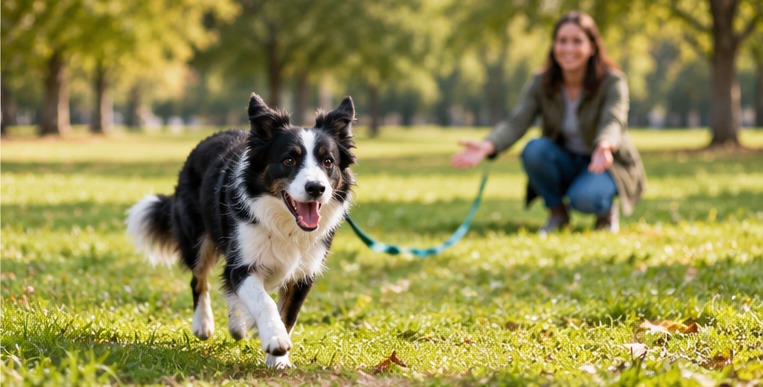
Progress gradually: from the quiet room to another room, then the yard, then a calm outdoor spot, and only then busier places. At each new location, expect to briefly help again — show the lure, or reward more often — until the behavior is reliable there, and then fade again. Repeating the fade in a new place is normal and usually goes faster than the first time.
This approach builds reliability one environment at a time. It is not a promise of instant off-leash reliability: in high-distraction settings, keep your dog on a leash or long line and stay close to a professional's guidance when the stakes are high.
Common Mistakes
- Fading before the behavior is learned. The dog needs a solid behavior first; otherwise there is nothing to fade from.
- Hiding the treat but reaching for it too early. If your hand moves toward the pouch before the behavior happens, the dog still gets a visible signal that food is coming — keep the treat still until after.
- Stopping rewards entirely. Fading the lure is not the same as removing reinforcement. Under-rewarding a newer skill makes it weaker.
- Repeating the cue. Saying "sit, sit, sit" teaches the dog that the cue is a background noise, not a signal. Say it once; help if needed.
- Raising difficulty too fast. Moving from the living room to a busy street in one jump is a setup for frustration on both ends.
- Ending sessions on failures. If things stall, ask for something easy, reward it, and stop there.
Quick Troubleshooting Table
| Problem | Likely explanation | Practical next step |
|---|---|---|
| Dog sits for the treat but not without it | The visible food has become part of the cue | Hide the treat, keep the gesture, reward immediately after the sit |
| Dog looks at your empty hand and waits | The hand still signals "food is coming" | Keep the hand still and neutral; reward the first correct try generously |
| Behavior was fine, then fell apart | Faded too quickly or new distractions | Go back one step; rebuild in a quieter setting |
| Dog responds at home but not outside | The environment is too distracting for this skill level | Practice in low-distraction outdoor spots first; help again when needed |
| Dog loses interest after a few repetitions | Reward value too low, or sessions too long | Switch to a higher-value reward; end on a success sooner |
| Slow, hesitant responses | Unclear cue or inconsistent timing | Clarify the cue; reward within a second or two |
When to Ask for Professional Help
Most lure-fading difficulties are ordinary training challenges. Some situations deserve professional support:
- Your dog shows signs of fear, anxiety or distress during training.
- You see growling, snapping, freezing or other signs of aggression around food or handling.
- Behavior problems persist or worsen despite consistent reward-based training.
- A health problem could be affecting appetite, energy or responsiveness — a veterinarian is the right first stop.
A qualified reward-based trainer or behavior professional can watch your timing and environment in person and adjust the plan to your dog. There is no failure in asking for help; there is only faster progress.
Frequently Asked Questions
How long does it take to phase out treats?
It depends on the dog, the behavior and how consistently you practice. Some behaviors fade in a few sessions; some take weeks of gradual steps. Judge by your dog's responses, not by a deadline.
Can I fade the lure if my dog only knows hand signals?
Yes. Keep the hand gesture and remove only the food. You can add a verbal cue alongside the gesture later if you want the word to work on its own.
What if my dog refuses to work without seeing the treat?
Go back a step: show the treat, ask for the behavior, reward, and then hide the treat more gradually — for example, in a closed fist, then in a pocket. Refusing usually means the fade moved faster than the dog's understanding.
Should I switch to toys instead of treats?
You can, especially for dogs who love to play. Toys work well as rewards; they are just slower to deliver than food. Many owners use food for teaching and toys for games and energy outlets.
Is it bad to still use a lure for a brand-new behavior?
No. Luring is a useful way to introduce a new behavior. The fading process described here begins after the behavior is understood — not before.
Conclusion
Phasing out treats is not about weaning your dog off food. It is about moving the food from before the behavior to after it, so the cue — not the treat — is what your dog responds to. Work in small steps, keep the reward flowing, and step back whenever the dog needs it. If your dog currently responds only when a treat is visible and you want to understand the pattern behind it, our decision guide My Dog Only Listens When I Have Treats walks through the possible reasons in a few quick questions — and our dog training hub collects more step-by-step guides for everyday training problems.
References
This article was written from established reward-based training guidance. For further reading: