Italian Greyhound – The Ultimate Guide to This Elegant Toy Hound
The Italian Greyhound is the perfect combination of elegance and affection in a compact, graceful body. This miniature sighthound is known for its sleek appearance, gentle temperament, and deeply loyal nature. Whether curled up in a sunbeam or sprinting around your living room, the Italian Greyhound is a charming companion for anyone seeking a sensitive and loving pet.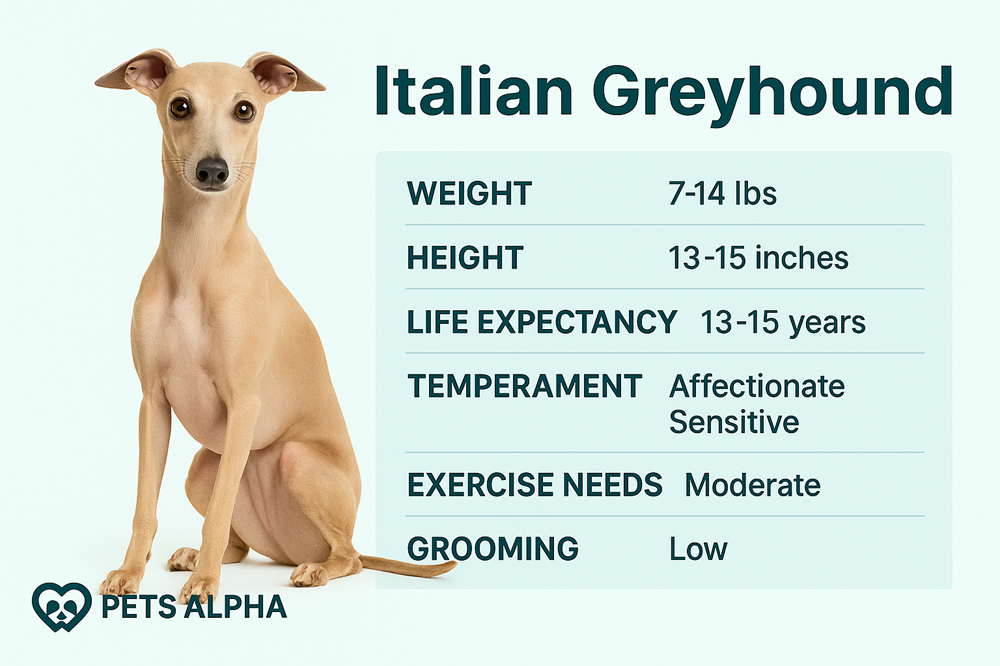
Why People Fall in Love with Italian Greyhounds
- Built for speed, but happiest cuddling
- Perfect for apartment living
- ❤️ Emotionally sensitive and loyal
- Almost odorless and low-shedding
- Surprisingly playful indoors
History and Origin
The Italian Greyhound has been adored since ancient times, appearing in Roman artwork over 2,000 years ago. Bred for companionship rather than hunting, these dogs became royal favorites in Renaissance Italy and later in European courts. Their timeless elegance and gentle nature made them icons of aristocratic life. Even today, this breed retains a sense of refinement — often described as "a Greyhound shrunk to lap-size."Physical Characteristics
| Trait | Details |
|---|---|
| Height | 13–15 inches |
| Weight | 7–14 pounds |
| Lifespan | 13–15 years |
| Build | Slim, fine-boned, athletic |
| Coat | Short, smooth, single-layered |
| Colors | Fawn, blue, gray, black, red, cream |

Temperament & Personality
- Loyal: Bonds tightly with one or two people
- ️ Shy: Often timid with strangers or loud environments
- Playful: Loves short zoomie sessions, then naps
- Quiet: Rarely barks unless startled
- ️ Velcro dog: Will shadow you all day at home
Common Health Concerns
- Leg fractures – Their slender limbs are fragile, especially in puppies
- Dental disease – Common in toy breeds; daily brushing is best
- Progressive Retinal Atrophy (PRA) – An inherited eye disorder
- Epilepsy – Can appear in some bloodlines
- Anesthesia sensitivity – Due to low body fat, use specialized vets for surgeries
Feeding & Nutrition
- ️ Feed 2 small meals per day to maintain stable energy
- Choose high-quality small-breed kibble or fresh food
- Add omega-3s to support their coat and joints
- Avoid rich or fatty foods — they’re prone to stomach upset
Training & Socialization
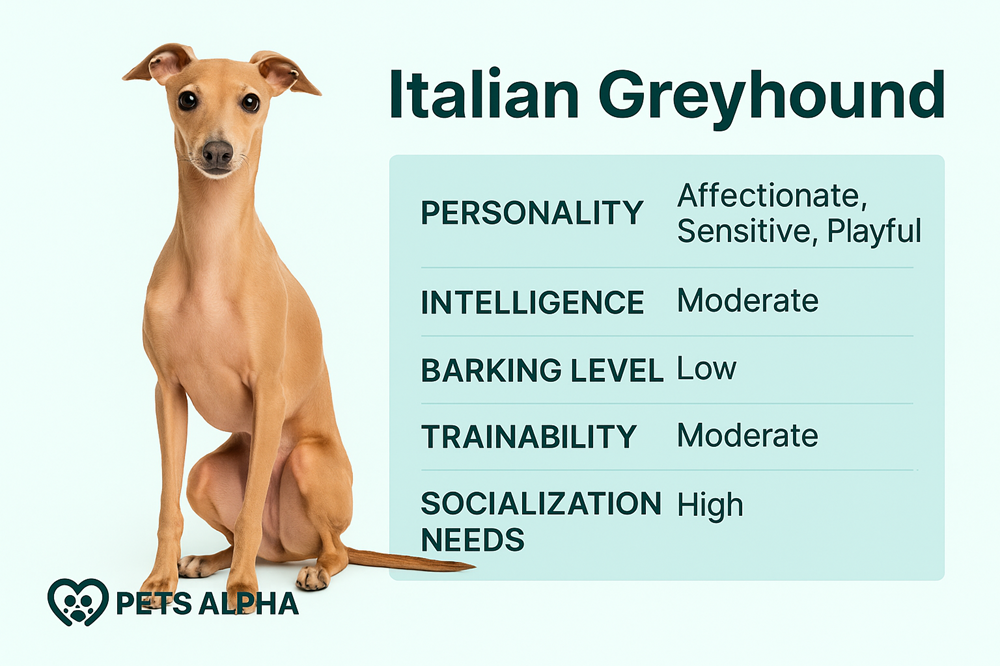
- ✅ Positive reinforcement only
- ✅ Treats, praise, and short sessions
- ✅ Socializing early with people, dogs, and different sounds
- ❌ Never use a harsh tone or punishment
Exercise Needs
- ♂️ 2–3 short walks daily (10–20 min each)
- ♂️ Occasional sprinting in a fenced area
- Indoor play is often enough
Grooming and Maintenance
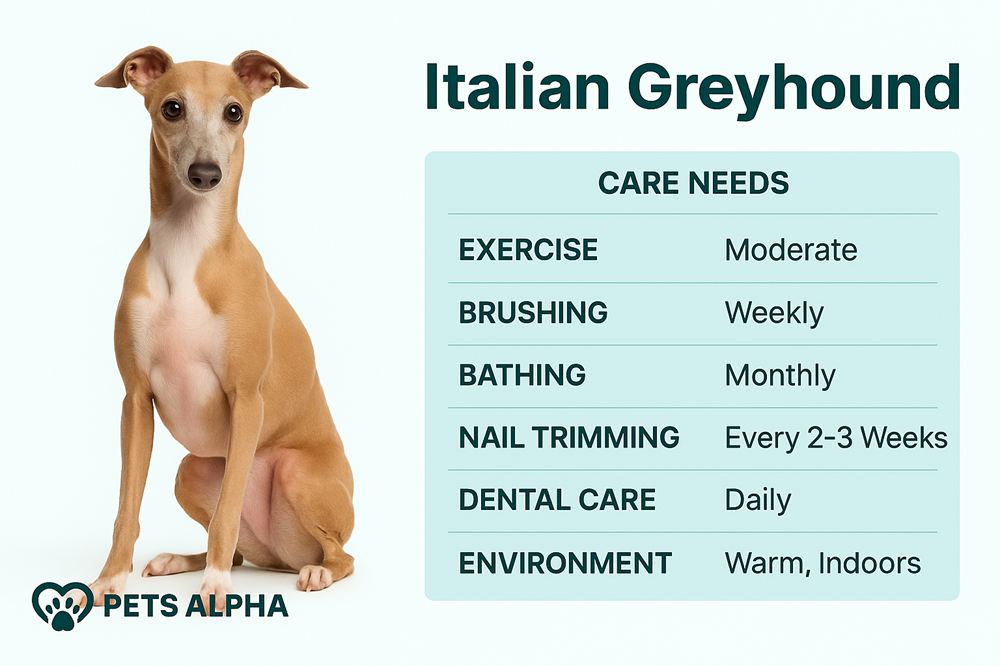
- Brushing: Once a week with a soft mitt
- Bathing: Monthly or as needed
- Teeth: Brush daily to avoid tartar
- ✂️ Nails: Trim every 2–3 weeks
- Ears: Clean weekly to prevent wax buildup
Home Suitability
The Italian Greyhound is an indoor-only breed. Cold weather, stairs, and rough surfaces are all challenges.Ideal homes:
- Apartments or cozy homes
- Quiet, predictable environments
- Families without young kids
- Pet owners who are home most of the day
Not ideal for:
- Households with toddlers or rough pets
- Outdoor-only living
- Owners who are gone for long hours
Ideal Owner Profile

- A calm, patient person
- Someone who enjoys cuddling over chaos
- A homebody or remote worker
- Willing to give them soft beds, warm clothes, and constant love
Cost Breakdown
| Expense | Estimated Cost |
|---|---|
| Adoption / Breeder | $800–$2,500 |
| Initial setup | $200–$400 (crate, bed, pads) |
| Monthly care | $60–$100 |
| Vet checkups | $200–$500 annually |
| Clothes/coats | $20–$60 (essential in cold) |
Did You Know?
- Italian Greyhounds can run up to 25 mph
- They appear in ancient Roman mosaics and statues
- They’re known for “snuggling under blankets year-round.”
Fun Facts & Trivia
- Many owners call them “sock thieves” — they love soft fabric
- ️ They’ll burrow into your laundry like it’s a cave
- Featured in paintings and movies as symbols of nobility