Broodmare Care
The complete guide to caring for pregnant mares — from conception to foaling. Gestation timeline, feeding by trimester, body condition scoring, the famous 1-2-3 rule, and everything you need to bring a healthy foal into the world.
Broodmare Overview
Key facts every breeder must know before starting
📖 What Is a Broodmare?
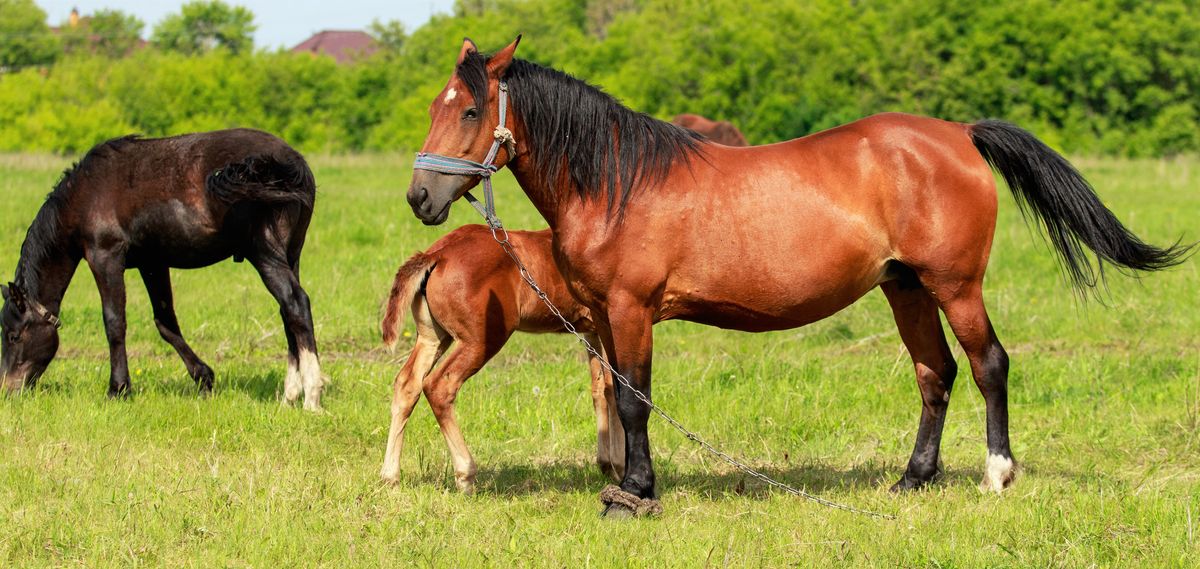
A broodmare is a female horse specifically used for breeding purposes — to carry, deliver, and nurse foals. The term comes from the Old English brōd, meaning "offspring" or "young." Broodmares are the foundation of every breeding program, and their care directly determines the health, growth, and future performance of their foals.
Not every mare makes a good broodmare. The best candidates are healthy, well-conformed, and possess a calm temperament. Ideally, a broodmare should be at least 3–4 years old and have reached her full skeletal maturity before her first pregnancy. Mares can successfully carry foals well into their late teens and even early twenties, though fertility does gradually decline with age.
Gestation Timeline
The 11-month journey from conception to foaling — month by month
⚖️ Body Condition Score (BCS) for Broodmares
The Henneke Body Condition Scoring System is the gold standard for assessing a mare's nutritional status. It uses a 1–9 scale based on visual and palpable fat at six key body areas: neck, withers, shoulder, ribs, loin, and tailhead.
• At conception: BCS 5–7 (mares in BCS 5+ have higher conception rates and fewer cycles per conception)
• During gestation: BCS 5.5–6.5 — do NOT let the mare become obese
• At foaling: BCS 6 (slightly fleshy — provides a buffer for early lactation)
• ⚠️ Obese mares (BCS 8+): Longer intervals between ovulations, higher risk of laminitis, insulin resistance, and foaling difficulties. Their foals may also have altered metabolic rates at birth.
🍽️ Feeding by Trimester
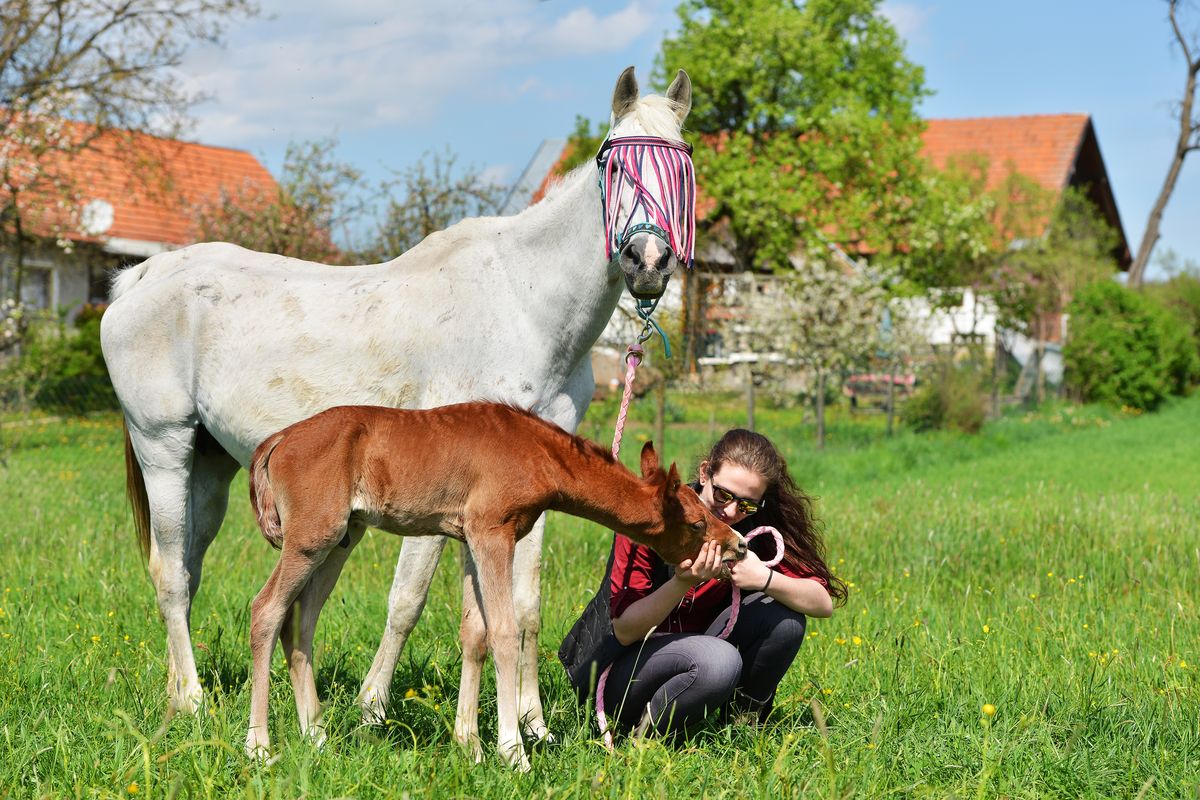
A broodmare's nutritional needs change dramatically throughout pregnancy. The key principle: feed the mare, not just the foal — underfeeding leads to poor foal development; overfeeding leads to obesity complications.
🌾 Early Gestation (Months 1–6)
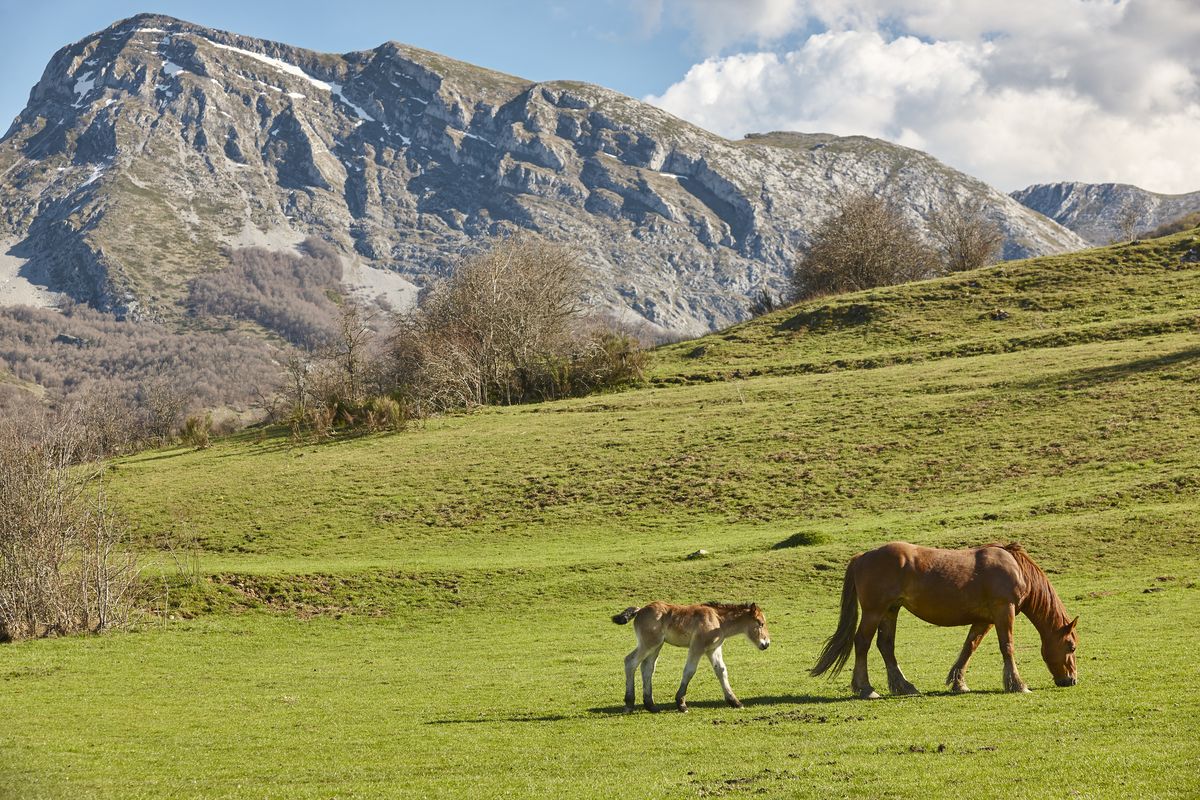
During the first half of pregnancy, the fetus is tiny and grows slowly. The mare's nutritional requirements are essentially the same as maintenance. The biggest mistake breeders make here is overfeeding early — the mare gets fat, not the foal.
- Feed the same as a non-pregnant mare: Good quality forage (hay/pasture) at 2–2.5% of body weight daily. A 500 kg mare needs ~10–12.5 kg of hay per day.
- Add a ration balancer — a low-calorie, high-nutrient pellet that provides vitamins and minerals without excess energy. Perfect for easy keepers.
- Body condition monitoring: Check BCS monthly. If the mare is gaining too much weight, reduce — don't wait until late gestation to fix obesity.
- ⚠️ Avoid endophyte-infected tall fescue: This common pasture grass can carry a fungus that causes prolonged gestation, thickened placenta, and lack of milk production. Test your pasture if unsure.
🌾 Late Gestation (Months 7–11)
The final trimester changes everything. The fetus gains 80% of its birth weight during the last 90 days — growing at approximately 0.45 kg (1 lb) per day. Nutrient demands spike dramatically:
Nutrient Increases (vs Maintenance)
- Energy: +28% — add small amounts of grain or concentrate gradually
- Protein: +40% — essential amino acids (lysine, methionine, threonine) are critical for fetal muscle development
- Calcium & Phosphorus: +80% — for fetal skeletal mineralization. Keep the Ca:P ratio at 1.5:1 to 2:1
- Copper, Zinc, Selenium: Dramatically increased — these trace minerals are stored in the foal's liver and used in the first weeks of life
- Vitamin E: Added in late gestation improves colostrum immunoglobulin levels — better passive immunity transfer to the foal
Feeding Adjustments
- Gradually increase concentrate over 7–10 days — sudden changes risk colic
- Total feed = 1.5–2% of body weight in forage + 0.5–1% in concentrate (adjust for BCS)
- Feed smaller, more frequent meals — the growing foal compresses the mare's digestive tract, reducing stomach capacity
- Water is critical: ~38–57 litres (10–15 gallons) per day — the fetus and amniotic fluid demand it
🐎 Foaling Signs & The 1-2-3 Rule
As foaling approaches, your mare will show clear physical and behavioral signs. Knowing them could save the foal's life:
Pre-Foaling Signs (Days to Hours Before)
- Udder development: Begins filling 3–6 weeks before foaling, becomes firm and distended in the final 24–48 hours
- Waxing: Yellowish, wax-like droplets appear on teat ends — typically within 12–36 hours of foaling
- Vulvar relaxation: Vulva elongates and becomes flaccid
- Pelvic ligament softening: Hollow areas appear around the tailhead — the mare looks "caved in"
- Restlessness & sweating: Pacing, pawing, frequently lying down and getting up, sweating patches on neck/flanks — active labor begins
❶ Stand within 1 HOUR
❷ Nurse from the mare within 2 HOURS
❸ Pass meconium (first dark, sticky stool) within 3 HOURS
If any of these milestones are delayed, call your veterinarian immediately. The foal needs colostrum within the first 6–8 hours to absorb antibodies. After 12 hours, the gut "closes" and antibody absorption stops.
💧 Post-Foaling Care & Lactation
Once the foal arrives, the mare enters lactation — the most nutritionally demanding phase of any horse's life. A lactating mare producing 15–20 litres of milk per day needs:
- 2× maintenance energy — roughly the equivalent of feeding a horse doing intense daily training
- 3% of body weight in dry matter daily — for a 500 kg mare, that's ~15 kg of feed
- Free-choice hay + high-quality concentrates designed for lactation
- Transition diets gradually over 7–10 days post-foaling
- The placenta should pass within 2 hours of foaling — retained placenta is a life-threatening emergency
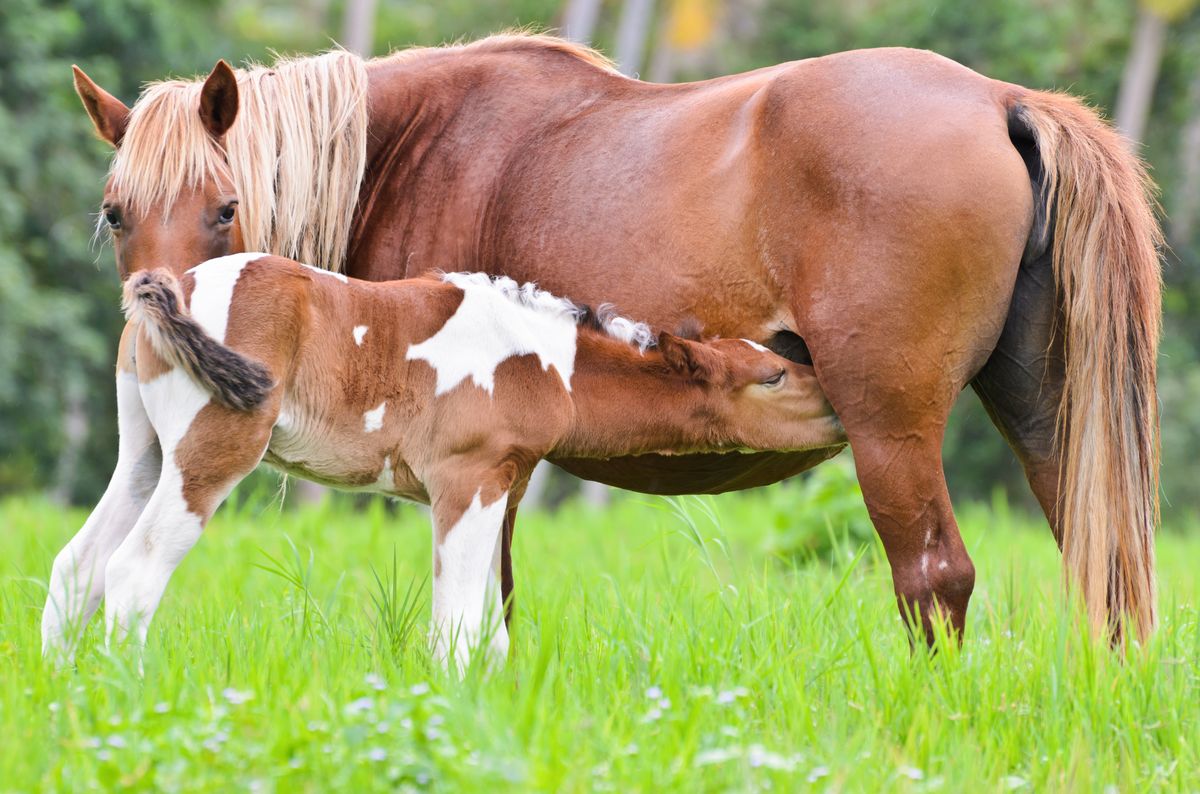
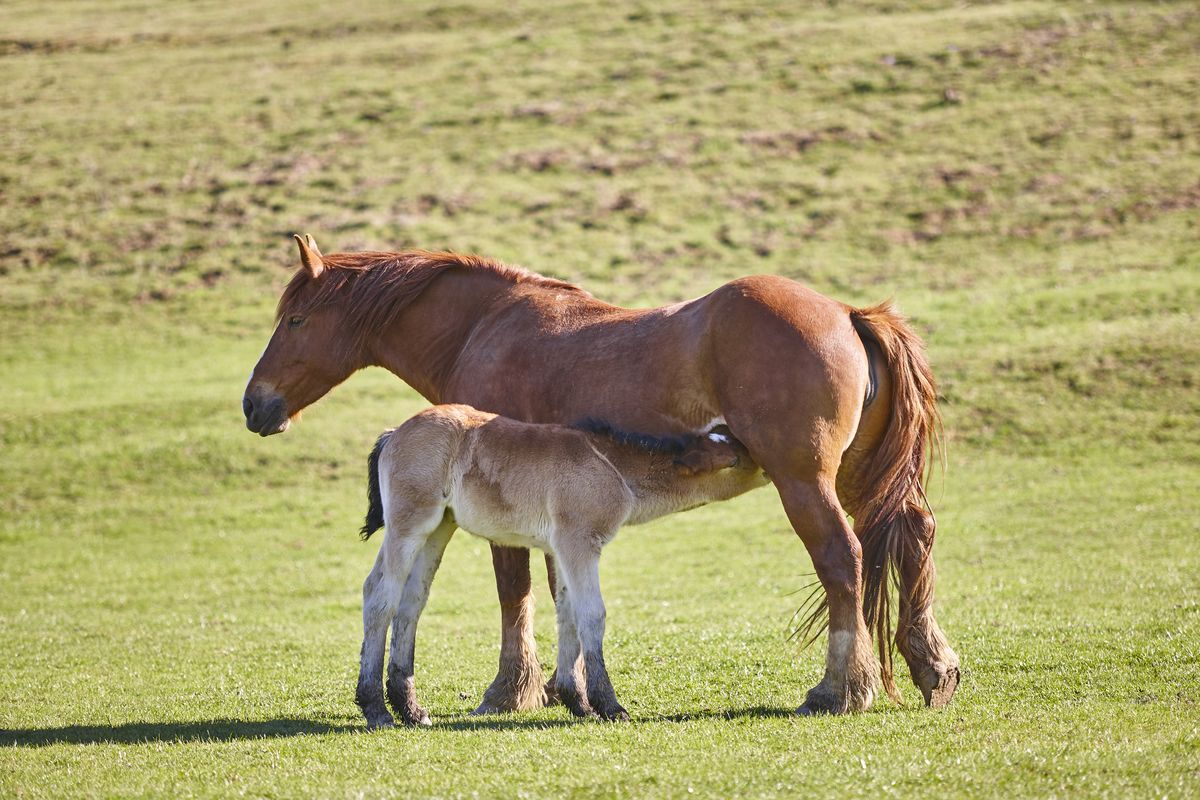
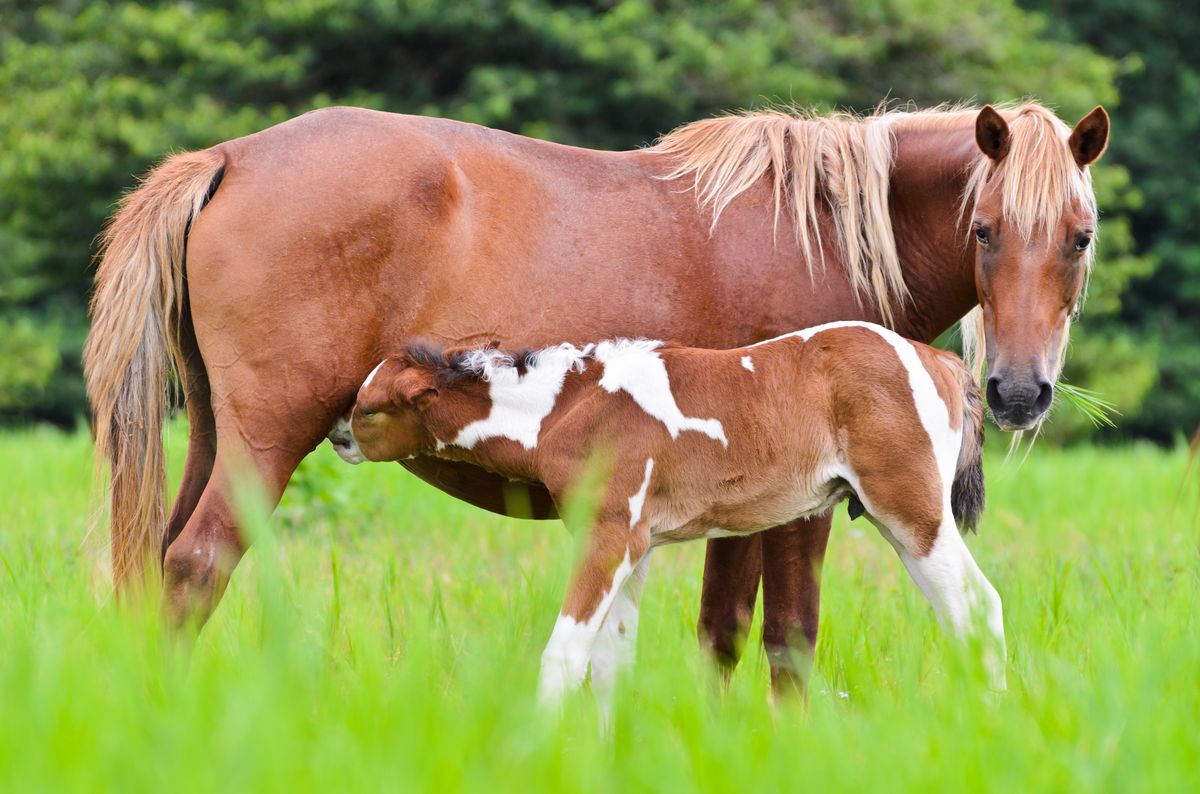
- Foal will nurse every 15–30 minutes initially — this stimulates milk production
Cost Breakdown
Estimated annual expenses for a broodmare in 2025 (USD)
| Expense Category | Estimated Cost (USD) |
|---|---|
| 🐴 Purchase of quality broodmare | $3,000 – $25,000+ |
| 🧬 Stud fee (varies by stallion) | $500 – $15,000+ |
| 🥕 Monthly feed (maintenance) | $150 – $300 |
| 🥕 Extra feed (late gestation/lactation) | $50 – $150/month extra |
| 🏠 Boarding (pasture/stable) | $300 – $1,200/month |
| 🩺 Veterinary (pre-breeding exam + pregnancy checks) | $300 – $800/year |
| 🦶 Farrier (every 6–8 weeks) | $40 – $150/visit |
| 💉 Vaccinations & deworming | $150 – $400/year |
| 🧪 Supplements (vit/min/omega-3) | $30 – $80/month |
| 🐎 Foaling emergency fund | $1,000 – $3,000 reserve |
| 💵 TOTAL Annual Cost (1 mare) | $4,500 – $20,000+ |
* Stud fees and boarding are the biggest variables. Emergency vet care for foaling complications can add $2,000–$10,000. Always have a financial buffer.
⚕️ Health & Wellness
Broodmares face several pregnancy-specific health risks that owners must be prepared for:
Common Broodmare Health Issues
- Retained Placenta: If the placenta is not expelled within 2 hours post-foaling, it's a life-threatening emergency. Can cause laminitis, sepsis, and death. Friesian mares have a 54% incidence rate — extraordinarily high.
- Dystocia (Difficult Birth): Malpositioned foal, uterine inertia, or oversized foal. Time is critical — call the vet if active labor exceeds 20–30 minutes without progress.
- Mastitis: Bacterial infection of the udder — often from poor hygiene or foal not nursing properly. Hot, swollen, painful udder with abnormal milk.
- Endophyte Fescue Toxicosis: Caused by endophyte-infected tall fescue grass. Results in prolonged gestation, thickened placenta (dystocia), absent milk production, and weak foals. Remove mares from infected pasture 30 days before foaling.
- Uterine Infections (Metritis): Post-foaling bacterial infection — fever, foul-smelling discharge, depression. Requires antibiotics + uterine lavage.
💡 Fun Facts & Trivia
80% of birth weight in 90 days: The final trimester is a growth explosion — a foal gains roughly 0.45 kg (1 lb) per day in the womb. That's like a human baby adding a small watermelon to its weight every single week.
Colostrum is liquid gold: A mare's first milk contains concentrated antibodies that protect the foal. Without it within the first 6–8 hours, the foal has virtually no immune system. The gut "closes" after 12 hours — the window is tiny.
Foals are born with "feathers": A newborn foal's hooves are covered in soft, rubbery tissue called eponychium (or "foal slippers") — evolved to protect the mare's birth canal. They wear off within hours of walking.
Mares control their due date: Unlike humans, mares can delay foaling for days or even weeks if they feel unsafe, stressed, or disturbed. This is why foaling stalls must be quiet, private, and undisturbed.
Record-breaking broodmares: The oldest mare recorded to give birth was 30 years old. With modern veterinary care, mares in their early 20s can successfully carry and raise healthy foals.
The 340-day average is just that — average: Normal gestation can range from 320 to 370 days. Colts (male foals) tend to be carried 2–3 days longer than fillies (female foals).
💬 Comments & Questions
Breeding horses? Share your broodmare experience below!
Comments are temporarily unavailable.
Check back soon!