
Water Moccasin (Cottonmouth)
North America's most feared aquatic snake. Semi-aquatic, venomous, and often confused with harmless water snakes — the cottonmouth's distinctive white mouth display is one of nature's most effective warning signals. Our complete guide covers identification, venom, habitat & what to do if bitten.
Species Overview
Quick facts about the Water Moccasin
📖 About the Water Moccasin
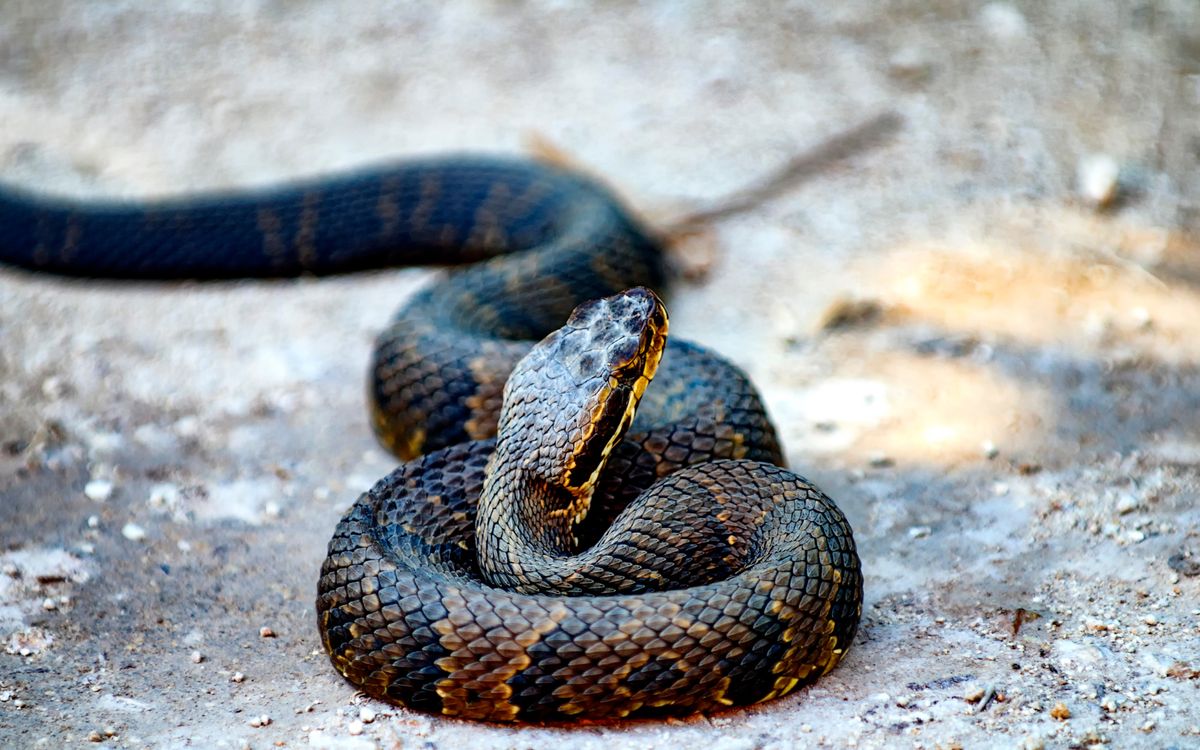
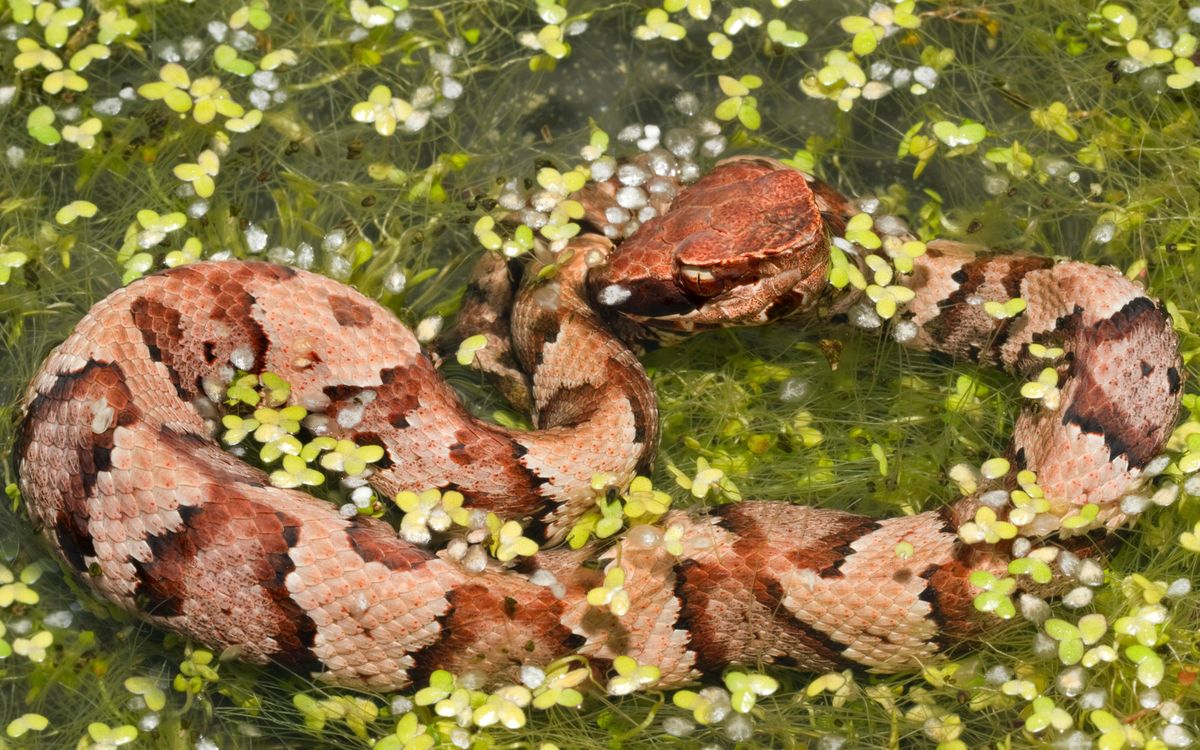
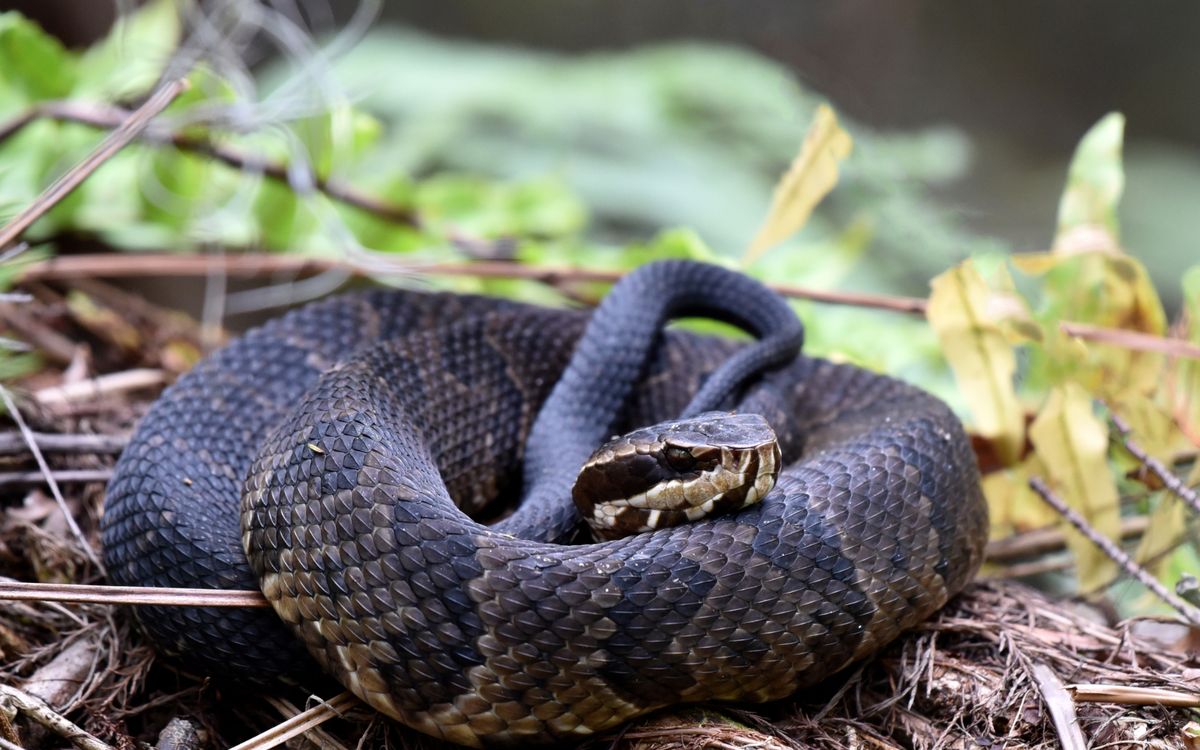
The Water Moccasin (Agkistrodon piscivorus) — also known as the Cottonmouth — is the only semi-aquatic pit viper in North America. It gets its common name from the stark white interior of its mouth, which it displays as a warning when threatened — opening its jaws wide in a dramatic threat display that's unmistakable once you've seen it.
Despite their fearsome reputation, cottonmouths are not naturally aggressive — they're defensive. Most bites occur when people accidentally step on them, try to handle them, or fail to recognize them while fishing or swimming in their habitat. Understanding this snake is the key to coexisting safely — and to distinguishing it from the harmless water snakes it's so often confused with.
🔍 How to Identify a Water Moccasin (vs Harmless Water Snakes)
This is the single most important skill for anyone in cottonmouth territory. Misidentification leads to harmless snakes being killed — and sometimes to people getting too close to the real thing.
⚠️ Water Moccasin (VENOMOUS)
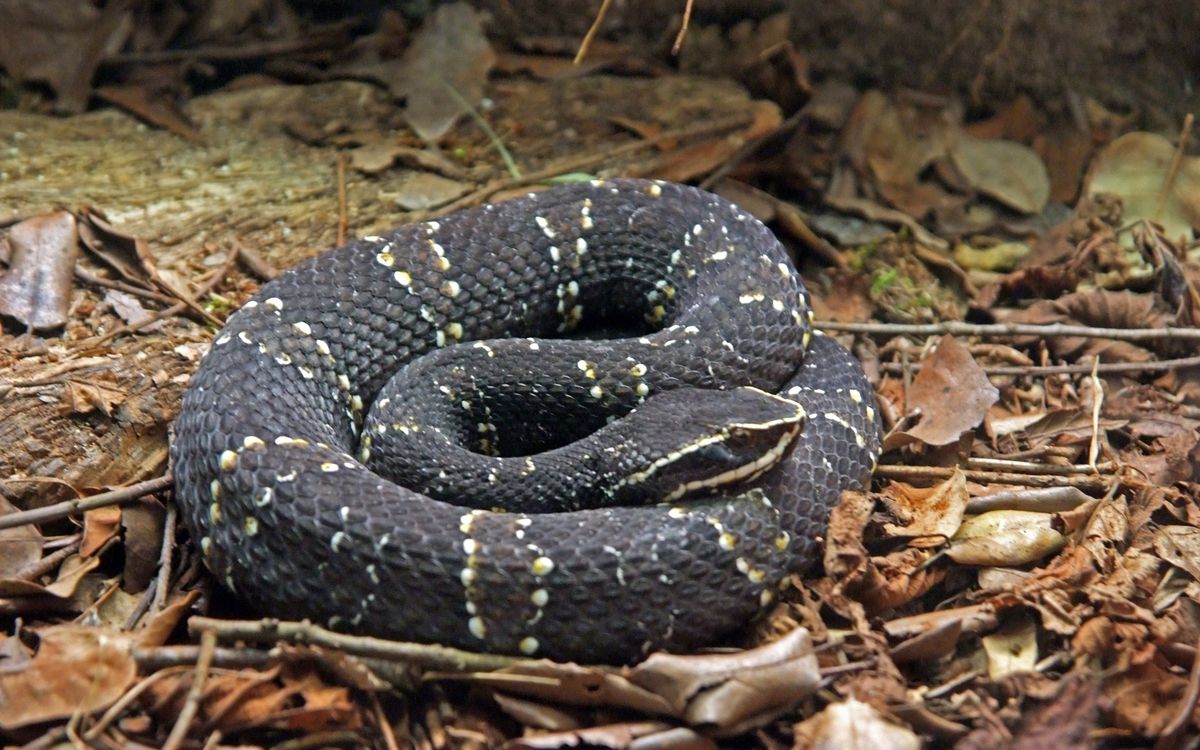
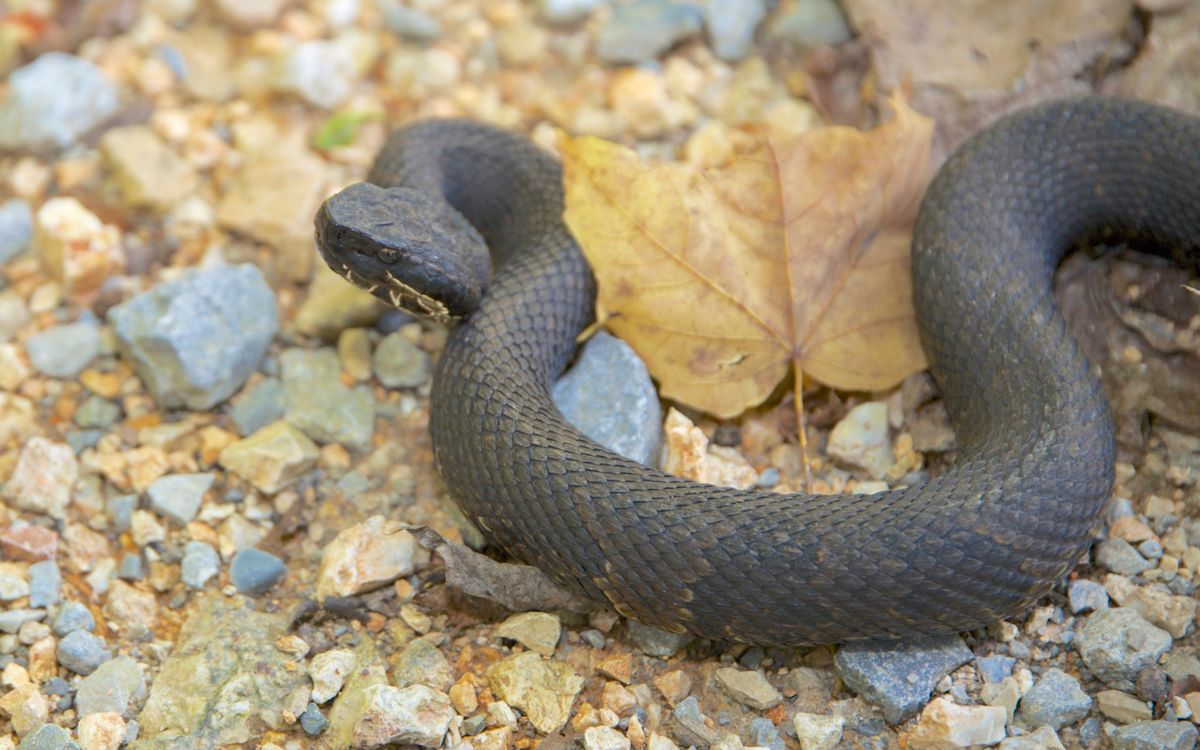
- Thick, heavy body — stout and muscular for its length
- Blocky, triangular head — much wider than the neck
- Vertical (cat-like) pupils — not round
- Facial pit between eye and nostril (heat-sensing)
- Swims with ENTIRE body floating on surface
- White mouth interior — displayed when threatened
- Dark facial stripe through the eye
- Juveniles have bright yellow/green tail tip
✅ Harmless Water Snake (NON-VENOMOUS)
- Slender, streamlined body
- Narrow, oval head — barely wider than neck
- Round pupils
- No facial pit
- Swims with only head above water, body submerged
- No white mouth display
- No dark facial stripe
- No yellow tail tip in juveniles
⚠️ Venom & Bite — What You MUST Know
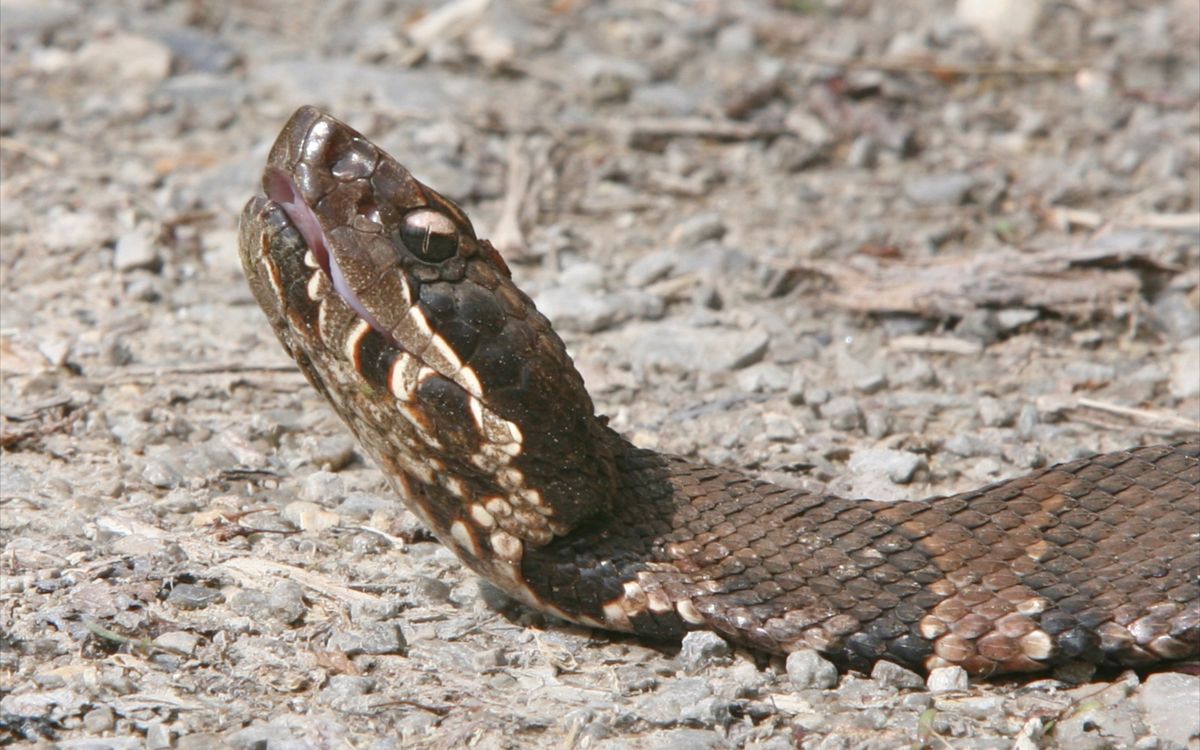
The cottonmouth delivers hemotoxic venom through hinged, hollow fangs that inject venom deep into tissue. This venom destroys red blood cells, damages blood vessels, and causes severe tissue necrosis (tissue death). Key facts:
- Bites are rarely fatal to healthy adults with prompt medical treatment — but they can cause permanent scarring, tissue loss, and in severe cases, amputation
- Fatalities are almost always due to delayed treatment, allergic reaction (anaphylaxis), or bites to very young/elderly/immunocompromised individuals
- The snake can control venom dosage — "dry bites" (no venom injected) occur in ~20% of defensive strikes
- Symptoms: immediate burning pain, rapid swelling, bruising, blisters, nausea, weakness, metallic taste, and in severe cases, difficulty breathing
🌿 Habitat & Range
Cottonmouths are found throughout the southeastern United States — from Virginia to Florida, west to Texas, and north to southern Illinois and Missouri. They inhabit: swamps, marshes, and wetlands; slow-moving rivers, creeks, and streams; lakes, ponds, and drainage ditches; and brackish coastal waters. They're excellent swimmers and can stay submerged for extended periods. They frequently bask on logs, rocks, and branches overhanging water — which is where most human encounters occur.
🍽️ Diet & Hunting
Cottonmouths are opportunistic ambush predators and scavengers. Their scientific name piscivorus means "fish-eating," and fish make up a large portion of their diet. But they'll eat almost anything: fish, frogs, salamanders, other snakes (including smaller cottonmouths), small turtles, birds, rodents, and carrion. They hunt by: ambushing from a coiled position near the water's edge, actively foraging in shallow water at night, and using caudal luring — juveniles wiggle their bright yellow tail tip to attract curious frogs and fish.
🥚 Reproduction: Live Birth, Not Eggs
Unlike most reptiles, cottonmouths are ovoviviparous — females retain eggs inside their bodies, and give birth to live, fully-formed young. Key reproduction facts: mating occurs in spring (April–May), gestation lasts 3–4 months, females give birth to 1–20 young (average 6–8) in late summer (August–September), newborns are 20–35 cm (8–14 inches) long, fully venomous from birth, and independent immediately. Females breed every 2–3 years, not annually.
🚑 What to Do If Bitten — Step by Step
- Get away from the snake immediately. Do not attempt to capture or kill it — this leads to additional bites.
- Call 911 or get to the nearest ER. Time is tissue. Every minute counts.
- Stay calm and still. Increased heart rate spreads venom faster. Immobilize the bitten limb below heart level.
- Remove jewelry, watches, tight clothing near the bite — swelling will be rapid and severe.
- DO NOT: apply a tourniquet, cut the wound, suck venom, apply ice, drink alcohol, or take aspirin/ibuprofen. These folk remedies worsen outcomes dramatically.
- The ONLY treatment is CroFab antivenom — administered intravenously in a hospital. Most patients recover fully with prompt care, though some tissue scarring may be permanent.
💡 Fun Facts & Trivia
The white mouth is a BLUFF: The cottonmouth's famous open-mouth display isn't aggression — it's a defensive warning. The snake is saying "I'm venomous, back off." Most cottonmouths would rather escape than fight.
Babies have built-in fishing lures: Juvenile cottonmouths have a bright yellow or greenish tail tip that they wiggle like a worm to lure curious frogs, fish, and lizards within striking distance. This is called caudal luring.
Heat-sensing pit vipers: Those "extra nostrils" between the eye and nostril are actually heat-sensing pits that can detect temperature differences as small as 0.001°C — allowing cottonmouths to strike warm-blooded prey accurately in total darkness.
They STINK when threatened: Cottonmouths have anal glands that secrete a foul-smelling musk when they feel threatened. If you smell something like rotten cucumbers near water in cottonmouth territory — there may be one nearby.
Live birth, not eggs: Unlike most reptiles, cottonmouths give birth to live, fully-formed young (ovoviviparous). Babies are independent from birth, fully venomous, and receive no parental care.
Dead snakes can still bite: A decapitated cottonmouth head can still deliver a venomous bite for up to an hour after death due to retained reflexes. NEVER handle a dead venomous snake — it's one of the most common causes of snakebite.
💬 Comments
Comments are temporarily unavailable.